
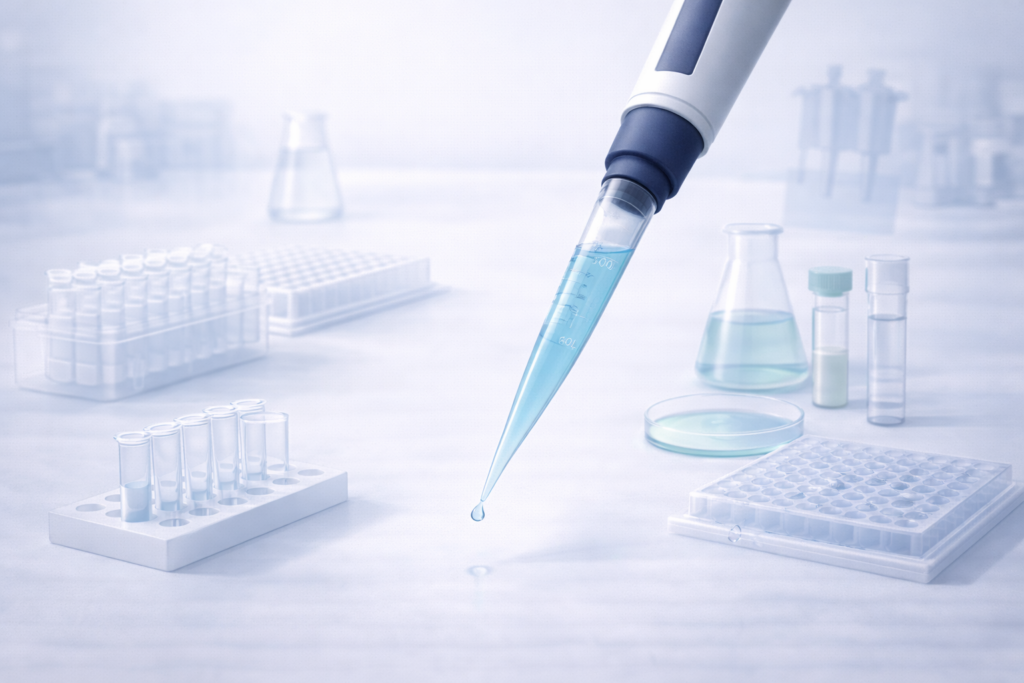
Accuracy in the laboratory is not merely about the pipette mechanism; it is about the entire liquid handling system, which includes the user, the pipette, the tip, and the specific application. Applications drive the selection process. A setup perfect for educational demonstrations may be disastrous for quantitative PCR, just as a system designed for high-throughput screening may be unnecessarily costly for routine buffer preparation.
This guide provides an application-first approach to selecting pipettes and pipette tips. It moves beyond basic volume matching to address the critical variables of contamination risk, liquid viscosity, ergonomics, and sample volatility. Whether you are establishing a new tissue culture facility or standardizing workflows across a clinical diagnostic lab, understanding the interplay between instrument and consumable is essential for reproducible data. The following sections outline a selection matrix, core technical concepts, and deep dives into specific laboratory use cases to ensure your liquid handling protocols are robust and efficient.
Quick Selection Matrix
This matrix provides a high-level overview for matching common laboratory applications with the appropriate liquid handling tools.
| Application | Main Risks | Recommended Pipette Type | Recommended Tip Type | Packaging Notes |
|---|---|---|---|---|
| Molecular Biology / PCR | Aerosol contamination, DNA/RNA degradation, nuclease presence | Manual or Electronic Single/Multichannel (Air Displacement) | Filter tips (Aerosol barrier), Low retention | Sterile Racks (never bulk) |
| Cell Culture | Biological contamination, cytotoxicity, repetitive strain | Electronic Pipette Controllers (Serological) or Air Displacement | Sterile, Extended length (to reach tubes), Filter tips | Sterile Racks (Individually wrapped for serological) |
| Microbiology | Cross-contamination, biohazard exposure | Air Displacement (Manual) | Filter tips, Standard sterile tips | Sterile Racks |
| Immunoassays / ELISA | Inconsistent volume, repetitive strain injury (RSI) | Electronic pipettes (Multichannel), Adjustable Spacing | Standard tips, Low retention (if reagents contain surfactants) | Racks or Refill Towers |
| Analytical Chemistry | Vapor pressure errors, dripping, corrosion | Positive Displacement or Air Displacement | Standard tips (Air), Capillary pistons (Positive) | Bulk or Racks |
| Clinical / Diagnostics | Sample carryover, infectious agents | Air Displacement (Electronic or Manual) | Filter tips (mandatory), Wide-bore (for fragile cells/genomic DNA) | Sterile Racks |
| Teaching / Routine Labs | Durability issues, misuse, cost | Manual Air Displacement (Robust construction) | Standard non-sterile tips | Bulk bags |
| High-Throughput | Fatigue (RSI), well-to-well variation | Electronic Multichannel (96/384 format) | Standard tips, Compatible robotic tips | Racks (Stackable) |
Core Concepts
Understanding the mechanics of liquid handling is a prerequisite for making informed purchasing decisions.
Air Displacement vs. Positive Displacement
- Air Displacement: The most common mechanism. A piston moves a cushion of air, which pulls liquid into the tip. The piston never touches the liquid. This is ideal for aqueous samples but struggles with volatiles (which evaporate into the air cushion) or viscous liquids (which stick to the tip walls).
- Positive Displacement: The piston is part of the tip (often called a capillary piston) and comes into direct contact with the liquid. There is no air cushion. This is the gold standard for volatile, viscous, hot, cold, or corrosive liquids.
Single-Channel vs. Multichannel vs. Adjustable Spacing
- Single-Channel: The workhorse for individual tube work. Essential for non-standard formats and low-throughput tasks.
- Multichannel (8, 12, 16 channel): Designed for 96-well and 384-well plates. Drastically increases speed but requires consistent hand technique to ensure all tips seal and aspirate equally.
- Adjustable Spacing: Allows the user to change the width between nozzle cones. This bridges the gap between different labware formats, such as moving samples from microcentrifuge tubes to a 96-well plate without manual reformatting.
Manual vs. Electronic
- Manual: Relies on thumb force for aspiration and dispensing. They are robust and tactile but rely heavily on user technique for consistency.
- Electronic: Uses a motor to drive the piston. This eliminates user-to-user variation in speed and force, significantly reducing Repetitive Strain Injury (RSI). Electronic pipettes also offer programmable modes like mixing, dilution, and reverse pipetting, which improve accuracy in complex protocols.
Tip Types and When They Matter
The quality of the consumable is just as important as the calibration of the instrument.
Tip Classification Table
| Tip Type | Best For | Not Ideal When | Common Mistakes |
|---|---|---|---|
| Standard Tips | Routine aqueous buffers, teaching labs, general chemistry. | Handling DNA/RNA, biohazards, or viscous fluids. | Using non-sterile bulk tips for sensitive cell culture work. |
| Filter Tips | PCR, radioisotopes, bacteriology, infectious samples. | General buffer prep (unnecessary cost), non-critical applications. | Assuming the filter stops liquid contact (it primarily stops aerosols). |
| Low Retention | Viscous samples (glycerol), detergents (Triton X-100), PCR master mixes. | Pure water or standard buffers (no significant benefit). | Using standard tips for enzymes and losing expensive reagents on tip walls. |
| Extended Length | Reaching bottom of 15mL/50mL tubes, narrow vessels. | General micro-pipetting (longer arm means less ergonomic control). | Touching the pipette shaft to the vessel wall because the tip is too short. |
| Wide-Bore | Genomic DNA, macrophages, viscous slurries, beads. | Precise small volumes (<10µL) where surface tension dominates. | Shearing fragile cells by forcing them through a standard narrow orifice. |
| Sterile | Cell culture, molecular biology, clinical applications. | Routine chemical analysis, pH adjustment. | Opening a sterile rack without gloves or in a non-sterile environment. |
Detailed Breakdown
- Filter Tips: These contain a porous barrier that prevents aerosols from the liquid from entering the pipette shaft. This protects the pipette from cross-contamination and the sample from carryover.
- Low Retention Tips: Manufactured with a specialized polymer or surface treatment that makes the plastic hydrophobic. This prevents liquid from filming on the inside of the tip, ensuring maximum sample recovery.
- Extended Length: Physically longer to prevent the pipette shaft from entering the collection vessel, reducing contamination risk.
- Wide-Bore: Features a larger opening to reduce shear force. Essential for handling fragile cell lines or macromolecules that can be physically damaged by passing through a narrow aperture.
Applications (Deep Dive Sections)
Molecular Biology & PCR
Goal: Amplify specific DNA sequences without introducing foreign nucleic acids or nucleases (DNase/RNase).
Failure Modes: False positives due to aerosol contamination; false negatives due to enzyme degradation or low volume delivery.
- Recommended Pipette Features: Electronic or manual air displacement. High precision at low volumes (0.2 µL – 20 µL).
- Recommended Tip Features: Pipette tips must be filter-barrier equipped to prevent aerosol transfer. Low retention properties are critical for maximizing recovery of expensive enzymes and viscous master mixes.
- Practical Best Practices:
- Use a dedicated set of pipettes for PCR setup (pre-PCR) and a different set for analysis (post-PCR).
- Always use sterile, rack-packaged filter tips.
- Utilize “Reverse Pipetting” technique for viscous master mixes to improve accuracy.
- Change tips between every sample, without exception.
- Store tips in a clean, DNA-free environment, away from high-traffic areas.
Cell Culture
Goal: Maintain aseptic conditions while manipulating living cells and media.
Failure Modes: Bacterial/fungal contamination (mycoplasma), cytotoxicity from leaching plastics, physical stress on cells.
- Recommended Pipette Features: Serological pipette controllers for large volumes (>10mL). Air displacement pipettes for micro-dosing. Ergonomic designs are vital due to high repetition under hoods.
- Recommended Tip Features: Certified sterile, endotoxin-free (pyrogen-free). Extended length tips are highly recommended to reach the bottom of 15mL/50mL conical tubes without the pipette barrel entering the vessel. Wide-bore tips are essential when transferring fragile cell lines or clusters.
- Practical Best Practices:
- Wipe down the pipette body with 70% ethanol before entering the biosafety cabinet.
- Use the term cell culture grade consumables to ensure sterility and absence of cytotoxic agents.
- Avoid touching the pipette tip against the outside of the flask or any non-sterile surface.
- Do not leave tip boxes open in the hood; open only when accessing a tip.
- Calibrate pipettes regularly, as the warm, humid environment of a culture room can affect internal lubricants.
Microbiology
Goal: Handle pathogenic or non-pathogenic microorganisms safely and accurately.
Failure Modes: Cross-contamination between cultures, infection of the user, aerosol generation.
- Recommended Pipette Features: Robust manual pipettes that can withstand frequent cleaning.
- Recommended Tip Features: Filter tips are standard to protect the pipette cylinder from bacterial aerosols. Standard sterile tips may be used if the pipette is autoclavable and regularly cleaned.
- Practical Best Practices:
- Slow aspiration is critical to prevent aerosol formation.
- Decontaminate pipettes regularly; ideally, use fully autoclavable models.
- When ejecting tips, do so gently into a biohazard waste container to avoid splashing.
- Use a bleach solution or specific biocide to wipe down pipettes after sessions involving pathogens.
- Ensure tips fit tightly; a loose tip can fall into a culture, ruining the experiment.
Immunology & ELISA
Goal: Process large numbers of samples with high precision to quantify antigen-antibody interactions.
Failure Modes: High background noise, inconsistent replicates, user fatigue (RSI), washing errors.
- Recommended Pipette Features: Electronic pipettes (multichannel) are highly advantageous here. Modes like “Multi-dispense” (filling a plate from one aspiration) drastically reduce thumb movement and improve speed.
- Recommended Tip Features: Standard tips are usually sufficient, provided they are high quality and straight. Low retention tips are necessary if buffers contain surfactants like Tween-20 or Triton X-100, which reduce surface tension and cause dripping.
- Practical Best Practices:
- Prime tips (pre-wetting) 2-3 times before the actual transfer to equilibrate air temperature and humidity inside the tip.
- Use a reverse pipetting technique for foaming wash buffers.
- Ensure the pipette is held at a consistent vertical angle (within 20 degrees of vertical).
- Immersion depth should be consistent (2-3mm) to avoid hydrostatic pressure variations.
- Verify channel-to-channel consistency on multichannel pipettes regularly using a balance or photometric check.
Analytical Chemistry
Goal: Precise measurement of chemical reagents, solvents, and standards.
Failure Modes: Dripping solvents, corrosion of pipette mechanisms, evaporation leading to concentration errors.
- Recommended Pipette Features: Positive displacement pipettes are superior for high vapor pressure liquids (acetone, methanol, chloroform) and high density/viscosity liquids. If using air displacement, ensure chemical resistance (PVDF components).
- Recommended Tip Features: Capillary pistons for positive displacement. For air displacement with solvents, high-quality polypropylene tips are standard.
- Practical Best Practices:
- If using air displacement for volatiles, pre-wet the tip 3-5 times to saturate the air cushion with solvent vapor, preventing dripping.
- Check chemical compatibility charts for both the pipette body and the tip material.
- Do not turn the pipette upside down or lay it flat with liquid in the tip; solvents can destroy internal seals.
- Work in a fume hood, but be aware that strong airflow can affect pipette accuracy (drafts).
- Inspect O-rings frequently for degradation if working with aggressive organic solvents.
Clinical / Diagnostics & QC
Goal: Deliver patient results with absolute reliability and traceability.
Failure Modes: Sample mix-ups, carryover leading to false diagnosis, volume inaccuracies affecting assay cutoffs.
- Recommended Pipette Features: Air displacement with strict calibration schedules. Electronic models with password protection or protocol locking prevent accidental volume changes.
- Recommended Tip Features: Certified filter tips are non-negotiable to prevent sample carryover. Clinical labs often benefit from trackable tip batches (lot numbers printed on racks).
- Practical Best Practices:
- Implement a rigorous QC schedule: gravimetric or photometric checks daily or weekly.
- Use color-coded tips and pipettes to prevent volume selection errors.
- Never reuse tips, even for the same sample, if the protocol dictates strict sterility or volume precision.
- Discard any tip that touches a surface other than the liquid or the vessel interior.
- Maintain logs of maintenance and decontamination for accreditation purposes.
High-Throughput Workflows
Goal: Process hundreds or thousands of samples rapidly with minimal variance.
Failure Modes: Inconsistent tip sealing on multichannel heads, robotic failures, repetitive strain injuries.
- Recommended Pipette Features: Electronic 8, 12, or 96-channel pipettes. Adjustable spacing pipettes for reformatting between tubes and plates.
- Recommended Tip Features: “Low force” or “soft fit” tips designed to mount easily on multichannel cones. Tips must be absolutely straight and uniform in length to ensure all channels touch the liquid surface simultaneously.
- Practical Best Practices:
- Visual check: Ensure all tips are seated at the same level before aspirating.
- Use reagent reservoirs to facilitate multichannel aspiration.
- Automate mixing steps using electronic pipette functions to ensure homogeneity in wells.
- Rotate tasks among staff to prevent fatigue-induced errors.
- Invest in quality tips; cheap tips often have variable orifice sizes, leading to uneven dispensing across a plate.
Teaching / Routine Labs
Goal: Teach techniques and perform general preparations (pH, simple buffers) cost-effectively.
Failure Modes: Equipment breakage, gross pipetting errors, loss of calibration due to drops/impacts.
- Recommended Pipette Features: Manual, robust construction. Color-coded for easy identification.
- Recommended Tip Features: Bulk-bagged non-sterile tips are cost-effective and sufficient for non-biological work.
- Practical Best Practices:
- Focus training on vertical aspiration and smooth plunger release.
- Emphasize that the volume is set by the dial, not by eye.
- Teach students/staff not to over-tighten the volume lock or wind beyond the range.
- Use rack refills to save plastic waste (and money) compared to boxed tips.
- Store pipettes vertically on a stand, not in a drawer.
Common Buying & Workflow Mistakes
Even with the best intentions, labs often compromise data quality through simple oversights in procurement and usage.
- Choosing Tips by Volume Only: Ignoring the tip’s geometry or properties (e.g., assuming a 200µL tip is fine for a PCR master mix without considering low retention needs).
- Ignoring Fit and Seal: Buying the cheapest “universal” pipette tips without validating the seal on your specific brand of pipettes. Poor fit leads to leaking and inaccuracy.
- Mismanaging Filter Tips: Overusing them for non-critical buffer prep (wasting money) or underusing them for serial dilutions of DNA (risking contamination).
- Skipping Low Retention: Failing to use low retention tips when handling detergents or viscous liquids, resulting in significant reagent loss and data variability.
- Poor Inventory Standardization: allowing every researcher to buy their preferred brand of tips, leading to a stockpile of incompatible consumables and inventory chaos.
Practical Procurement Checklist
Use this checklist to streamline your liquid handling procurement and ensure quality control.
- Standardization Audit:
- Identify the top 2 pipette brands in the lab.
- Select one tip supplier that validates fit for these brands.
- Pilot Validation:
- Request samples before buying bulk.
- Perform a gravimetric check (water weight) with the new tips on existing pipettes.
- Check mounting force: Do the tips require excessive force to attach or eject?
- Documentation Requirements:
- Request Lot-specific Certificates of Analysis (CoA) for sterility, RNase/DNase free status, and endotoxins.
- Ask for “compatibility charts” from the manufacturer.
- Service Planning:
- Establish a calibration schedule (e.g., every 6 or 12 months).
- Decide if calibration will be done in-house (requires balance + training) or outsourced.
FAQs
1. When should I use filter tips?
Use filter tips whenever there is a risk of aerosol contamination (e.g., PCR, handling infectious agents, radioactive work) or when you need to protect the pipette from volatile or corrosive sample vapors.
2. Are “universal” tips truly universal?
Not always. While “universal” tips fit most standard micropipettes, the quality of the seal varies. A tip might physically fit but leak air, compromising accuracy. Always test a sample batch first.
3. What tip should I use for viscous or detergent-containing samples?
Use Low Retention tips. The hydrophobic surface ensures that sticky liquids slide off the tip wall rather than adhering to it, ensuring you dispense the full volume.
4. Do I need electronic pipettes for routine work?
For occasional pipetting, no. However, if you or your team pipettes for more than 1-2 hours a day, electronic pipettes are highly recommended to prevent RSI and improve user-to-user consistency.
5. How do I reduce contamination risk in pipetting?
Use filter tips, wear gloves, clean pipette shafts regularly, keep tip boxes closed when not in use, and use proper technique (vertical aspiration, never letting the pipette lay flat with liquid inside).
6. Can I autoclave my pipette tips?
Most standard bulk and racked tips are made of polypropylene and are autoclavable. However, filter tips should generally not be autoclaved by the user unless specified, as the heat/pressure can damage the filter matrix or block airflow. Buy them pre-sterilized.
7. Why is my pipette dripping?
Dripping usually indicates a poor tip seal, a damaged pipette O-ring, or that the liquid has a high vapor pressure (volatiles) or low surface tension. Pre-wetting the tip or switching to positive displacement can help.
8. What is the difference between sterile and DNA-free?
“Sterile” means free of living organisms (bacteria/fungi). “DNA/RNase-free” means free of nucleic acids and enzymes that degrade them. Sterile tips are not automatically DNA-free, though high-quality molecular biology tips are usually both.
Key Takeaways
- Match the tool to the task: Application determines whether you need air displacement, positive displacement, or electronic assistance.
- Tips are part of the system: The pipette and tip work as a single unit; a poor quality tip ruins a high-quality pipette’s performance.
- Filter tips are insurance: Use them for molecular biology and microbiology to prevent costly contamination.
- Low retention saves money: For expensive reagents and viscous samples, the reduced hold-up volume pays for the premium tip cost.
- Ergonomics is economic: Reducing RSI through electronic tools or low-force tips saves downtime and medical issues in high-throughput labs.
- Sterility varies: Understand the difference between bulk non-sterile, racked sterile, and certified bio-clean (RNase/DNase free).
- Technique matters: Even the best system fails with poor technique (angle, depth, speed).
- Consistency requires standardization: Standardize tip brands across the lab to ensure consistent fit and data.
- Validate first: Always test “universal” tips for seal integrity before committing to a bulk purchase.
- Maintain the instrument: Regular cleaning and calibration are essential for long-term accuracy.