
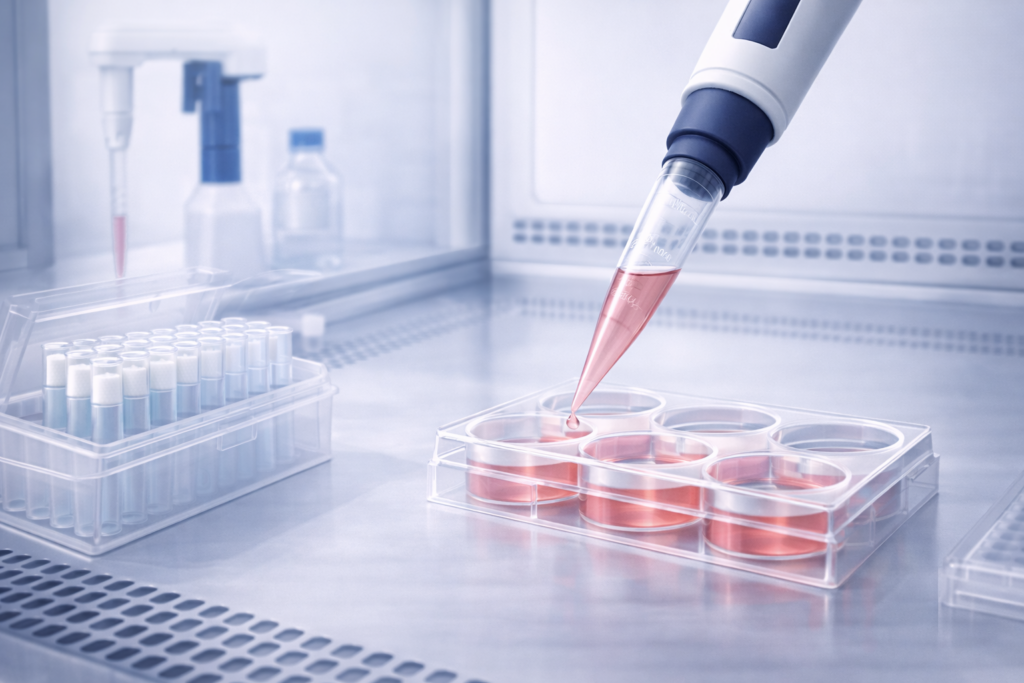
Cell culture is arguably the most contamination-sensitive workflow in the modern laboratory. Unlike chemical assays where a mistake might only ruin one run, a single breach in aseptic technique can introduce bacteria, fungi, or mycoplasma that destroy months of cell line propagation. Furthermore, the physical handling of cells-how they are aspirated, mixed, and dispensed-directly impacts cell viability and experimental reproducibility.
Choosing the correct liquid handling tools is the first line of defense. The interaction between the pipette and the consumable tip defines the accuracy of the volume delivered and the sterility of the environment. A poor seal leads to dripping; a lack of aerosol barriers leads to cross-contamination; and improper tip geometry can shear sensitive cells.
This guide provides a comprehensive framework for selecting the right liquid handling tools. We will cover how to match pipette tips to specific tissue culture (TC) tasks, standardized workflows to minimize error, and procurement strategies to keep the biosafety cabinet (BSC) stocked with reliable, sterile consumables.
Quick Cell Culture Selector
For many lab managers and technicians, the immediate question is not “how does it work,” but “what do I need for this specific task?” The following tools break down the decision-making process based on common TC workflows and environmental constraints.
1. Workflow Table: Matching Task to Tool
| Task | Typical Volume | Vessel | Main Risk | Recommended Pipette | Recommended Tip Type | Packaging Note |
|---|---|---|---|---|---|---|
| Media Preparation & Aliquoting | 5 mL – 50 mL | Bottles, 50mL Tubes | Contamination Source | Serological Pipette + Controller | Serological (Polystyrene) | Individually wrapped (paper/plastic peel) |
| Seeding Cells (6/12/24 Well Plates) | 0.5 mL – 2 mL | Multi-well Plates | Uneven density / Edge effect | P1000 or Electronic P1000 | sterile Filter Tip (1000 µL) | Racked, hinged box |
| Seeding Cells (96/384 Well Plates) | 10 µL – 200 µL | 96-well Plates | Fatigue / Consistency | Multichannel (8 or 12 ch) | Sterile Filter Tip (Low Retention) | Racked, compatible with multichannel spacing |
| Feeding / Media Change | 2 mL – 20 mL | T-Flasks (T25, T75) | Drips / Splash-back | Serological Pipette | Serological (Standard) | Individually wrapped |
| Passaging (Trypsinization) | 1 mL – 10 mL | T-Flasks, Conical Tubes | Cell Shear / Clumping | P1000 or Serological | Wide-Bore Tip or Serological | Racked or wrapped |
| Adding Antibiotics / Growth Factors | 1 µL – 200 µL | Cryovials, Microtubes | Accuracy / Dead Volume | P20 or P200 | Sterile Filter Tip (Low Retention) | Racked |
| Gentle Resuspension (Pellet) | 1 mL – 5 mL | 15mL / 50mL Tubes | Cell Shear / Viability | P1000 | Wide-Bore Tip (1000 µL) | Racked |
| Supernatant Removal (Aspiration) | Variable | Plates / Dishes | Disturbing the pellet/monolayer | Vacuum Aspirator or P1000 | Unfiltered Standard Tip (economic choice) | Bulk (if sterilized) or Racked |
2. Decision Tree: The “IF/THEN” Logic
- IF working inside a Biosafety Cabinet (BSC) daily:
- THEN prioritize sterile, racked pipette tips. Avoid bulk bags that require handling tips with gloves to rack them, as this introduces a major contamination vector.
- THEN ensure tip boxes have hinged lids that can be easily opened/closed with one hand to maintain laminar airflow.
- IF processing many wells or replicates (e.g., screening assays):
- THEN switch to multichannel pipettes or electronic pipettes with “repeat dispense” modes.
- THEN verify your tips are compatible with the mounting force of a multichannel pipettor to ensure an even seal across all channels.
- IF cells are fragile (e.g., Neurons, Primary cells, Stem cells):
- THEN prioritize wide-bore tips to reduce shear stress during mixing.
- THEN use electronic pipettes with adjustable aspiration speeds to slow down the flow rate.
- IF foaming or bubbles are a recurring issue:
- THEN use “Low Retention” tips to prevent surfactants in the media from sticking to the wall.
- THEN use reverse pipetting technique or electronic modes designed to leave the last drop (blow-out) behind.
- IF contamination incidents occur sporadically:
- THEN mandate the use of filter tips for all micropipette steps to prevent aerosol buildup in the pipette shaft.
- THEN switch to individually wrapped serological pipettes rather than bulk canisters.
What Pipettes a Cell Culture Lab Actually Needs
A cell culture facility does not need every pipette on the market, but it does need a specific core set to function efficiently.
Micropipettes (P20, P200, P1000)
These are the workhorses for volumes under 1 mL.
- P1000 (100–1000 µL): The most used micropipette in TC. Used for resuspending cell pellets, adding trypsin, and washing small plate wells. A lab needs at least one dedicated P1000 per hood.
- P200 (20–200 µL): Essential for plating cells into 96-well plates and adding larger volumes of supplements.
- P20 (2–20 µL): Critical for high-concentration additives, antibiotics, and expensive growth factors. Accuracy here prevents overdosing cells with toxic selection agents.
Serological Pipettes + Controller
For volumes over 1 mL, micropipettes become inefficient and risky (liquid touching the shaft). Serological pipettes (typically 5mL, 10mL, and 25mL) are required. The pipette controller (pipette aid) should have distinct gravity-dispense and blow-out settings. Cordless models are preferred in the BSC to prevent airflow disruption caused by dragging cords across the sash.
Single-channel vs. Multichannel
While single-channel pipettes offer precision for individual tubes, they are a liability for 96-well plates. Fatigue leads to shaking hands and variable data. A generic lab setup should include at least one 8-channel or 12-channel pipette (P200 range) specifically for seeding plates and changing media.
Manual vs. Electronic Features
Electronic pipettes are often viewed as a luxury, but in cell culture, they are a standardization tool.
- Speed Control: You can lock the aspiration speed to “Slow” for shear-sensitive cells, ensuring every technician treats the cells exactly the same way.
- Repeat Dispense: This allows a user to aspirate enough liquid for a whole row and dispense it in one go, reducing time the culture is exposed to open air.
Choosing Tips for Aseptic Work
The pipette is the engine, but the tip is the tire-it’s where the rubber meets the road. Using high-quality pipette tips is non-negotiable for aseptic workflow.
Sterile vs. Non-Sterile
In a molecular biology lab, you might get away with autoclaving bulk tips. In cell culture, this is risky. Autoclaving can leave water residue (leading to dilution errors) or fail to eliminate endotoxins. TC labs should purchase pre-sterilized tips certified to a Sterility Assurance Level (SAL) of 10⁻⁶.
Filter / Aerosol-Barrier Tips
Filter tips contain a porous barrier (usually polyethylene) inside the proximal end of the tip.
- Why they matter: When you aspirate warm media, aerosols/vapor can rise into the pipette shaft. If the next user creates a vacuum, those aerosols can be blown out into a new culture.
- Recommendation: Use filter tips for all cell culture activities involving micropipettes. The cost difference is negligible compared to the cost of decontamination and lost cell lines.
Low-Retention vs. Standard
Standard polypropylene tips can retain liquid, especially with viscous fluids like fetal bovine serum (FBS) or glycerol. Low-retention tips use a hydrophobic polymer blend or coating to ensure the liquid slides off fully.
- Use Case: Critical when pipetting expensive growth factors or when precise stoichiometry is required for transfection complexes.
Tip Geometry and Dimensions
- Extended Length: Longer tips (often called “reach” tips) allow you to reach the bottom of a 15mL conical tube or a deep-well block without the pipette shaft touching the side of the vessel. This is a massive aseptic advantage.
- Wide-Bore: These tips have a wider orifice, reducing the shear stress on cells during passage. They are essential for minimizing damage to large cell clusters or organoids.
Fit and Seal: The Universal Myth
Many manufacturers sell “universal tips” designed to fit most pipette brands. While convenient, “universal” does not guarantee an airtight seal on every specific barrel. A loose fit causes air leakage, which leads to dripping media (contamination risk) and inaccurate volumes. Always validate that your universal tips require moderate force to mount and do not fall off during ejection.
Mini-Table: Tip Selection Summary
| Tip Type | Best in Cell Culture For… | Trade-offs | Quick Check |
|---|---|---|---|
| Filter Tips (Sterile) | General TC work, virus handling, mycoplasma prevention | Higher cost than non-filter | Ensure filter doesn’t touch liquid |
| Standard Tips (Sterile) | Aspiration of waste, non-critical buffer prep | Aerosol risk in pipette shaft | Only use for waste/cleaning |
| Low-Retention | Viscous serums, enzymes, transfection reagents | Slightly more expensive | Inspect tip after dispense |
| Wide-Bore | Fragile cells, genomic DNA, viscous slurries | Lower accuracy with small volumes | Use only when necessary |
| Extended Length | 15mL/50mL tubes, deep blocks | Can be wobbly on some pipettes | Check box depth compatibility |
Aseptic Technique + Pipetting Technique (Practical Checklists)
Even the best pipette tips cannot prevent contamination if the user’s technique is flawed.
Checklist: Setting Up the BSC Workflow
- Airflow Check: Ensure the sash is at the correct height and vents are not blocked by boxes.
- Zone Layout: Establish a “Clean to Dirty” workflow.
- Left: Clean pipettes, unopened tip boxes.
- Center: Active workspace (plates, flasks).
- Right: Waste container, aspirator, used tips.
- Decontamination: Wipe down pipette barrels with 70% ethanol before entering the hood.
Checklist: Tip Handling
- One-Hand Rule: Arrange tip boxes so you can open, mount a tip, and close the box with one hand. This prevents your other hand from passing over open sterile items.
- Don’t Hover: Never hover an active pipette or hand over an open bottle or plate. Approach from the side or an angle.
- Don’t Touch: Never touch the tip to the outside of a flask or the rim of a waste container. If in doubt, discard.
Checklist: Aspiration & Dispense
- Vertical Aspiration: Hold the pipette vertically (within 20 degrees) when aspirating to ensure accurate volume.
- Angled Dispense: Touch the tip against the vessel wall at a slight angle when dispensing media to avoid splashing (unless seeding plates where you drip into the center).
- Immersion Depth: Submerge the tip only 2-3mm below the surface. Going too deep coats the outside of the tip, wasting reagent and increasing drip risk.
Checklist: When to Change Tips
- Between Cell Lines: Mandatory to prevent cross-contamination.
- Between Reagents: Mandatory to prevent chemical reactions in stock bottles.
- Touching Non-Sterile Surfaces: If you touch the hood surface, sash, or outside of a bottle -> Change immediately.
- Repetitive Wells: You can reuse a tip for multiple wells of the same plate with the same cell line, provided you do not touch the liquid in the well (air dispense). If you touch the media, change the tip.
Standardization & Purchasing (For Lab Managers)
Procurement is often disconnected from the daily reality of the lab. Standardization of pipette tips can reduce inventory headaches and improve experimental consistency.
Racked vs. Reload vs. Bulk
- Racked (Sterile): The gold standard for cell culture. Ready to use, minimal handling.
- Reload Systems (Sterile): These save plastic waste. The user transfers a sterile wafer of tips into a reusable rack. Caution: The rack must be autoclaved regularly, and the transfer must be done aseptically in the hood.
- Bulk: Generally unacceptable for aseptic cell culture due to the high risk of contamination during hand-racking.
Lot Consistency and QC Claims
When sourcing tips, look for the manufacturer’s certificates.
- Sterility: Gamma irradiation or E-beam sterilization (SAL 10⁻⁶).
- Purity: Certified free of RNase, DNase, DNA, Pyrogens (Endotoxins), and ATP. “Pyrogen-free” is critical for cell culture, as endotoxins can activate immune cells or alter cellular phenotypes.
How to Pilot-Test New Tips
Before buying a year’s supply of a cheaper brand, run a “Pilot Week”:
- Visual Check: Are tips straight? Do they have flash (plastic burrs)?
- Fit Test: Do they mount on your specific pipettes without jamming? Do they eject easily?
- Leak Test: Aspirate water and hold for 10 seconds. Is there a droplet?
- Culture Test: Use them for one non-critical cell line for a week to check for cytotoxicity or contamination issues.
Inventory Strategy
Try to consolidate to 1-2 reliable brands. Mixing five different brands of “universal” tips leads to confusion about which tip fits which pipette, increasing the likelihood of a poor seal and subsequent contamination.
Troubleshooting (Fast)
| Symptom | Probable Cause | Quick Fix |
|---|---|---|
| Frequent Contamination | Aerosols entering pipette shaft | Switch to Filter Tips immediately; clean pipette barrel. |
| Leaking Tips / Drips | Poor tip fit / Loose seal | Check tip compatibility; press harder to mount; switch tip brands. |
| Bubbles / Foam | Dispensing too fast / Blow-out | Dispense against wall; use electronic “slow” mode; avoid full blow-out. |
| Inconsistent Seeding | Clogged tip or poor technique | Pre-wet tip (aspirate/dispense once) before transfer; check cell suspension for clumps. |
| Splashing | Ejection speed too high | Eject tips gently into waste; do not “shoot” them. |
| Tip Falling Off | Wrong size / barrel worn | Check pipette barrel for scratches (wear and tear); verify tip compatibility. |
| Wrist Fatigue | High ejection force | Switch to “Soft Eject” tips or electronic pipettes. |
| Uneven Volume (Multi) | Tips not seating evenly | Use “Opti-load” or specialized tips designed for your multichannel brand. |
| Cells Dying in 1 Well | Chemical carryover | Change tips more frequently; ensure tips are not touching sash/surface. |
| Liquid stuck in tip | Surface tension | Switch to Low-Retention tips. |
FAQs
Do I need filter tips for all cell culture work?
It is highly recommended. While you can use non-filter tips for aspirating waste, using filter tips for handling cells and media prevents aerosols from contaminating the internal mechanism of the pipette, which is difficult to clean and a common source of mycoplasma spread.
Are racked tips always better in a BSC?
Yes. Racked tips allow for single-handed mounting, which is crucial for maintaining aseptic technique. Reload systems are a good eco-friendly alternative, provided the transfer mechanism doesn’t require touching the tips.
How do I know my tip seal is airtight?
Perform a simple leak test. Aspirate the maximum volume of water (or colored liquid) and hold the pipette vertically for 15–20 seconds. If a droplet forms at the tip orifice, the seal is compromised.
When does low-retention matter in TC?
Low-retention matters when handling viscous liquids like undiluted FBS, DMSO, or glycerol, and when working with very small volumes (<10 µL) where retained liquid represents a significant percentage error.
Can I standardize one tip line for the whole lab?
Yes, and you should. Standardizing on a high-quality brand of pipette tips simplifies ordering, ensures consistent experimental results across different users, and guarantees that the tips actually fit the lab’s pipettes.
Is it okay to autoclave my own tips for cell culture?
It is risky. Autoclaves in shared labs may not reach the consistent temperature/pressure required to destroy all endotoxins. Furthermore, moisture retained in the tip box can affect volume accuracy. Pre-sterilized tips are safer for sensitive cultures.
What is the difference between “Sterile” and “Certified Free of…”?
“Sterile” refers to the absence of living organisms (bacteria/fungi). “Certified Free of RNase/DNase/Endotoxins” refers to the absence of biological byproducts. You need both for high-quality cell culture.
Why use a wide-bore tip?
Wide-bore tips reduce shear force. When passing cells through a standard narrow orifice, the physical pressure can rupture cell membranes or mechanically signal stress pathways. Wide-bore tips are gentler on genomic DNA and fragile cell types.
Key Takeaways
- Sterility First: Always prioritize pre-sterilized, racked tips with an SAL of 10⁻⁶ for cell culture.
- Barrier Protection: Use filter tips to protect the pipette shaft from aerosols and prevent cross-contamination between cell lines.
- Workflow Logic: Match the tool to the task-use serological pipettes for bulk media and micropipettes for precision additives.
- Technique Matters: Even the best tips fail if the user hovers over open vessels or touches the tip to non-sterile surfaces.
- Standardization: Minimize variables by sticking to one or two high-quality tip brands that are validated to fit your specific pipettes.
- Ergonomics: Use multichannel and electronic pipettes for high-throughput plating to reduce fatigue and error.
- Specialized Geometry: Utilize wide-bore tips for fragile cells and extended-length tips to keep the pipette barrel out of deep tubes.
- Consumable Quality: Ensure tips are certified free of endotoxins (pyrogens), not just bacteria.