
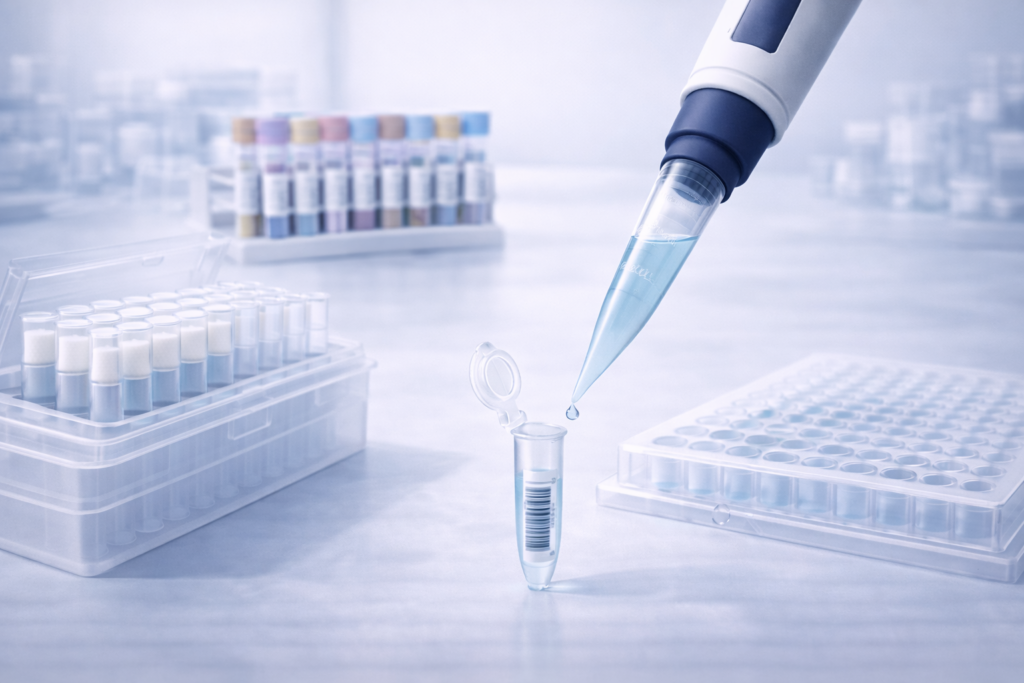
In a clinical laboratory, the margin for error is effectively zero. Unlike research environments where an experiment can simply be repeated, clinical samples-patient blood, tissue, or urine-are often unique, limited in volume, and time-sensitive. A small variance in liquid handling can lead to failed Quality Control (QC), the need for re-draws, delayed patient diagnosis, or, in the worst-case scenario, erroneous results.
While automated analyzers handle the bulk of high-throughput testing, manual pipetting remains the backbone of sample aliquoting, reagent preparation, specialized molecular assays, and complex method validation. Variability in these manual steps is a primary source of analytical error.
This guide provides a structured approach to selecting the right liquid handling tools. By matching the specific clinical workflow to the correct instrument and consumable, laboratories can improve accuracy, significantly reduce the risk of cross-contamination, and standardize purchasing to minimize inventory complexity.
Quick Clinical Lab Selector
This section breaks down liquid handling needs by common clinical workflows. Use these tables to quickly identify the optimal configuration for specific bench tasks.
1. Workflow & Selection Table
| Workflow | Typical Volumes | Sample Type | Main Risk | Recommended Pipette | Recommended Tip Type | Packaging Format |
|---|---|---|---|---|---|---|
| Sample Aliquoting & Secondary Tubes | 200 µL – 1000 µL | Serum, Plasma, Whole Blood | Cross-contamination; Aerosols | Single-channel (P1000) | Filter / Aerosol Barrier | Racked (Sterile) |
| Reagent Prep & Controls | 1 mL – 10 mL | Buffers, QC Material, Standards | Volume inaccuracy; Evaporation | Serological or Macro-pipette (5mL/10mL) | Standard (Non-filter) | Bulk or Individually Wrapped |
| Immunoassays (ELISA/CLIA prep) | 50 µL – 300 µL | Reagents, Wash Buffers, Conjugates | Repetitive strain; Speed; Splashing | Multichannel (8 or 12-channel) | Standard (High quality fit) | Racked or Refill Towers |
| Molecular Diagnostics (Pre-PCR) | 2 µL – 20 µL | DNA/RNA extracts, Master Mix | Amplicon Contamination; Aerosols | Single-channel (P20/P10) or Electronic | Filter / Aerosol Barrier | Racked (Sterile) |
| Microbiology (Plating/Dilutions) | 100 µL – 1000 µL | Broth, Suspensions, Urine | Biohazard exposure; Splash-back | Single-channel (Fixed volume often used) | Standard or Wide-Bore (for viscous samples) | Bulk (if sterility allows) or Racked |
| Clinical Chemistry (Manual Dilutions) | 10 µL – 1000 µL | Serum, Urine, Reagents | Carryover; Dilution precision | Single-channel (P200/P1000) | Low Retention (if critical) | Racked |
| Plate-based Workflows (96/384-well) | 5 µL – 200 µL | Various | Fatigue; Missed wells | Electronic Multichannel | Standard or Low Retention | Racked |
2. Decision Tree for Selection
When evaluating a specific protocol, apply this logic to determine the necessary equipment specifications:
- IF the workflow involves high-throughput microplates (ELISA/PCR setup) → THEN switch to Multichannel or Electronic pipettes to ensure consistent timing across the plate.
- IF the primary risk is amplicon contamination or infectious carryover → THEN mandate Filtered Barrier tips and enforce a strict tip-change policy between every well.
- IF handling viscous samples (Serum, Glycerol-based enzymes, Tween) → THEN select Low-Retention tips and utilize reverse pipetting technique.
- IF accessing deep secondary tubes or vacutainers is required → THEN select “Extended Length” tip geometry to prevent the pipette shaft from touching the tube walls.
- IF standardization is the priority → THEN consolidate to three core pipette sizes (P20, P200, P1000) and validate a single tip brand that fits all three securely.
What Pipettes a Typical Clinical Lab Needs
Standardizing the pipette inventory simplifies calibration schedules and training. A lean inventory typically consists of the following categories.
Essential Adjustable Micropipettes
Most manual clinical work can be accomplished with three primary “families” of adjustable air-displacement pipettes:
- P1000 (100–1000 µL): The workhorse for aliquoting serum, adding diluents, and reconstituting lyophilized controls.
- P200 (20–200 µL): Essential for adding reagents to cuvettes, creating larger dilution series, and general chemistry prep.
- P20 (2–20 µL): Critical for molecular master mix preparation, adding standards, and handling expensive reagents where precision is paramount.
Multichannel Use Cases
In clinical immunology and serology, speed is a functional component of accuracy. If a technician pipettes a 96-well ELISA plate using a single-channel pipette, the reaction in the first well starts significantly earlier than the last well, creating “drift” in optical density readings. Multichannel pipettes (8-channel or 12-channel) synchronize the start times of reactions across rows or columns, reducing intra-assay variability.
When Electronic Pipettes Help
Electronic pipettes are often viewed as a luxury, but in high-volume testing, they are ergonomic necessities. They significantly reduce the force required to mount and eject tips, lowering the risk of Repetitive Strain Injury (RSI). Furthermore, electronic modes like “multi-dispense” (filling a plate from a single aspiration) improve repeatability between technicians by removing the variability of manual plunger speed.
Serological Pipettes and Controllers
For volumes greater than 1 mL-such as preparing liters of wash buffer, aliquoting media for microbiology, or transferring bulk urine samples-serological pipettes combined with electronic controllers are required. They offer speed and preventing the contamination associated with pouring liquids from bottles.
Choosing Tips for Clinical Work (Fit, Carryover, and QA Reality)
The pipette is the engine, but the tip is the tires. A high-precision engine is useless if the tires slip. The compatibility between the pipette cone and the plastic tip is the single most critical factor in volumetric accuracy.
Fit and Seal: The #1 Accuracy Driver
Air-displacement pipettes rely on an airtight seal to function. If the tip does not fit the pipette cone perfectly, air escapes, and the aspirated volume will be lower than the setting. In clinical labs using mixed brands of pipettes, “universal” tips must be validated to ensure they truly fit all pipette models in use. Signs of poor fit include:
- Visible droplets remaining in the tip after dispensing.
- Tips that require excessive force to mount or eject.
- Tips falling off during dispense cycles.
Filter/Barrier vs. Non-Filter
Filter tips contain a porous barrier (usually polyethylene) that prevents aerosols from the liquid sample from entering the pipette shaft.
- Where it matters: Essential for Molecular Diagnostics (preventing DNA contamination) and Microbiology/Virology (protecting the pipette and user from pathogens).
- Where it is optional: General chemistry reagent preparation or pH buffering, where aerosols do not pose a cross-contamination risk.
Low-Retention vs. Standard
Standard polypropylene tips can retain a thin film of liquid on their inner walls, particularly with fluids that have low surface tension (containing detergents) or high viscosity (serum/plasma).
- Low-Retention: These tips undergo a surface treatment to make them super-hydrophobic. This ensures maximum sample recovery.
- Usage: Highly recommended for PCR master mixes (which contain glycerol/detergents) and protein-rich clinical samples to ensure the exact volume is delivered.
Sterile vs. Non-Sterile
Sterile tips are irradiated to eliminate biological contaminants.
- Sterile: Mandatory for cell culture, microbiology, and molecular workflows.
- Non-Sterile: Acceptable for general chemistry, teaching benches, or loading waste/wash buffers where biological sterility is not a functional requirement.
Packaging Considerations
- Racked: Pre-loaded in boxes. Best for sterile workflows and efficiency. Prevents hand contact with tips.
- Reload/Refill: Towers of stacked plates that clip into empty racks. Reduces plastic waste and shipping costs. Ideal for high-volume non-sterile work.
- Bulk: Loose tips in a bag. Cheapest option, but requires hand-racking which introduces contamination risk. Generally unsuitable for sensitive clinical diagnostics.
Tip Selection Mini-Table
| Tip Type | Best For | Trade-offs | Quick Validation Check |
|---|---|---|---|
| Standard Universal | General Chemistry, buffers | May retain viscous liquid | Check for droplets left after dispense |
| Filter / Barrier | PCR, Infectious samples | Higher cost | Ensure filter doesn’t touch liquid at max vol |
| Low Retention | Serum, Enzymes, Detergents | Premium pricing | Compare residual liquid vs. standard tip |
| Wide Bore | Genomic DNA, Macrophages | Lower precision on small vols | Visually check orifice width |
Technique + Process Controls
Even the best pipette tips and pipettes cannot compensate for poor operator technique. Standardization of physical movement is required to reduce Inter-Operator Variability.
Checklist: Technique Best Practices
- Tip Mounting: Use a firm “press and twist” motion (if using universal tips) to ensure a seal. Do not hammer the pipette into the rack.
- Aspiration Angle: Hold the pipette vertically (90 degrees). Aspirating at an angle changes the hydrostatic pressure and leads to inaccurate volumes.
- Immersion Depth: Immerse the tip only 2-3mm into the liquid. Going deeper forces liquid to cling to the outside of the tip, which may drip into the receiving vessel.
- Dispensing: Touch the tip against the sidewall of the receiving vessel (at 45 degrees) or the liquid surface to break the surface tension and ensure the full dose leaves the tip.
- Pre-wetting: Aspirate and dispense the sample liquid 2-3 times before the final draw. This humidifies the air inside the tip and coats the tip surface, significantly improving accuracy.
Tip-Change Rules
- Between Samples: Always change tips to prevent patient-to-patient carryover.
- Between Reagents: Change tips if the tip touched the destination vessel.
- PCR/Plates: When adding master mix to a plate, a single tip can technically be used if it never touches the wells, but changing tips per column is a safer standard to prevent accidental aerosol carryover.
Reverse Pipetting
For viscous clinical samples like serum or whole blood:
- Press plunger to the second stop.
- Immerse and aspirate (drawing up more liquid than needed).
- Dispense to the first stop (delivering the exact volume).
- Discard the remaining liquid.
This technique prevents the air bubble that often forms when dispensing viscous fluids.
Basic Care
- Daily: Visual check for cracks in the shaft or dried residue. Clean the exterior with 70% ethanol.
- Calibration: Verify calibration every 3–6 months (or per local regulation like CLIA/ISO 15189) using gravimetric testing.
Standardization & Purchasing (Lab Manager View)
Fragmented purchasing leads to “drawer clutter” where mismatched tips and pipettes accumulate, causing fit issues and wasted budget.
Build a “Minimal SKU” Plan
Standardize around specific volume bands. A typical setup utilizes:
- Micro Family: 0.5–10 µL pipettes + 10 µL tips.
- Mid Family: 20–200 µL pipettes + 200 µL tips.
- Macro Family: 100–1000 µL pipettes + 1000 µL tips.
Avoid “odd” sizes (e.g., 300 µL or 5 mL micropipettes) unless a specific assay mandates it.
Validating a New Tip Line
Before switching suppliers for cost savings, perform a 1-week validation:
- Fit Check: Does it mount securely on all lab pipettes without hammering?
- Leak Check: Aspirate water, hold vertical for 20 seconds. Does a droplet form?
- Gravimetric Check: Weigh 10 dispenses of distilled water on an analytical balance. Calculate the CV (Coefficient of Variation). It should be <1-2% depending on volume.
- Ejection Force: Can technicians eject the tip without strain?
Training & Competency
Create a one-page competency checklist for new staff covering:
- Selection of correct pipette for volume.
- Proper tip mounting.
- Forward vs. Reverse pipetting demonstration.
- Maintenance (cleaning) knowledge.
Troubleshooting
Common liquid handling issues, their causes, and immediate fixes.
| Issue | Probable Cause | Immediate Fix |
|---|---|---|
| Inconsistent QC / Drifting | Poor tip seal or operator fatigue | Check tip fit; switch to electronic pipette for long runs. |
| Carryover (Positive in Negative Control) | Aerosol contamination | Switch to pipette tips with filters; clean pipette shaft. |
| Aerosols / Splashing | Jerky plunger release | Control thumb speed; use electronic pipette “soft” mode. |
| Tips Falling Off | Mismatched tip cone geometry | Validate tip brand compatibility; check for worn pipette O-rings. |
| Bubbles / Foaming | Blowing out too hard / fast | Stop at the first stop; do not blow out into proteinaceous liquids. |
| Inaccurate Low Volumes (<10µL) | Thermal expansion or evaporation | Pre-wet tips; avoid holding the pipette body in a warm hand too long. |
| Hard to Eject Tips | Poor manufacturing tolerance | Switch tip brands; check pipette ejection mechanism. |
| Liquid Dripping | Tip immersion too deep | Immerse only 2-3mm; hold vertically. |
| Slow Workflow | Manual repetition | Move to multichannel or electronic dispensing modes. |
| Wrist/Thumb Pain | High spring force | Evaluate ergonomic pipettes or electronic assist. |
FAQs
1. Do clinical labs need filter tips for every application?
No. Filter tips are critical for molecular diagnostics (PCR), microbiology, and handling infectious samples. For general chemistry reagent preparation or non-infectious buffers, standard tips are cost-effective and safe.
2. What is the simplest way to standardize tips across different pipette brands?
Test “Universal” fit tips. Ask suppliers for samples and perform a leak test and a mounting test on every brand of pipette in your lab. Once a universal tip is validated, stick to that specific manufacturer and lot.
3. How do I know if my pipette seal is airtight?
Aspirate the maximum volume of water into the tip and hold the pipette vertically for 20 seconds. If a droplet forms at the end of the tip, you have a leak-either from a poor tip fit or a damaged pipette O-ring.
4. When do low-retention tips actually improve results?
They provide measurable improvement when handling fluids with low surface tension (detergents like Triton-X, Tween) or high viscosity (glycerol, serum, plasma). For water or simple buffers, the improvement is negligible.
5. Racked vs. Reload vs. Bulk: What’s best for busy benches?
For high-volume clinical benches, “Reload” systems (wafers that snap into racks) offer the best balance of speed, sterility, and reduced plastic waste. Bulk tips are generally too slow and risky for clinical diagnostics.
6. Can I autoclave my pipette tips?
Most standard and low-retention tips are autoclavable. However, pipette tips with filters should usually not be autoclaved, as the heat can damage the filter matrix or block airflow, unless the manufacturer explicitly states otherwise.
7. How often should pipettes be calibrated?
Clinical standards (like CLIA or ISO 15189) often dictate the schedule, usually every 6 months. However, heavy-use pipettes should be checked for accuracy (calibration verification) every 3 months or whenever dropped.
8. Why is my 1000 µL pipette inaccurate when dispensing 100 µL?
Pipettes are most accurate at their nominal (maximum) volume. Accuracy decreases significantly below 10% of the rated volume. For 100 µL, use a P200 pipette, not a P1000, for better precision.
Key Takeaways
- Match the tool to the task: Use P1000/P200/P20 for general work, and multichannels for plate-based immunoassays.
- Tip fit is paramount: A tip that leaks air will deliver inaccurate volumes, regardless of pipette calibration.
- Filter tips are insurance: Use them for all PCR and infectious workflows to prevent amplicon contamination and shaft contamination.
- Viscosity requires strategy: Use low-retention tips and reverse pipetting for serum and plasma to ensure full sample delivery.
- Standardize early: Limit SKU counts to core families (10/200/1000) to simplify ordering and training.
- Technique matters: Vertical aspiration, consistent immersion depth, and pre-wetting are free ways to improve accuracy.
- Ergonomics equals accuracy: Electronic pipettes reduce fatigue, which directly correlates to fewer errors in long runs.
- Validate changes: Never switch tip brands without a gravimetric and fit validation.