
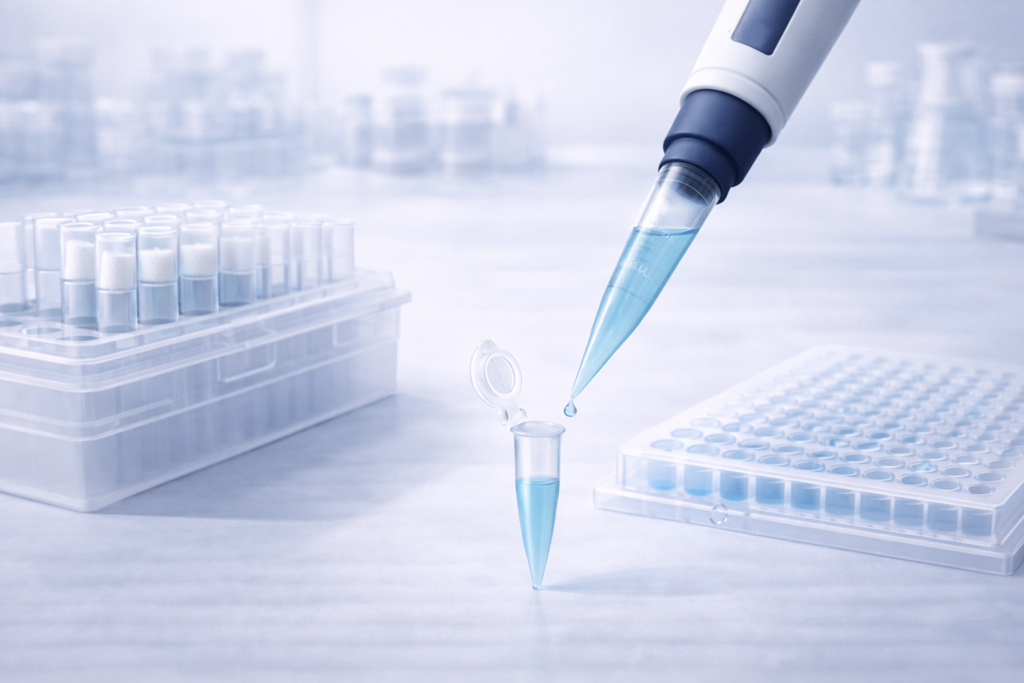
Pipettes and Tips for Molecular Biology Workflows
Molecular biology workflows are uniquely unforgiving. Unlike general chemistry or media preparation, where a 2% volume variance might be negligible, molecular biology applications rely on the precise manipulation of microliter and sub-microliter volumes. In assays like qPCR, Next-Generation Sequencing (NGS) library prep, or enzyme kinetics, pipetting accuracy directly dictates the validity of the data. Furthermore, the risk of cross-contamination-amplicon carryover or RNase introduction-can compromise weeks of work in a single careless movement.
For lab managers and researchers, selecting the right liquid handling tools is not just a purchasing decision; it is a fundamental component of experimental design. This guide provides a workflow-first approach to selecting pipettes and pipette tips, helping you build a setup that ensures reproducibility, minimizes waste, and standardizes operations across the bench. We will cover a quick workflow selector, a recommended starter set, tip selection criteria, and a procurement checklist for standardization.
Quick Workflow Selector
Different assays impose different demands on your liquid handling tools. The following table maps common laboratory tasks to the specific pipette formats and tip types required to maintain data integrity and workflow efficiency.
1. Workflow Mapping Table
| Workflow / Application | Typical Volumes | Primary Risk Factors | Recommended Pipette Format | Recommended Tip Type | Packaging Considerations |
|---|---|---|---|---|---|
| PCR / qPCR Setup | 2 µL – 50 µL | Aerosol contamination, volume variance (Ct shifts). | Single-channel (manual or electronic) for mastermix; Multichannel for plate loading. | Filtered (Aerosol Barrier) | Racked, Pre-sterilized. |
| DNA/RNA Extraction | 100 µL – 1000 µL | Cross-contamination, viscous lysis buffers. | Single-channel; Wide-bore options if handling genomic DNA (gDNA) to prevent shearing. | Filtered; Wide-bore for gDNA. | Racked or Reload systems. |
| Serial Dilutions / Normalization | 1 µL – 200 µL | Accuracy at low volumes, carryover between steps. | Electronic single or multichannel (for mixing consistency). | Low Retention (crucial for recovery). | Racked. |
| Enzyme Reactions (Restriction/Ligation) | 0.2 µL – 10 µL | Enzyme viscosity, temperature sensitivity, cost of reagents. | High-precision single-channel (P2, P10). | Low Retention, Filtered. | Racked. |
| Aliquoting Reagents / Buffers | 1 mL – 50 mL | Speed, fatigue, sterility maintenance. | Electronic repeater pipette or serological pipettes. | Standard or Syringe tips (for repeaters). | Bulk (if sterile) or Racked. |
| Plate-Based Assays (ELISA, 96/384 well) | 5 µL – 300 µL | Repetitive strain injury (RSI), well-to-well variability. | Multichannel (8 or 12 channel); Electronic preferred for 384-well. | Standard or Filtered (assay dependent). | Racked (aligned for multichannel pick-up). |
| Sterile Cell Culture Work | 1 mL – 25 mL | Bacterial/Fungal contamination. | Serological controllers; Single-channel for additives. | Filtered; Serologicals. | Individually wrapped or Racked. |
| Viscous / Foaming Solutions | Variable | Undelivered volume, bubble formation in optical reads. | Positive Displacement Pipette. | Capillary / Piston tips. | Specialized packaging. |
2. Decision Tree: Selection Logic
Use this logic flow to make rapid decisions at the bench:
- IF dispensing volumes ≤10 µL:
- THEN prioritize a dedicated P10 or P2 pipette. Use low-retention tips to ensure the full dose leaves the plastic.
- IF setting up 96-well plates with ≥3 replicates:
- THEN switch to a multichannel pipette immediately. Consider electronic pipettes to automate the mixing step and reduce thumb fatigue.
- IF the step is contamination-sensitive (PCR, RNA work, Radioisotopes):
- THEN strictly use aerosol barrier (filtered) tips. Never rely on “careful pipetting” alone to stop aerosols.
- IF sample recovery is poor or the liquid is low surface tension (detergents, Triton X-100):
- THEN use low-retention polymer tips. Standard polypropylene may retain up to 1-2 µL of liquid, altering concentrations.
- IF accessing deep vessels (15mL/50mL tubes) or narrow cryovials:
- THEN select “extended length” or “long” tips to prevent the pipette shaft from contacting the vessel walls and picking up contaminants.
Build a Practical Pipette Set
A lab does not need every pipette model on the market. Instead, build a “starter set” based on coverage and overlap. Overlap between volume ranges is critical; pipettes are most accurate in the middle-to-high end of their range, and least accurate at the bottom 10%.
Minimal Set for a Small Lab (The “Core 4”)
For a standard molecular biology station, this set covers 95% of tasks:
- P2 or P10 (0.2–2 µL or 0.5–10 µL): Essential for enzyme additions, primers, and high-concentration template DNA. The P10 is generally more versatile, but the P2 is necessary if you routinely pipette volumes under 1 µL.
- P20 (2–20 µL): The workhorse for reaction setups, mastermix distribution, and RNA normalization.
- P200 (20–200 µL): Used for buffer addition, sample dilution, and resuspension.
- P1000 (100–1000 µL): Used for large volume washes, elution steps, and media handling.
Lab Ops Note: Avoid relying on a P1000 to pipette 100 µL. While technically within range, a P200 operating at 100 µL offers superior precision and ergonomics compared to a P1000 operating at its minimum limit.
When Multichannel Pays Off
Manual single-channel pipetting into a 96-well plate requires nearly 300 plunger depressions (including tip changes) for a single reagent. A multichannel pipette reduces this to 12 movements.
- 8-Channel: Standard for 96-well plates working column-wise.
- 12-Channel: Standard for 96-well plates working row-wise.
- Electronic Multichannel: Highly recommended if the lab runs >5 plates per day. The electronic motor ensures consistent aspiration/dispense speeds across all channels, reducing the “edge effect” or human variation between columns.
Air Displacement vs. Positive Displacement
- Air Displacement (Standard): A cushion of air sits between the piston and the liquid. Ideal for aqueous solutions (buffers, water, DNA). This covers 90% of molecular biology work.
- Positive Displacement: The piston makes direct contact with the liquid (inside a specialized capillary tip).
- Use when: Handling volatile liquids (acetone, ethanol) that evaporate into the air cushion, causing leaks.
- Use when: Handling viscous liquids (glycerol, restriction enzymes) that stick to standard tips or cannot be displaced by air pressure alone.
Ergonomics and Repeatability
Pipetting fatigue is a real source of experimental error. As thumb muscles tire, the speed and smoothness of the plunger depression degrade, leading to inconsistent volumes.
- Weight: Lighter pipettes generally reduce hand strain.
- Plunger Force: Look for “low force” springs.
- Finger Hook: A good hook allows the pipette to rest in the hand without a tight grip, reducing static muscle tension.
Tip Selection for Molecular Workflows
Pipettes are only as good as the tips attached to them. In many cases, the tip quality is the limiting factor in assay precision. View tips not as generic consumables, but as precision-molded engineering components.
Standard vs. Filtered (Aerosol Barrier) Tips
- Standard Tips: Hollow polypropylene tubes.
- Use for: Loading gels, non-critical buffer prep, pH adjustment.
- Filtered Tips: Contain a porous polyethylene plug near the top of the tip. This plug blocks aerosols (micro-droplets created during aspiration) from entering the pipette shaft.
- Why it matters: Without filters, DNA aerosols can migrate into the pipette barrel and contaminate the next sample.
- Rule: If the sample will be amplified (PCR) or is irreplaceable (clinical samples), use filtered pipette tips.
Sterile vs. Non-Sterile
- Sterile: Treated (usually gamma irradiation or E-beam) to eliminate living organisms.
- Reality Check: “Sterile” refers to the absence of viable organisms (bacteria/fungi). It does not automatically guarantee the tip is free of DNA, RNase, or endotoxins, though most high-quality sterile tips are also certified “Bio-clean.”
- Non-Sterile: Bulk bagged.
- Use for: Chemical chemistry, teaching labs, or workflows where the tips will be autoclaved in-house (though autoclaving can sometimes warp tip geometry).
Low-Retention Tips
Standard polypropylene is naturally hydrophobic, but certain biological fluids (containing detergents like Tween-20, SDS, or TRITON) reduce surface tension, causing the liquid to “wet” the plastic. This leaves a film of liquid on the tip walls.
- The Benefit: Low-retention tips use a specialized polymer blend or surface treatment to make the wall “super-hydrophobic.”
- The Result: Maximum sample recovery and higher precision in serial dilutions.
Geometry and Compatibility
- Universal fit: Designed to fit most major pipette brands. However, “universal” is a loose term. A tip might fit but require excessive force to seal or eject.
- Wide-bore: The orifice is wider to reduce shear forces. Essential for handling fragile genomic DNA or macrophage cell lines.
- Gel-loading: Long, thin, or flat capillaries designed to slide between glass plates or into submerged wells.
Tip Selection Mini-Table
| Tip Type | Best Use Case | Trade-offs | Quick Check |
|---|---|---|---|
| Standard (Bulk) | General chemistry, teaching. | High risk of cross-contamination; not sterile. | Are these RNase free? (Usually no). |
| Filtered (Barrier) | PCR, RNA, Radioisotopes. | Higher cost (~3x standard tips). | Is the filter self-sealing? (Blocks liquid if over-pipetted). |
| Low Retention | Viscous samples, detergents, scarce samples. | Slightly higher cost. | Visually compare residual liquid against a standard tip. |
| Extended Length | 15mL tubes, tall bottles. | Can be less stable on the pipette nozzle. | Does the tip touch the filter when ejected? |
If this specification matches what you need to buy, include the product type, quantity and destination on the RFQ.
Technique That Protects Your Results
Even the most expensive electronic pipette cannot correct for poor user technique. Adhering to these physical principles protects the integrity of your results.
Volume Range Best Practices
- The 35-100% Rule: Pipettes are most accurate within 35% to 100% of their maximum volume.
- Avoid the Bottom: Using a P1000 to pipette 50 µL (5% of scale) introduces significant error. Switch to a P200 or P100.
Pre-Wetting (Pre-Rinsing)
- The Concept: Aspirate and dispense the liquid 2–3 times before taking the final sample.
- The Physics: This equilibrates the humidity and temperature inside the tip air cushion with the sample. It prevents evaporation into the air space, which can lead to lower dispensed volumes.
- Exception: Do not pre-wet for detergents or proteins that bind to the tip surface (unless using low-retention tips), as this may coat the tip and alter the concentration.
Immersion Depth and Angle
- Vertical Aspiration: Always aspirate with the pipette held vertically. Aspirating at an angle changes the hydrostatic pressure and the volume of the air cushion.
- Dispensing Angle: Dispense at a 45° angle touching the vessel wall to break surface tension and ensure the droplet leaves the tip.
- Depth: Immerse the tip only 2–4 mm below the surface. Plunging deep creates a “hydrostatic head” that forces more liquid in, and coats the outside of the tip, creating external carryover.
Mixing and Viscosity
- Mastermixes: Mix gently. Vigorous pipetting creates bubbles, which can scatter light in qPCR or denature proteins.
- Viscosity: When pipetting glycerol or enzymes, use “Reverse Pipetting” (press to second stop, aspirate, dispense to first stop) or wait 1–2 seconds after aspiration to allow the viscous liquid to flow fully into the tip.
Standardization & Procurement
For lab operations and procurement managers, the goal is to balance quality with supply chain simplicity. Managing five different brands of tips leads to inventory chaos and “mixed matches” that compromise seal integrity.
How to Standardize Across Benches
- Select a Primary Pipette Brand: Choose a brand that offers easy calibration and durable construction. Ensure all benches use the same brand to allow for bulk servicing.
- Validate a “System” of Tips: Do not buy pipettes from Brand A and the cheapest tips from Brand Z without testing.
- The System Concept: Manufacturers calibrate pipettes using their own specific tips. Using third-party tips shifts the geometry and can alter accuracy by 5–10%. If using third-party tips, verify the calibration with those tips.
Packaging Choices Mapped to Workflow
- Racked (Hinged/Lift-off): Mandatory for sterile workflows (PCR, cell culture). Easy to load without hand contact.
- Reload/Tower Systems: Eco-friendly options where wafers of tips are transferred into reusable racks. Great for high-throughput labs reducing plastic waste. Ensure the reload mechanism doesn’t require touching the tips.
- Bulk Bags: Acceptable only for non-sterile work. Requires hand-loading into racks, which is a massive contamination risk for molecular biology.
Documentation and Certification
When purchasing for molecular workflows, look for the “Bio-Clean” or “Molecular Grade” claim. This usually certifies the product is:
- RNase/DNase Free: Critical to prevent degradation of samples.
- Pyrogen/Endotoxin Free: Critical if samples will be used in cell culture or in vivo.
- PCR Inhibitor Free: Ensures the plastic does not leach chemicals that stall polymerase activity.
- Requirement: Ask suppliers for the Lot-Specific Certificate of Analysis (CoA).
Calibration and Service
- Frequency: ISO 8655 recommends calibration at least once a year. For accredited (ISO 17025) or GLP labs, every 3–6 months is standard.
- As-Found vs. As-Left: Always request “As-Found” data. This tells you if the pipette was out of spec during the experiments you just finished.
Troubleshooting Guide
When assays fail, the pipette is often the silent culprit.
| Problem | Likely Cause | Fix |
|---|---|---|
| Tips falling off / Loose seal | Mismatched tip brand or worn nozzle. | Check tip compatibility chart. Inspect pipette nozzle for scratches/wear. |
| Leaking (droplets forming at tip) | Poor seal, temperature difference, or volatile liquid. | Use “System” tips. Pre-wet tip. Use positive displacement for volatiles. |
| Inconsistent qPCR Ct values | Poor pipetting technique or aerosol contamination. | Use electronic pipettes for mastermix. Switch to filtered tips. Calibrate pipettes. |
| Liquid remains in tip after dispense | Surface tension / Static. | Switch to Low-Retention tips. Touch tip to vessel wall when dispensing. |
| Bubbles / Foaming in wells | Blowing out too aggressively (second stop). | Stop at the first stop during mixing. Dispense against the wall. |
| Slow workflow / Thumb pain | High spring force or excessive plunger travel. | Evaluate ergonomic pipettes or electronic options. Rotate tasks. |
| Sample volume looks uneven in plate | Loose tips on multichannel pipette. | “Rock” the multichannel slightly to seat all tips (if manual). Use “O-ring” technology pipettes. |
| Contamination in NTC (No Template Control) | Aerosol carryover. | Check: Are you using filter tips? Action: Clean pipette shaft with DNA decontamination solution. |
Key Takeaways
- Match the tool to the task: Use P10s for enzymes and multichannels for plates. Avoid using pipettes at the bottom 10% of their volume range.
- Filters are insurance: Use aerosol barrier pipette tips for all amplification (PCR) and RNA workflows to prevent cross-contamination.
- Check the fit: Not all “universal” tips fit perfectly. A poor seal leads to leaking and inaccurate volumes.
- Technique is paramount: Hold vertical to aspirate, touch the wall to dispense, and control your immersion depth.
- Standardize to survive: Reduce lab clutter and confusion by sticking to a validated system of pipettes and compatible tips.
- Protect the sample: Use low-retention tips for viscous or detergent-heavy liquids to ensure full delivery.
- Ergonomics equals accuracy: A tired hand is an imprecise hand. Invest in ergonomic or electronic options for high-throughput steps.
- Packaging matters: Use racks for sterility; reserve bulk bags for non-critical chemistry.
- Maintenance: Calibrate annually and clean pipette shafts regularly to remove potential contaminants.
- Documentation: Ensure your tips come with certificates of analysis for RNase/DNase/Endotoxin freedom.
FAQs
For sensitive applications like PCR, qPCR, and RNA extraction, yes. The cost of filtered pipette tips is negligible compared to the cost of repeating an experiment due to aerosol contamination. For running agarose gels or simple pH adjustments, non-filtered tips are acceptable.
"Universal" tips are designed to fit the nozzle cone diameter of common brands, but they do not guarantee the optimal seal depth or ejection force. Always perform a quick gravimetric check (weighing water) or a leak test when switching to a new brand of universal tips to ensure accuracy hasn't shifted.
Visual check: The tip should sit straight, not angled. Tactile check: It should not require excessive force to mount. Leak check: Aspirate the maximum volume of water and hold the pipette vertical for 20 seconds. If a droplet forms at the orifice, the seal is compromised.
Low-retention technology matters most when handling liquids with low surface tension (detergents, Triton-X, some mastermixes) or when working with very small volumes (<10 µL) where a retained droplet represents a large percentage of the total sample.
For cell culture and sterile media prep, racked tips are the standard to prevent contact contamination. Individually wrapped serological pipettes are standard for larger volumes. Avoid bulk bags, as the act of loading them into racks by hand destroys sterility.
At minimum, annually. However, if the pipette is dropped, disassembled for cleaning, or used for aggressive solvents, it should be verified immediately. Heavily used pipettes in critical workflows (like clinical diagnostics) are often calibrated quarterly.
Many modern pipettes are "fully autoclavable," but you must check the manufacturer's manual. Some only allow the lower part (shaft/ejector) to be autoclaved. Frequent autoclaving can degrade internal grease and seals, so re-calibration or maintenance may be needed more frequently.
Human hands vary in speed and pressure throughout a 96-well plate due to fatigue. Electronic pipettes use a motor to drive the piston, ensuring the aspiration and dispense speed is identical for the first well and the 96th well, significantly reducing Coefficient of Variation (CV).