
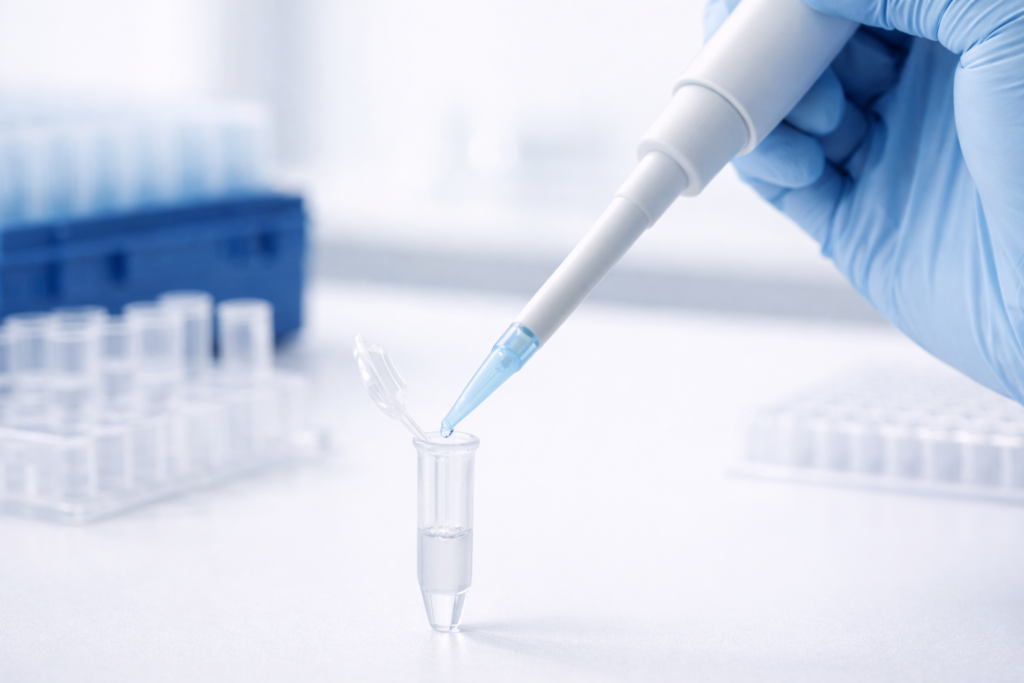
A fixed volume pipette is a liquid-handling instrument designed to dispense a single, predetermined volume with minimal user adjustment or variation. Unlike adjustable alternatives, these tools prioritize repeatability and speed, making them indispensable in quality control labs, clinical diagnostics, and teaching environments. This guide explains what fixed volume pipettes are, when they outperform adjustable options, and how to use them correctly for maximum accuracy and consistency.
What Is a Fixed Volume Pipette?
A fixed volume pipette is a manual or electronic liquid-handling device calibrated to deliver one specific volume-typically ranging from 10 microliters to 1000 microliters-each time it is used. The preset volume cannot be adjusted by the operator, eliminating dial-setting errors and guesswork. These pipettes are commonly employed in routine assays, quality assurance testing, and educational labs where standardization matters more than flexibility.
The core advantage lies in simplicity: technicians follow a consistent protocol without interpreting volume scales or adjusting settings. This reduces cognitive load, speeds up repetitive tasks, and ensures batch-to-batch consistency in high-throughput environments.
Fixed Volume vs Adjustable vs Volumetric Pipettes
Understanding the distinctions between pipette types is essential for choosing the right tool for your workflow.
| Type | Volume Flexibility | Accuracy | Speed | Typical Use |
|---|---|---|---|---|
| Fixed volume pipettes | None; preset only | ±0.5–2% (depending on model) | Very fast | QC, routine assays, teaching labs |
| Adjustable volume pipettes | Continuous range (e.g., 10–1000 µL) | ±1–3% | Moderate | Research, multi-protocol labs |
| Volumetric pipettes | None; one volume only | ±0.5% or better | Slow (gravity-based) | Analytical chemistry, certified calibrations |
Fixed volume pipettes deliver speed and consistency. Adjustable volume pipettes (also called variable-volume pipettes) offer flexibility but introduce operator variability. Volumetric pipettes are glass, gravity-fed instruments used mainly in classical chemistry for ultra-precise standardization.
For labs performing the same assay hundreds of times daily, fixed volume options reduce training time and eliminate misadjustments. For labs running diverse protocols, adjustable models provide versatility at the cost of slightly higher maintenance and calibration complexity.
Why Labs Choose Fixed Volume Pipettes
Repeatability and Consistency
Fixed volume pipettes excel at delivering identical volumes across thousands of cycles. Because the volume is engineered into the instrument, not dialed in each time, batch-to-batch variation plummets. This is critical in clinical labs where test results must be defensible and reproducible.
Reduced User Error
Operator mistakes-reading a dial incorrectly, applying inconsistent pressure, or adjusting during a busy shift-are eliminated. Technicians cannot accidentally select 500 µL when 200 µL is required. This safeguard is especially valuable in high-volume environments or when training new staff.
Speed and Efficiency
Fixed volume pipettes require no volume confirmation or adjustment. A technician simply aspirates, dispenses, and moves to the next sample. In a 96-well plate protocol, this acceleration compounds across hundreds of replicates.
Durability and Mechanical Stability
Fewer moving parts mean fewer components that can wear, drift, or require recalibration. Fixed designs often remain within specification longer than adjustable counterparts, reducing downtime and replacement costs.
Training Simplification
New staff can learn fixed volume operation in minutes. The workflow is mechanical, not interpretive. This accelerates onboarding in labs with high turnover or shift-based operations.
Limitations of Fixed Volume Pipettes
Fixed volume pipettes are not universally superior; they carry real constraints.
Lack of Flexibility
If your lab runs protocols requiring 150 µL one day and 500 µL the next, you need separate fixed-volume instruments for each. This inflexibility creates inventory management challenges and upfront capital costs.
Inventory Burden
Maintaining 10, 20, 100, 200, 1000, and 5000 µL fixed-volume pipettes consumes bench space, maintenance hours, and calibration resources. A lab with dozens of these tools faces logistical complexity that adjustable alternatives avoid.
Higher Equipment Cost (Potentially)
Although individual fixed-volume units may be cheap, stocking a complete range across a facility can exceed the cost of a few adjustable instruments.
When Adjustable is Better
If your lab performs exploratory research, method development, or protocols that vary frequently, adjustable volume pipettes remain the practical choice. Fixed volume tools are optimized for standardized, high-repetition tasks, not discovery workflows.
Accuracy, Precision & Calibration
Accuracy vs Precision: Key Concepts
- Accuracy = how close a measurement is to the true value.
- Precision = how consistent repeated measurements are with each other.
A fixed volume pipette can be precise but inaccurate if miscalibrated; it can also be both accurate and precise if properly maintained. The preset design inherently improves precision because each dispense follows the same mechanical path.
Why Fixed Volume Designs Improve Repeatability
Because the volume is fixed at the factory, variation comes only from wear, temperature, or tip sealing issues-not operator interpretation. This mechanical consistency is why fixed-volume instruments often show coefficient of variation (CV) below 2% in compliance testing.
Calibration and ISO 8655 Context
ISO 8655 is the international standard for pipette accuracy and precision. It defines acceptable ranges for volumetric performance. Laboratories performing clinical, pharmaceutical, or regulated testing must verify that instruments-whether fixed or adjustable-meet ISO 8655 criteria.
Fixed volume pipettes should be calibrated annually or whenever they show drift. Calibration verifies that the instrument delivers its designated volume within acceptable tolerances. Many labs outsource calibration to certified providers; others perform in-house gravimetric or volumetric verification.
Choosing the Right Fixed Volume
Common Fixed Volumes and Applications
| Fixed Volume (µL) | Best Use | Common Mistakes |
|---|---|---|
| 10 | Molecular biology, qPCR, dilutions | Over-immersion causing splash-back |
| 20 | Pipetting master mixes, small reactions | Inconsistent tip sealing pressure |
| 200 | Routine assays, microbiology spreads | Rapid dispensing causing aerosol |
| 1000 | Large transfers, bulk reagents | Ignoring temperature-induced volume drift |
Matching Volume to Task
- High-throughput assays: Choose the volume closest to your standard aliquot size.
- Precision chemistry: Err toward smaller fixed volumes; multiple dispenses are more accurate than one large aspirate.
- Ergonomics: Consider user comfort; very small volumes (< 5 µL) or very large (> 2 mL) may cause fatigue or inaccuracy.
Pipette Tips & Compatibility
Tip Fit and Sealing Importance
A poor seal between pipette tip and shaft is the leading cause of inaccuracy in manual liquid handling. Before each use, verify that tips seat firmly and without wobbling. Loose tips leak during aspiration, reducing delivered volume.
Filtered vs Non-Filtered Tips
- Non-filtered tips: Suitable for most aqueous solutions, salts, and buffers.
- Filtered tips: Recommended for hazardous materials (volatile solvents, radioactive samples, pathogens) to protect the pipette mechanism from contamination.
Low-Retention Tips
Low-retention (LTS) tips reduce sample adhesion to the plastic. They are essential when handling expensive reagents, viscous liquids, or hydrophobic compounds. Standard tips may retain 2–5 µL; LTS tips retain < 1 µL.
Contamination Control Basics
- Always use sterile, pyrogen-free tips for cell culture and diagnostic work.
- Replace tips between samples to prevent cross-contamination.
- Store tips in clean, sealed containers to avoid dust and moisture uptake.
- When using filtered tips, ensure the filter does not compromise seal integrity.
Best Practices for Using Fixed Volume Pipettes
Forward Pipetting Technique (Numbered Steps)
- Inspect the pipette for visible damage, cracks, or debris.
- Attach a fresh tip and press firmly until it seats fully.
- Pre-wet the tip by aspirating and dispensing 3 times with the sample solution (optional, but recommended for viscous or protein-rich samples).
- Position the tip 2–3 mm below the liquid surface; avoid touching the vessel bottom or aspirating bubbles.
- Aspirate smoothly by pressing the plunger to the first stop, holding briefly, then releasing to draw liquid into the tip.
- Withdraw the tip from the source vessel, keeping it vertical to prevent spillage.
- Position over the destination vessel, with the tip 1–2 mm inside the surface.
- Dispense by pressing the plunger all the way to the second stop, then releasing.
- Remove the tip by pressing the eject button; discard into appropriate waste.
Pre-Wetting and Immersion Depth
Pre-wetting reduces evaporation and protein adsorption, improving accuracy for viscous or sticky solutions. Limit immersion depth to 2–3 mm; excessive depth (> 5 mm) increases resistance, makes tip removal difficult, and can introduce bubbles.
Speed and Consistency Tips
- Maintain steady, moderate speed during aspiration and dispensing; jerky motions introduce aerosols.
- Pause 1 second after aspiration before withdrawing to allow surface tension to stabilize.
- Dispense at the same speed each time to reduce variability.
- Keep your elbow at 90°, wrist straight, to ensure consistent plunger pressure.
Temperature Considerations
Liquids expand and contract with temperature. Room-temperature samples and ambient lab conditions are ideal. If samples are heated (> 25°C) or chilled (< 15°C), allow them to equilibrate to room temperature before pipetting, or apply published temperature-correction factors to your results.
Common Problems & Troubleshooting
| Symptom | Likely Cause | Quick Fix | When to Recalibrate |
|---|---|---|---|
| Inconsistent volumes | Loose tip, worn seal, or air leak | Replace tip; check plunger assembly | If CV > 2% persists |
| Liquid dripping after dispense | Improper tip seating or viscosity buildup | Clean and reattach tip; pre-wet next use | If problem continues after tip replacement |
| Difficult plunger movement | Dried sample residue in shaft | Clean with distilled water and lint-free cloth | Not needed unless plunger binds |
| Over-dispensing (more than expected) | Bubble trapped during aspiration | Re-aspirate; ensure immersion depth 2–3 mm | If recalibration confirms drift |
| Under-dispensing (less than expected) | Tip leakage or evaporation | Replace tip; check temperature | After any repair; annually for compliance |
FAQ: People Also Ask
1. What is a fixed volume pipette?
A fixed volume pipette is a manual or motorized liquid-handling instrument designed to dispense one specific, unchangeable volume each time it is used. It is calibrated at the factory and typically used in high-volume, routine laboratory tasks where consistency and speed matter more than flexibility. Common volumes range from 10 microliters to 1000 microliters.
2. Does a pipette measure fixed volume?
Not all pipettes measure fixed volume. Adjustable volume pipettes allow the operator to set different volumes within a range (e.g., 10–1000 µL). Fixed volume pipettes, by contrast, dispense only their designated volume. Volumetric pipettes (glass, gravity-fed) are also fixed-volume instruments, historically used in analytical chemistry but largely replaced by mechanical pipettes.
3. What is the difference between a fixed volume pipette and a graduated pipette?
A graduated pipette (often called a transfer pipette or Pasteur pipette) has volume markings along its length and relies on gravity to dispense. It is slow, prone to user error, and less accurate than a mechanical fixed volume pipette. A fixed volume pipette is mechanical, fast, and repeatable. Graduated pipettes remain useful for rough estimates; fixed volume pipettes are standard for quantitative work.
4. What size of pipette should I use?
Choose the pipette volume closest to your typical dispensing amount. If you routinely dispense 200 microliters, a 200 µL fixed volume pipette is ideal. Avoid using a 1000 µL pipette to dispense 50 µL; accuracy degrades at the extremes of a pipette’s range. For mixed protocols, an adjustable volume pipette or a set of fixed volumes (10, 20, 200, 1000 µL) is practical.
Key Takeaways
- Fixed volume pipettes are purpose-built for repeatability and speed in standardized, high-volume lab tasks.
- They eliminate user error from volume adjustment but require stocking multiple units for different volumes.
- Accuracy and precision are enhanced by the preset design, provided calibration and maintenance are performed annually.
- Proper technique-correct tip seating, immersion depth, and plunger control-is essential for reliable results.
- Filtered or low-retention tips address contamination and sample loss in specialized applications.
- ISO 8655 compliance ensures volumetric performance meets regulatory standards.
- Labs performing exploratory or variable protocols benefit more from adjustable volume pipettes.
- Calibration drift and operator technique are the leading sources of inaccuracy; troubleshooting begins with tip replacement.
- Temperature and evaporation affect measured volumes in long protocols; environmental controls improve reproducibility.
- Training and documentation standardize fixed volume pipette use across team members, reducing variability.