

Why Attracting New Pet Owners is Your Clinic’s Lifeline
In the dynamic world of veterinary care, the steady influx of new clients is not just beneficial; it’s the lifeline that ensures growth, sustainability, and the ability to serve a growing pet population. While fostering loyalty among existing clients is crucial, a proactive and strategic approach to attracting new pet owners is paramount for any veterinary practice aiming to thrive. Modern pet owners are informed consumers, actively researching options and seeking more than just basic medical services. They desire a partnership with a clinic that offers trust, expertise, convenience, and a genuine understanding of their pet’s well-being. This comprehensive guide provides veterinary clinics with actionable strategies, from refining their digital presence to optimizing the in-clinic experience, all designed to capture the attention of new pet owners and build lasting relationships from the very first interaction.
Understanding the New Pet Owner Mindset
 Key drivers of the modern pet owner include a strong emotional bond, a need for trust, and reliance on digital research.
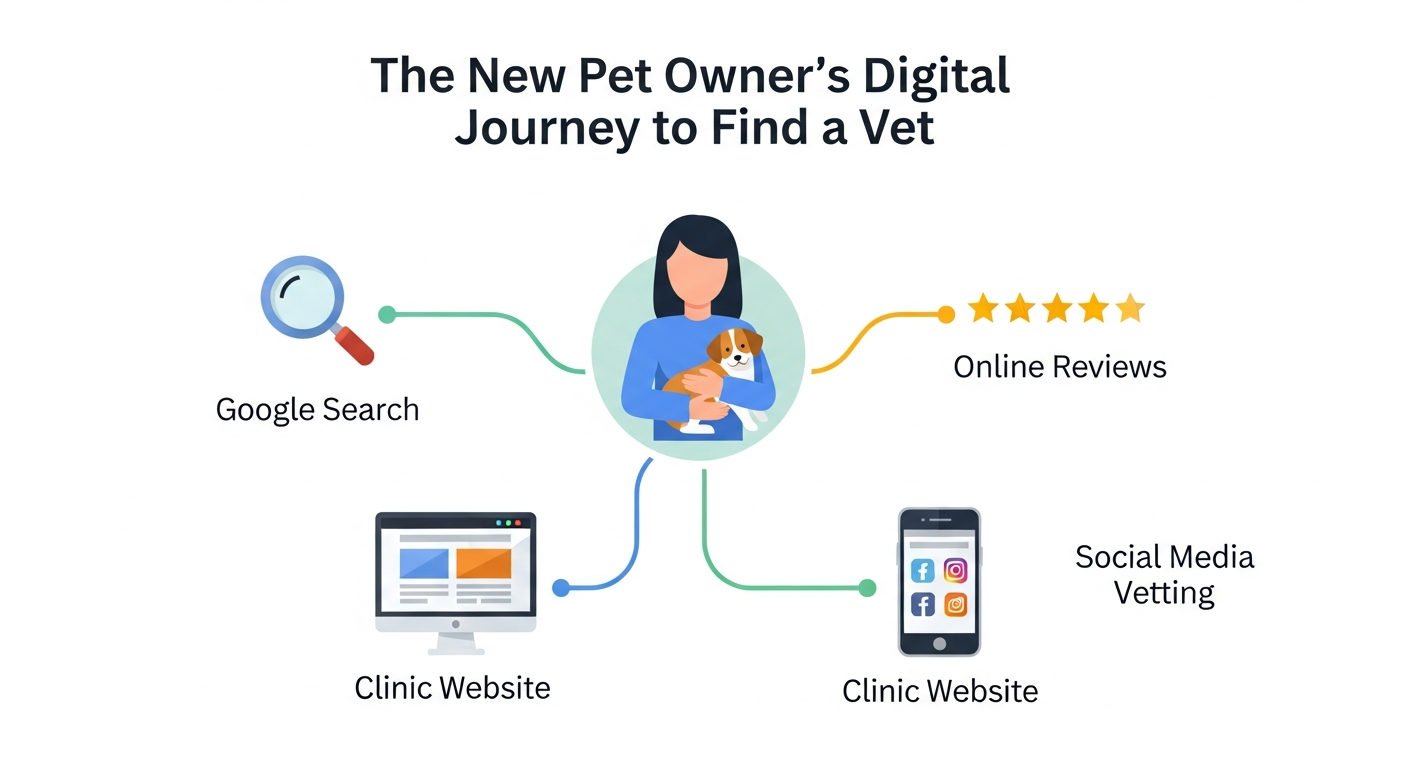 The modern pet owner’s journey to finding a veterinarian is a multi-step digital process involving search, reviews, and social validation.
The journey of a new pet owner, whether they are welcoming their first animal companion or adding to their existing family, is often characterized by a blend of excitement and apprehension. This mindset significantly influences how they approach finding and choosing a veterinary clinic. Today’s pet owners are not passive recipients of services; they are active researchers who leverage a wealth of online resources to make informed decisions. They are seeking not just a vet, but a partner in their pet’s lifelong health and happiness. Understanding their anxieties, information needs, and decision-making processes is the foundational step in developing effective attraction strategies. They are looking for reassurance, clear guidance, and a sense of trust before they even pick up the phone.
The “new pet owner” is digitally savvy. Before making a decision, they meticulously research their options online. This involves extensive use of search engines like Google, where they look for local practices, read online reviews, and explore clinic websites. They also turn to social media platforms such as Facebook and Instagram to gather insights, see visual representations of the clinic’s environment and staff, and even seek recommendations within local pet owner groups. This digital exploration is not superficial; it’s a critical part of their vetting process, aiming to gauge the veterinary practice’s reputation, services, and perceived quality of care. The sheer volume of information available online means that a clinic’s online presence is often the first, and sometimes only, impression it makes.
Furthermore, new pet owners are highly motivated by their emotional connection to their pets. They view their animals as integral family members and are willing to invest time and resources into ensuring their health and well-being. This emotional bond translates into a desire for empathetic care, clear communication, and a veterinary team that demonstrates genuine passion for animals. They are looking for reassurance that their pet will be treated with the same love and concern they themselves feel. Convenience also plays a significant role; ease of scheduling, accessible location, and clear communication channels are essential considerations for busy individuals.
The Foundation of Growth: Beyond Existing Client Loyalty
While a strong client base built on trust and excellent service is the bedrock of any successful veterinary practice, sustainable growth cannot solely rely on retaining existing clients. The pursuit of new clients is an active, ongoing process that requires a multifaceted approach, blending digital outreach with community engagement and an optimized client experience. Focusing exclusively on retention can lead to stagnation, especially as pet ownership trends evolve and new demographics of pet owners emerge. Attracting new pet owners is about expanding reach, diversifying the client base, and ensuring the practice is positioned to meet the growing demands of the pet-loving community.
The health and longevity of a veterinary practice depend on its ability to continuously attract and onboard new clients. This influx of fresh faces and furry friends not only boosts revenue but also brings new perspectives and opportunities for the clinic team. Building a robust client base is a marathon, not a sprint, and it requires a strategic marketing plan that addresses the various touchpoints where potential pet owners interact with your brand. Ignoring the importance of new client acquisition is akin to neglecting the future of your practice, leaving it vulnerable to market shifts and increased competition.
Building Your Clinic’s Irresistible Digital Front Door
In the digital age, your clinic’s website is more than just an online brochure; it’s often the first point of contact and a critical gateway for attracting new pet owners. A well-designed, informative, and user-friendly website acts as your digital front door, welcoming potential clients and providing them with the essential information they need to make a decision. It needs to be professional, easy to navigate, and reflect the quality of care and compassionate service your practice offers. Neglecting your website is akin to leaving your physical clinic doors locked to a significant portion of your potential audience.
Your website must be optimized for discoverability and user experience. This means ensuring it’s mobile-responsive, loads quickly, and clearly outlines your services, veterinary team, and contact information. High-quality images and videos can showcase your clinic’s environment and the care you provide, helping potential clients visualize bringing their pets to your practice. Clear calls to action, such as “Book an Appointment” or “Contact Us,” should be prominent and easy to find, guiding visitors towards the next step in becoming a new client.
Optimizing Your Online Presence for Discoverability
For potential pet owners seeking a new veterinary clinic, the initial search often begins with a simple query on Google. Therefore, optimizing your online presence for local discoverability is paramount. This involves a strategic approach to Search Engine Optimization (SEO), ensuring your veterinary practice appears prominently in search results when individuals in your geographic area are looking for veterinary services. A strong local SEO strategy makes it easier for new clients to find you, significantly increasing the likelihood of them becoming actual patients.
Central to local SEO is your Google My Business (GMB) profile. This free listing allows you to provide essential information like your clinic’s name, address, phone number, hours of operation, services, and website link. Keeping your GMB profile complete, accurate, and up-to-date is vital. Encourage clients to leave reviews on your Google profile, as positive reviews significantly impact local search rankings and build trust with potential new clients. Regularly posting updates, photos, and responding to Q&A within your GMB profile can further enhance its visibility and engagement.
Beyond Google, ensuring your clinic’s information is consistent across various online directories and platforms (like Yelp, Bing Places, and industry-specific directories) is also crucial. Many pet owners utilize multiple platforms for their research. A consistent online footprint reinforces your clinic’s legitimacy and professionalism. Furthermore, incorporating relevant local keywords into your website content, such as “[Your City] veterinarian,” “[Your Neighborhood] pet clinic,” or “emergency vet near me,” helps search engines understand your services and target audience, driving more qualified traffic to your digital doorstep.
Cultivating a Stellar Online Reputation
In an era where information is readily available, online reviews have become one of the most influential factors in decision-making for new pet owners. A stellar online reputation is a powerful magnet for attracting new clients and a critical component of your marketing strategies. Potential clients actively seek out and trust online reviews as a proxy for the real-world experience they can expect at your veterinary practice. A positive collection of reviews builds credibility, instills confidence, and differentiates your clinic from competitors.
Proactively managing your online reputation involves encouraging satisfied clients to share their experiences. Implement a system for requesting reviews after positive interactions, such as a successful appointment or a resolved health issue. This can be done through automated email follow-ups, a prompt on your website, or even a discreet sign in your waiting area. Make the process as easy as possible by providing direct links to your review profiles on platforms like Google, Yelp, and Facebook.
Responding to all reviews, both positive and negative, is equally important. Acknowledge positive feedback with gratitude, reinforcing the excellent service provided. For negative reviews, respond promptly, professionally, and empathetically. Aim to de-escalate the situation, demonstrate your commitment to customer satisfaction, and offer to discuss the matter further offline. This shows that your clinic values client feedback and is dedicated to resolving issues, which can positively influence other potential clients who are reading the reviews.
Engaging New Pet Owners Through Valuable Content and Social Media
Once your clinic has a strong digital foundation and a positive online reputation, the next step is to actively engage with potential new clients by providing value and building community. This is achieved through strategic content marketing and a dynamic social media presence. By becoming a trusted resource and demonstrating your expertise, you can capture the attention of pet owners even before they have an immediate need, positioning your veterinary practice as their go-to choice when the time comes.
The digital landscape offers numerous avenues to connect with pet owners. Think beyond simply advertising services; focus on educating, entertaining, and inspiring your audience. This approach not only attracts new clients but also strengthens relationships with existing ones, fostering a sense of loyalty and advocacy for your brand. The key is to consistently deliver content that resonates with the concerns and interests of pet owners, establishing your clinic as a valuable partner in their pet’s life.
Becoming a Trusted Resource with Educational Content
In the quest to attract new clients, positioning your veterinary practice as an authoritative and accessible source of information is a powerful strategy. Educational content, such as blog posts, articles, infographics, and videos, allows you to share valuable pet care tips, address common health concerns, and offer insights into veterinary medicine. This not only educates pet owners but also builds trust and establishes your clinic’s expertise, making them more likely to choose your practice when a need arises.
Your website‘s blog is an ideal platform for housing this educational content. By regularly publishing articles on topics relevant to pet owners – from puppy and kitten care to senior pet health, preventative measures, and common ailment explanations – you demonstrate your commitment to their pet’s well-being. For instance, a series on “Preparing Your Home for a New Puppy” or “Understanding Common Cat Behavioral Issues” can attract a wide audience of prospective clients. These articles should be written in a clear, readable tone, avoiding overly technical jargon, and always encouraging readers to consult with their veterinarian for personalized advice.
This content also plays a crucial role in SEO. Well-crafted, informative articles can attract organic traffic from search engines as pet owners actively seek answers to their questions. Keywords related to specific health issues, breeds, or life stages can help your content rank higher, bringing potential clients directly to your website. Furthermore, this valuable content can be repurposed and shared across other channels, such as social media and email newsletters, amplifying your reach and reinforcing your message. By consistently providing helpful pet care tips, you build a reputation as a go-to resource, making your clinic the natural choice for new clients.
Strategic Social Media Engagement
Social media platforms like Facebook and Instagram are not just for sharing photos of cute pets; they are powerful tools for veterinary practices to engage with current and potential clients, build community, and drive new client acquisition. A strategic social media presence allows you to connect with pet owners on a more personal level, showcase your clinic’s personality, and share valuable information in an engaging and accessible format. It’s a dynamic space where you can foster relationships and make your clinic stand out in a competitive market.
On Facebook, you can create a dedicated page for your clinic to share updates, promote services, and engage with your local community. Joining local pet owner groups (where permitted) allows you to offer helpful advice and establish yourself as a knowledgeable professional without overt selling. Regular posts featuring veterinary tips, behind-the-scenes glimpses of your clinic, staff spotlights, and heartwarming patient stories can significantly increase engagement. Facebook also offers robust advertising capabilities, allowing you to target specific demographics and geographic areas with compelling campaigns designed to attract new clients.
Instagram, with its visually driven nature, is perfect for showcasing the vibrant life and care within your veterinary practice. High-quality photos and videos of happy pets, dedicated staff, and the clinic environment can create an inviting atmosphere. Use Instagram Stories to share daily happenings, answer quick pet care tips, and run interactive polls or Q&A sessions. Hashtags are crucial for discoverability on Instagram; using relevant tags like #veterinarian, #pethealth, #[yourcity]pets, and breed-specific tags can help reach a broader audience of pet owners actively searching for pet-related content. Consistent posting and active engagement with comments and direct messages are key to building a strong presence and converting followers into new clients.
Leveraging Email Marketing for Onboarding and Education
Email marketing remains one of the most effective tools for direct communication with both existing and potential clients. For attracting new clients, a well-structured email marketing strategy can guide prospects through their decision-making journey, provide essential information, and reinforce their choice to entrust their pet’s care to your veterinary practice. It allows for personalized communication at scale, ensuring that new clients feel welcomed, informed, and supported from the moment they express interest.
A crucial aspect of email marketing for new clients is the implementation of a welcome email sequence. Upon a new client’s initial contact or appointment booking, an automated series of emails can be triggered. The first email should serve as a warm welcome, confirming their appointment and providing essential details like clinic hours, location, and parking information. Subsequent emails can introduce your veterinary team, offer a link to pre-visit forms for streamlining the onboarding process, and share important pet care tips relevant to their pet’s species or age. This sequence helps manage expectations, reduce first-visit anxiety, and showcase the professionalism and care of your clinic.
Furthermore, email marketing is an excellent channel for ongoing education and engagement. Once a client has visited, you can continue to nurture the relationship by sending out newsletters that include seasonal pet care tips, updates on new services, reminders for preventative care (like vaccinations or parasite control), and articles from your blog. Personalized appointment reminders are also a vital function of email marketing. These not only help reduce no-shows but also provide a timely touchpoint, reinforcing your clinic’s attention to detail and commitment to their pet’s health. By segmenting your client base and tailoring email content, you can deliver messages that are highly relevant and impactful, fostering deeper loyalty and encouraging continued engagement.
Strategic Outreach and Community Engagement
Beyond the digital realm, actively engaging with your local community is a time-tested and highly effective marketing strategy for attracting new clients. Building relationships with other local businesses and participating in community events positions your veterinary practice as a committed and accessible part of the neighborhood. This creates organic opportunities for exposure, builds trust through personal interaction, and can generate valuable word-of-mouth referrals.
Community outreach is not just about visibility; it’s about demonstrating your clinic’s dedication to animal welfare and the well-being of the community. When pet owners see your practice actively involved and contributing positively, it builds a strong sense of trust and reliability. This approach complements your digital efforts, providing a tangible, human element that resonates deeply with individuals seeking a veterinary partner they can count on.
Building Mutually Beneficial Local Partnerships
Collaborating with complementary local businesses is a powerful way to expand your reach and tap into new client bases. Identifying businesses that serve pet owners but do not directly compete with your services can lead to mutually beneficial partnerships. Think about businesses like pet supply stores, pet groomers, dog walkers, pet sitters, animal shelters, and rescue organizations. These entities often have direct contact with pet owners who may be in need of veterinary services.
Establishing a referral relationship with local groomers, for example, can be incredibly effective. Groomers often identify potential health issues during their grooming sessions that a veterinarian should address. By providing groomers with referral cards or brochures and educating them on when to recommend your services, you create a steady stream of potential new clients. In return, you can refer clients to trusted groomers, strengthening the partnership and offering a comprehensive service ecosystem to pet owners. Similarly, partnerships with animal shelters can provide opportunities for you to offer initial wellness checks for newly adopted pets, introducing your clinic to eager new pet parents right at the moment they need care.
These partnerships can take various forms: co-hosted events, cross-promotional efforts (e.g., displaying each other’s flyers or business cards), joint social media campaigns, or even offering special discounts to clients referred from a partner business. The key is to foster genuine relationships where both parties feel they are receiving value, ensuring the partnership is sustainable and beneficial for all involved, especially for attracting new clients.
Active Community Involvement and Local Events
Being an active participant in local community events is a fantastic way to increase your veterinary practice’s visibility and connect with potential clients on a personal level. This could involve setting up a booth at local pet expos, farmers’ markets, or community fairs. At these events, you can offer free advice, distribute informational materials, provide branded giveaways (like pet waste bags or tennis balls), and simply engage in conversations with pet owners.
Consider hosting your own community events, such as adoption days in partnership with local shelters, free pet health seminars focused on common concerns (e.g., “Puppy’s First Year,” “Keeping Your Senior Pet Comfortable”), or even low-cost vaccination clinics for underserved areas. These events not only provide valuable services but also showcase your clinic’s commitment to animal welfare and community health. They create memorable experiences that foster goodwill and positive word-of-mouth, directly translating into new clients who have experienced your clinic’s dedication firsthand.
Sponsoring local youth sports teams or community initiatives related to animals can also enhance your clinic’s local profile. When your veterinary practice is visibly contributing to the community, it builds a positive brand image and fosters a sense of trust and familiarity. These efforts, when consistent and genuine, can significantly impact your ability to attract new pet owners who are looking for a vet that aligns with their community values.
Implementing Effective Referral Programs
Word-of-mouth is consistently cited as one of the most trusted sources of information for new pet owners, and a well-structured referral program can effectively harness this power. By incentivizing your existing satisfied client base to refer friends, family, and colleagues, you can generate a steady stream of high-quality new clients who are already predisposed to trust your practice. A referral program transforms your happy clients into enthusiastic brand advocates.
The design of your referral program is crucial for its success. Clearly define what constitutes a successful referral – typically, when the referred individual becomes a new patient by booking and completing their first appointment. Then, determine the incentives for both the referrer and the referred. For the referrer, common rewards include discounts on future services, credits towards their account, or small gift certificates. For the referred new client, offering an incentive such as a discount on their first exam fee or a complimentary service can encourage them to book their initial appointment.
Promote your referral program actively across all your communication channels. Mention it on your website, include it in your email newsletters, highlight it on your social media pages, and have informational flyers available in your waiting area. Staff should also be trained to mention the program to satisfied clients. When a referral is made, ensure you acknowledge and thank the referring client promptly. Track your referrals diligently to understand which marketing strategies are most effective and to measure the ROI of your program. An effective referral system is a cost-efficient way to grow your client base with individuals who are likely to be a good fit for your practice.
Optimizing the New Client Experience: From First Call to First Visit
Attracting new clients is only the first step; ensuring they have an exceptional experience from their initial contact through their first visit is critical for retention and fostering early loyalty. A seamless and welcoming onboarding process can transform a first-time visitor into a devoted patient. Conversely, friction points or a less-than-ideal first impression can deter them from returning, negating your acquisition efforts. The goal is to make the journey as smooth, informative, and reassuring as possible for both the pet and the owner.
Every interaction a new client has with your veterinary practice shapes their perception. This includes phone calls, online inquiries, the scheduling process, the completion of forms, and the actual in-clinic visit. By meticulously optimizing each of these touchpoints, you demonstrate your commitment to excellent service and build a strong foundation of trust that encourages them to become long-term members of your client base.
Streamlining the Onboarding Process
The onboarding process for new clients begins the moment they decide to contact your veterinary practice. Efficiency, clarity, and a welcoming demeanor are key. This starts with the first phone call or online inquiry. Ensure your front desk staff are well-trained to handle new patient inquiries with professionalism, warmth, and thoroughness. They should be able to answer common questions about services, pricing, and appointment availability, and guide the prospective client through the booking process smoothly.
Consider offering online appointment booking through your website. This caters to the modern pet owner who prefers the convenience of scheduling at their own pace, anytime. Once an appointment is booked, provide immediate confirmation and follow up with relevant information. This might include details about your clinic’s location, parking, and what to expect during their visit. Crucially, offer the ability to complete new patient forms online. Digitizing this process reduces waiting room time for the client and ensures your team has the necessary information to provide the best care from the outset.
These online forms should be comprehensive yet easy to fill out. They serve as an essential tool for gathering information about the pet’s medical history, current health status, diet, behavior, and owner concerns. A well-designed digital form not only streamlines the administrative side but also provides your veterinary team with valuable insights, allowing them to prepare for the appointment and offer more personalized care. Clearly communicate the purpose of these forms and assure clients that their information will be handled confidentially.
Creating a Welcoming and Efficient First Visit
The first in-clinic visit is a pivotal moment in the new client journey. It’s where the promise of your digital presence and initial communications is either fulfilled or falls short. Your clinic environment and the interactions with your team are paramount to creating a positive and lasting impression. The aim is to make both the pet and the owner feel comfortable, confident, and well-cared for.
Upon arrival, the reception area should be clean, organized, and welcoming. Consider elements that cater to pets, such as a designated waiting area for dogs and cats (if space allows) or the provision of water bowls. Your front desk staff should greet new clients warmly, confirm their appointment, and efficiently process any remaining paperwork or check-in procedures. If forms were completed online, this step should be minimal.
The examination room experience is equally critical. The veterinary technician or assistant who initially greets the client and pet should be friendly, knowledgeable, and gentle. They should gather preliminary information, ensuring a smooth handover to the veterinarian. When the veterinarian enters, they should take the time to introduce themselves, acknowledge the client and pet by name, and review the forms and the reason for the visit. Empathetic communication, clear explanations of procedures, and a demonstration of genuine care for the pet are essential. The veterinarian should actively listen to the owner’s concerns, answer all questions thoroughly, and outline a clear plan for the pet’s care.
Integrating Modern Technology for Enhanced Care
The integration of modern technology plays a significant role in enhancing the new client experience and optimizing clinic operations. From efficient scheduling and communication to advanced diagnostic tools, technology can streamline processes, improve accuracy, and elevate the perceived value of your veterinary practice. For new clients, these technological advancements often translate into greater convenience and confidence in the care they are receiving.
As mentioned, online scheduling and digital forms are fundamental. Beyond these, consider implementing a robust client communication system. This can include automated appointment reminders via email or text message, which are crucial for reducing no-shows and keeping clients informed. Secure client portals can provide 24/7 access to medical records, appointment history, and educational resources, empowering pet owners with information. Telemedicine capabilities, where appropriate, can offer convenient consultations for minor issues or follow-up care, demonstrating a forward-thinking approach to pet health.
Investments in advanced diagnostic equipment, such as digital radiography, ultrasound, and in-house laboratory services, not only improve diagnostic accuracy and speed but also contribute to the perception of a high-quality, modern clinic. When new clients see that your practice utilizes cutting-edge technology for their pet’s health, it reinforces their decision and builds trust in your capabilities. Transparently communicating how these technologies benefit their pet’s care can further enhance their appreciation and loyalty.
Transparent Financial Discussions
Cost can be a significant consideration for new pet owners, and a lack of transparency around financial expectations can lead to dissatisfaction and distrust. Addressing financial discussions openly and empathetically from the outset is crucial for building strong relationships and ensuring clients feel informed and respected. This proactive approach helps prevent misunderstandings and sets a clear path for their pet’s care.
During the initial consultation, after a diagnosis or treatment plan has been discussed, it’s important for the veterinarian or a designated team member to discuss the associated costs. Provide a detailed estimate or treatment plan that outlines all anticipated expenses. Break down the costs for each service, procedure, or medication, allowing the client to understand where their money is being allocated. Avoid using overly complex veterinary jargon; explain costs in clear, understandable terms.
Be prepared to discuss various payment options. Many clinics offer payment plans or partner with third-party financing services like CareCredit. Clearly explaining these options can make necessary veterinary care more accessible for pet owners. If there are less expensive alternatives or preventative measures that could save costs in the long run, discuss those as well. This demonstrates a commitment to the pet’s health and the owner’s financial well-being, rather than just providing a service. Offering a clear, upfront discussion about finances fosters trust and helps manage expectations, contributing to a positive new client experience and long-term loyalty.
Nurturing Early Loyalty and Building Trust
The initial weeks following a new client’s first visit are critical for cementing their relationship with your veterinary practice. This period is when trust is solidified, and the foundation for long-term loyalty is laid. Proactive follow-up, exceeding expectations, and actively soliciting feedback are key strategies to ensure these new relationships blossom. It’s about demonstrating that your commitment to their pet’s well-being extends beyond the first appointment.
Focusing on this early stage transforms a transactional interaction into a relational one. It shows new clients that you value their business and are genuinely invested in their pet’s health journey. By consistently providing excellent care and communication, you can turn first-time visitors into loyal advocates for your practice, contributing to sustained growth and a strong community of satisfied pet owners.
The Critical First Few Weeks: Follow-Up and Support
Following a new client’s first appointment, a proactive follow-up strategy is essential. A simple phone call or personalized email a few days after their visit to check on their pet’s well-being and answer any lingering questions can make a significant difference. This demonstrates that your concern extends beyond the clinic walls and reinforces your commitment to their pet’s health. It’s an opportunity to address any minor issues that may have arisen and reassure the client.
During this initial period, provide clear and accessible resources. This could include links to relevant pet care tips on your website, instructions for administering any prescribed medications, or information about when to seek further veterinary attention. If the pet had a specific health concern or underwent a procedure, a follow-up email or call to monitor their recovery is invaluable. This proactive support helps manage anxieties, empowers pet owners with information, and builds confidence in your practice’s capabilities. It’s these small gestures that contribute significantly to fostering early loyalty.
Creating a “Delight” Factor
Beyond meeting expectations, the key to fostering deep loyalty and encouraging positive word-of-mouth lies in creating moments of “delight” for new clients. These are unexpected positive experiences that go above and beyond the standard service, leaving a memorable impression. Delight is about exceeding expectations and connecting with clients on an emotional level, transforming a routine veterinary visit into a remarkable experience.
Examples of creating a “delight” factor can be subtle yet impactful. This might include a handwritten thank-you note from the veterinarian after a significant visit, a small welcome gift for new patients (e.g., a branded toy, a bag of treats, or a guide to local pet-friendly parks), or personalized recommendations based on their pet’s breed or age. Ensuring staff are empowered to go the extra mile, such as offering extra comfort or attention to a nervous pet or providing a thoughtful recommendation for a local pet service, can also contribute. These “delight” moments make clients feel valued and appreciated, strengthening their connection to your veterinary practice and encouraging them to share their positive experiences with others.
Soliciting and Acting on Feedback
Actively seeking and responding to client feedback is a cornerstone of continuous improvement and a powerful tool for building trust and loyalty, especially with new clients. By showing that you value their opinions, you encourage them to become more invested in your practice and provide insights that can help you refine your services. This demonstrates a commitment to meeting and exceeding their expectations.
Implement systematic ways to gather feedback. This can include short, post-visit surveys delivered via email or text message, suggestion boxes in the waiting area, or direct conversations with your team. Make it clear that you are interested in their honest opinions, both positive and constructive. The key is not just to collect feedback but to actively listen and act upon it. Analyze the feedback regularly to identify trends, areas of success, and opportunities for improvement.
When a client provides feedback, especially constructive criticism, respond promptly and professionally. Acknowledge their input, thank them for their time, and explain any steps you are taking to address their concerns. For positive feedback, share it with your team to celebrate successes and reinforce best practices. By demonstrating that you are responsive to client feedback and committed to making improvements, you build a stronger, more trustworthy relationship with your client base, encouraging deeper loyalty and positive word-of-mouth.
Introducing Early Loyalty Programs
To foster immediate loyalty and encourage repeat business, consider introducing early loyalty programs designed for new clients. These programs incentivize clients to return for subsequent visits, establishing a consistent pattern of care and reinforcing their decision to choose your clinic. They offer tangible rewards for their commitment, making them feel appreciated and invested in your practice.
A simple yet effective approach is a punch card system, where clients receive a stamp for each visit or service, with a reward (e.g., a discount on their next exam or a complimentary service) after a set number of visits. Another option is a points-based system, where clients earn points for every dollar spent, which can then be redeemed for various services or products. For new clients, you could offer bonus points on their first few visits to accelerate their accumulation of rewards.
These programs not only incentivize repeat business but also provide valuable data on client purchasing habits and visit frequency. Ensure your loyalty programs are easy to understand, clearly communicated, and integrated seamlessly into your client management system. By rewarding new clients for their early commitment, you create a positive feedback loop that encourages ongoing engagement and cultivates a strong, lasting relationship with your growing client base.
Measuring Success and Adapting Your Strategy
To ensure your efforts to attract new pet owners are effective, it’s essential to track your progress and measure the success of your marketing strategies. Regularly analyzing key performance indicators (KPIs) allows you to understand what’s working, identify areas for improvement, and make informed adjustments to your approach. This data-driven methodology ensures that your veterinary practice is continuously optimizing its client acquisition and retention efforts.
Without measurement, your strategies remain guesswork. By consistently monitoring metrics related to new client acquisition, engagement, and retention, you gain valuable insights into the health of your client base and the effectiveness of your outreach. This data empowers you to allocate your marketing resources more efficiently and adapt your strategies to meet the evolving needs of pet owners and the market.
Tracking Key Performance Indicators for New Client Acquisition
When evaluating the effectiveness of your efforts to attract new clients, several key performance indicators (KPIs) should be consistently tracked. The most fundamental is the number of new clients acquired over a specific period (e.g., monthly, quarterly). This raw number provides a baseline understanding of your growth trajectory.
Beyond the sheer number, it’s crucial to track the source of these new clients. Where are they coming from? Are they referrals from existing clients, walk-ins from strong Google visibility, responses to social media campaigns, website inquiries, or partnerships with groomers? Implementing a system where your front desk staff or online intake forms ask “How did you hear about us?” is vital for this analysis. This data will reveal which marketing strategies are most effective and deserve further investment, and which may need refinement or discontinuation.
Another important metric is the conversion rate of leads into new clients. If you are generating a high volume of inquiries through your website or social media, but a low percentage of those inquiries result in appointments, it indicates potential friction points in your onboarding or initial consultation process. Conversely, if your referral program is generating a high conversion rate, it suggests your existing client base is highly satisfied and effective at advocating for your practice. Tracking the average revenue generated by new clients also provides insight into the quality and potential lifetime value of the patients you are attracting.
Continuous Improvement and Strategy Adjustment
The landscape of pet owner behavior and marketing strategies is constantly evolving. Therefore, continuous improvement and a willingness to adapt are critical for sustained success. Regularly reviewing your KPIs and client feedback should inform strategic adjustments to your outreach, communication, and service delivery. What worked last year may not be as effective today, and staying agile is key.
For instance, if your social media engagement on Facebook has plateaued, you might explore new content formats, experiment with Facebook Ads, or dedicate more resources to interactive content. If you notice a decline in referrals, you might re-evaluate your referral program incentives or increase its promotion. If client feedback consistently points to challenges with appointment scheduling, investing in better website functionality or more front desk staff training could be necessary.
Embrace a mindset of experimentation and learning. Test different approaches to email marketing campaigns, explore new content themes for your blog, or pilot new community engagement initiatives. The goal is not to find a single perfect strategy, but to cultivate a dynamic and responsive approach that consistently attracts and retains new clients. By remaining committed to understanding your client base, leveraging data, and adapting your marketing strategies, your veterinary practice can achieve ongoing growth and build a thriving community of devoted pet owners.
Conclusion: Cultivating Lasting Relationships from Day One
Attracting new pet owners is a fundamental pillar of growth for any veterinary practice. It requires a strategic, multifaceted approach that extends far beyond traditional advertising. By understanding the modern pet owner‘s mindset—their digital savviness, their emotional connection to their pets, and their expectation of transparency and convenience—clinics can tailor their marketing strategies for maximum impact.
Building an irresistible digital front door through an optimized website and a strong online presence, particularly on Google, is paramount for discoverability. Cultivating a stellar online reputation through active management of reviews builds the trust necessary to convert online interest into actual visits. Engaging potential clients through valuable educational content and strategic social media presence on platforms like Facebook and Instagram establishes your clinic as a trusted resource. Furthermore, leveraging email marketing for welcoming sequences and personalized communication, coupled with active community outreach and partnerships with local businesses like groomers, expands your reach organically.
The journey does not end with acquisition. Optimizing the new client experience, from streamlining onboarding with digital forms to creating a welcoming and efficient first visit, is crucial for retention. Transparent financial discussions, proactive follow-up in the critical first few weeks, creating “delight” factors, and actively soliciting feedback all contribute to nurturing early loyalty. Implementing early loyalty programs provides tangible rewards for their commitment. Finally, consistently measuring success by tracking KPIs and remaining adaptable ensures your strategies remain effective. By focusing on building genuine relationships from the very first interaction, your veterinary practice can cultivate a strong, growing client base built on trust, exceptional care, and enduring loyalty.