
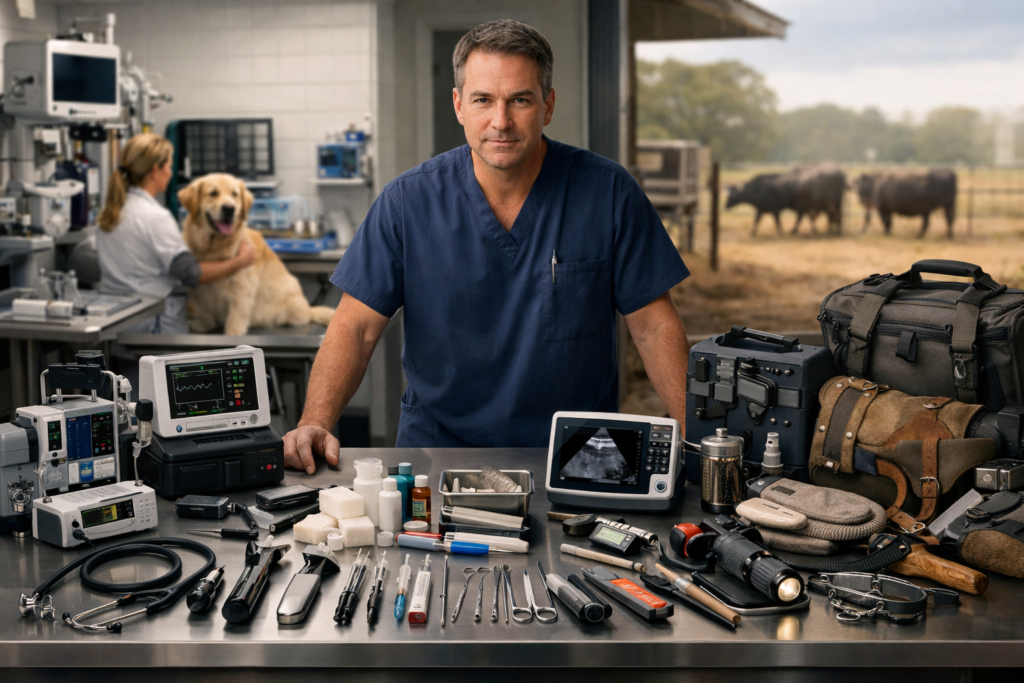
The right veterinary equipment is not a purchasing checkbox — it is the operational foundation of every diagnosis made, every surgery performed, and every animal that leaves your care healthier than it arrived. Whether you are opening a small animal clinic, running a mixed-practice hospital, doing farm calls across hundreds of acres, or building out a mobile unit, your tools directly determine your clinical capability, your workflow speed, your staff safety, and your clients’ trust.
This guide was built to be the most complete, practical, and commercially useful veterinary equipment reference available. It covers every practice type, every budget stage, every species context, and every buying decision — from the first stethoscope to an advanced in-house laboratory. Use it as your buying framework, your setup checklist, and your ongoing operational reference.
Why Equipment Choices Define Practice Quality
The goal of this guide is to help you avoid that pattern entirely.
Section 1 — What Veterinary Tools and Equipment Are Essential?
The Core Equipment Categories
| Category | What It Covers | Priority Level |
|---|---|---|
| Basic Clinical Tools | Stethoscopes, thermometers, otoscopes, scales, restraint tools | Immediate — Day 1 |
| Diagnostic Imaging | Digital X-ray, ultrasound, endoscopy | High — early investment |
| In-House Laboratory | Hematology analyzers, chemistry panels, centrifuges, microscopes | High — drives same-day decisions |
| Exam & Treatment Room | Exam tables, IV pumps, clippers, lighting, warming units | Immediate — Day 1 |
| Surgical Equipment | Surgical packs, anesthesia machines, monitoring, autoclave | High if you perform surgery |
| Sterilization & Infection Control | Autoclaves, disinfectants, packaging materials | Immediate — non-negotiable |
| Emergency & Critical Care | Crash cart, oxygen, suction, warming | High — protects patients and practice |
| Large Animal / Farm Tools | Portable diagnostics, obstetric tools, restraint, hoof care | Species-specific |
| Mobile / Field Equipment | Portable versions of the above, rugged carrying solutions | Practice-type specific |
The Absolute Minimum Every Veterinary Practice Needs
Even the smallest, most rural veterinary practice needs these before seeing its first patient:
- Quality stethoscope (small and large animal heads if treating multiple species)
- Digital thermometer(s)
- Otoscope and ophthalmoscope
- Patient weighing scale appropriate to species
- Basic surgical pack (scalpels, forceps, scissors, needle holders)
- Autoclave or equivalent sterilization unit
- Exam table with non-slip surface
- IV catheters, fluid lines, and basic fluid therapy setup
- Diagnostic reference materials and basic laboratory consumables
- Animal restraint tools appropriate to species served
Everything else — ultrasound, digital X-ray, in-house analyzers, dental units — builds on this foundation. The worst mistake buyers make is investing in advanced imaging before they have mastered basic clinical workflow.
Section 2 — Veterinary Equipment Checklist by Practice Type
No two practices need identical equipment. The right setup depends on species, volume, service scope, and setting. Here is a practical breakdown by practice type.
2.1 Small Animal Veterinary Clinics
Primary patients: Dogs, cats, small mammals, birds, exotic pets
Must-have equipment:
- Stethoscope (small animal head)
- Digital thermometer
- Otoscope / ophthalmoscope
- Exam table (hydraulic or fixed, non-slip surface)
- Patient scale (0–100 kg range minimum)
- Clippers (for surgical prep and grooming procedures)
- Digital X-ray system (essential even for basic practices)
- Ultrasound (highly recommended early)
- In-house hematology and chemistry analyzer
- Anesthesia machine with patient monitoring
- Autoclave / steam sterilizer
- IV pump and fluid therapy setup
- Dental unit (prophy machine, scaler, polisher)
- Centrifuge and microscope
- Basic surgical instrument pack
- Warming blanket / warming pad
Common overbuy: Advanced endoscopy before building surgical volume. MRI systems at clinic scale.
Common underbuy: Dental equipment (dental disease is among the most common diagnoses in small animal practice), in-house diagnostics that reduce send-out costs and wait times, and quality warming units.
Workflow tip: Small animal clinics see high daily volume with rapid patient turnover. Invest early in efficient exam room organization — treatment carts, clean procedure surfaces, and clear instrument storage dramatically reduce per-appointment time.
2.2 Veterinary Hospitals / Advanced Practices
Expanded capabilities beyond a standard clinic require:
- Advanced patient monitoring (multi-parameter monitors with ECG, capnography, SpO2, invasive blood pressure)
- Digital radiography with DR panel (not CR)
- Portable ultrasound + dedicated stationary ultrasound
- Endoscopy (rigid and flexible)
- Laparoscopy system (for minimally invasive procedures)
- Advanced in-house laboratory (CBC, chemistry, electrolytes, coagulation, urinalysis)
- Blood bank / transfusion capability (storage and administration)
- Intensive care / critical care ward equipment (oxygen cages, incubators, IV fluid trees)
- Specialized surgical packs for orthopedics, ophthalmology, or soft tissue
- Dental radiology (full-mouth intraoral X-ray)
- Dedicated isolation ward with separate equipment sets
Operational reality: Veterinary hospitals require not just more equipment, but duplicate sets for parallel procedures, separate sterilization workflows, and rigorous infection control protocols between wards.
2.3 Mixed-Animal Practices
Treating both companion animals and livestock creates unique equipment demands:
- All small animal essentials listed above
- Large animal stethoscope head
- Portable ultrasound unit capable of both abdominal/reproductive and cardiac scanning
- Digital thermometers rated for cattle and horses
- Large animal weighing equipment (floor scale, weigh tape)
- OB/calving equipment
- Portable X-ray unit (battery-powered or generator-capable)
- Drenching gun and stomach tubes
- Hoof care tools
- Pregnancy testing equipment
- Rugged drug carrying systems for field use
The key challenge in mixed-animal practice is portability. What works in an exam room is often unusable in a barn at 2 AM. Your equipment selection must include portable, battery-powered, and ruggedized versions of diagnostics tools.
If you treat both pets and livestock: Budget specifically for a second “field kit” — a complete portable diagnostic and treatment set that mirrors your clinic capability as closely as possible without requiring a power outlet.
2.4 Farm and Livestock Veterinary Work
Primary patients: Cattle, sheep, goats, pigs, horses, poultry
This practice environment is radically different from a clinic. Portability, durability, and speed under field conditions define every equipment decision.
Core farm veterinary equipment:
- Portable diagnostic kit (stethoscope, thermometer, otoscope)
- Portable ultrasound — pregnancy checking, fluid evaluation, cardiac assessment
- Portable digital X-ray (DR plate + battery generator)
- Large animal scales
- Cattle crush / squeeze chute (often farmer-provided)
- Head gate equipment
- Calving / OB chains and handles, calf puller (dystocia jack)
- Stomach tube and pump (for bloat, administration)
- Drenching guns (for anthelmintic and oral medication delivery)
- Vaccination guns, multi-dose syringes
- Ear tagging / ear notching tools
- Dehorning equipment (caustic paste, dehorning irons, Barnes dehorner)
- Hoof trimming chute and hoof knives, hoof blocks
- Reproductive tools: palpation sleeves, AI guns, semen handling equipment
- Portable centrifuge and basic field lab supplies
- Rugged drug storage with temperature control
What makes farm work different: You operate in environments with no electricity, no clean surfaces, no assistants, and animals weighing up to 700 kg that can injure you in a split second. Equipment must be durable enough to survive drops, mud, and temperature extremes.
2.5 Mobile / Ambulatory Veterinary Practice
Mobile vets — whether house-call companion animal vets or ambulatory large animal practitioners — face the most demanding equipment challenge: maximum capability in minimum space and weight.
Mobile veterinary kit essentials:
- Portable digital X-ray (battery-powered flat panel)
- Portable ultrasound (handheld or compact tabletop)
- Portable patient monitor (SpO2, ECG, temperature)
- Portable anesthesia machine (with compact oxygen supply)
- Collapsible or portable exam table
- Field surgery pack (sterile, pre-packed)
- Portable autoclave or field sterilization supplies
- IV pumps (battery-powered syringe pumps)
- Portable centrifuge and basic analyzer
- Compact drug storage with temperature management
- Power inverter or battery station for vehicle-based powerIf portability matters: Prioritize quality over quantity. One excellent portable ultrasound delivers more value than three mediocre pieces of equipment that fail under field conditions.
2.6 Shelter / Rescue / Animal Care Facilities
Equipment priorities shift toward volume, biosecurity, and population management:
- High-throughput examination tables (multiple)
- Microchip scanners and implantation systems
- Vaccination and mass treatment equipment
- Isolation ward with separate equipment sets
- In-house diagnostic capability (disease outbreak response)
- Anesthesia for spay/neuter programs
- Population-level monitoring (scale, temperature tracking)
- Robust sterilization workflow (high volume autoclave)
- Biosecurity and disinfection supplies
Section 3 — Core Veterinary Diagnostic Tools
Diagnostics are the foundation of veterinary medicine. No treatment plan is stronger than the diagnosis that drives it. This section covers every major diagnostic category with practical buyer guidance.
Stethoscope
What it is: An acoustic listening device for heart, lung, and gastrointestinal sounds.
What it does: Detects murmurs, arrhythmias, respiratory abnormalities, borborygmi, and foetal heartbeats.
Who needs it: Every veterinary professional — it is the single most universal tool in veterinary medicine.
Buyer guidance: Invest in quality. A Littmann Cardiology-grade stethoscope delivers significantly better acoustic clarity than budget alternatives. For mixed-animal practice, choose a dual-head model with both small-animal and large-animal diaphragm compatibility.
Must-have first. No exceptions.
Thermometers
What they do: Measure body temperature — a critical triage parameter for fever, hypothermia, shock, and anesthetic recovery.
Types: Digital rectal thermometers (gold standard for accuracy), infrared auricular thermometers (faster, less precise), non-contact infrared (useful in fractious animals).
Buyer guidance: Keep multiple units. They are inexpensive and lost constantly. Digital units with memory recall are practical for monitoring trends across multiple patients.
Otoscope and Ophthalmoscope
What they do: The otoscope visualizes ear canals (crucial for otitis externa diagnosis, foreign body detection). The ophthalmoscope examines the fundus, lens, and anterior eye structures.
Who needs it: All small animal and equine practitioners. Combination units are cost-effective for most clinics.
Advanced upgrade: Video otoscopes that display to a screen improve client communication and allow photo documentation — highly recommended for practices treating chronic ear conditions.
Patient Scales
What they do: Provide accurate body weight for drug dosing (all veterinary drugs are dosed by weight), nutritional assessment, and monitoring chronic disease.
Buyer guidance: Small animal clinics need a platform scale with sufficient range (0–150 kg). Large animal and farm practices need livestock scales capable of accurate measurement under field conditions. A walk-on floor scale with digital display is standard for clinic use. Never estimate weight — dosing errors from inaccurate weights are a genuine patient safety risk.
Blood Pressure Monitors
What they do: Measure systolic, diastolic, and mean arterial pressure — essential for anesthesia monitoring, cardiac patients, and kidney disease management.
Types: Doppler (gold standard for cats, inexpensive), oscillometric (faster but less reliable in small cats), invasive arterial (critical care/anesthesia).
When it becomes essential: Any practice performing anesthesia or managing systemic disease in companion animals needs this on Day 1.
Pulse Oximeters
What they do: Non-invasively measure blood oxygen saturation (SpO2) and pulse rate.
Clinical value: Essential during anesthesia, in recovery, and for any patient with respiratory compromise.
Buyer guidance: Clip-on tongue probes are standard for veterinary use. Invest in a dedicated veterinary model — human hospital units are often inaccurate in animals with pigmented mucous membranes or hairy skin.
ECG / Electrocardiography
What it does: Records the electrical activity of the heart to diagnose arrhythmias, conduction abnormalities, and guide anesthetic management.
Who needs it: Any practice managing cardiac patients or performing anesthesia at meaningful volume.
Buyer guidance: A basic 6-lead ECG unit is sufficient for most general practices. Multi-parameter monitors (combining ECG, SpO2, ETCO2, blood pressure) are more efficient than separate units and are the standard for surgical suites.
Ultrasound
What it does: Provides real-time soft tissue imaging — the most diagnostically versatile imaging modality in veterinary medicine for abdominal, cardiac, reproductive, and musculoskeletal evaluation.
Why it matters: Ultrasound guides needle aspirates, diagnoses effusions, detects pregnancy, evaluates organ architecture, and identifies masses that X-ray cannot visualize.
Types:
- Tabletop/cart-based — highest image quality, best for high-use clinics
- Portable handheld — growing rapidly in quality, ideal for mixed-animal and mobile practice
- Microconvex probe — best for small animals
- Linear probe — musculoskeletal, tendon, and vascular work
- Convex/curvilinear probe — abdominal and obstetric scanning, large animals
Buyer guidance: Ultrasound is one of the highest-ROI equipment investments a veterinary practice can make. It improves diagnostic accuracy, enables procedures that generate fee revenue, and visibly impresses clients. Purchase earlier rather than later.
Best for: All practice types. For farm and large animal work, a portable battery-powered unit is non-negotiable for on-farm pregnancy testing and evaluation.
Digital X-Ray (Radiography)
What it does: Provides structural imaging of bones, thoracic contents, abdominal organs, and foreign bodies.
CR vs. DR: Computed Radiography (CR) uses cassette plates processed through a reader — lower upfront cost, slower workflow. Direct Radiography (DR) uses a flat panel detector with near-instant image display — faster, higher quality, better for high-volume practices.
Buyer guidance: Digital X-ray is essential for any full-service clinic. Even basic practices diagnose fractures, pneumonia, and heart enlargement weekly. Prioritize DR systems if budget allows — the time savings and image quality justify the cost differential. For farm and mobile practice, portable battery-powered DR units are available and increasingly affordable.
Endoscopy
What it does: Provides direct visualization of hollow organs — gastrointestinal tract, airways, urinary tract, nasal passages.
When it becomes essential: Practices managing gastrointestinal foreign bodies, chronic vomiting, or respiratory disease at volume should strongly consider endoscopy.
Buyer guidance: Endoscopy is specialized equipment. Unless your case load clearly justifies it, this is a growth-stage or referral-level purchase.
In-House Laboratory Equipment
In-house diagnostics transform clinical decision-making by providing results in minutes rather than days.
Hematology Analyzer
Performs complete blood counts (CBC) — red cells, white cells, platelets. Essential for infection, anemia, immune disease, and pre-anesthetic screening.
Chemistry Analyzer
Measures organ function values — liver enzymes, kidney values, glucose, electrolytes, proteins. Drives treatment decisions for virtually every sick patient.
Centrifuge
Spins blood to separate serum or plasma, also used for urinalysis and parasite concentration. A basic benchtop centrifuge is inexpensive and used daily.
Microscope
Used for blood smear evaluation, fecal parasite identification, cytology, urinalysis sediment examination, ear cytology, and skin scrapes. Buy a quality binocular microscope with at least 4x, 10x, and 40x objectives and an oil immersion 100x objective for microbiology work.
Urine Analyzer / Refractometer
A refractometer measures urine specific gravity — a critical parameter for kidney disease assessment. Combined with urine dipstick testing, it provides rapid urinalysis results.
Fecal Diagnostic Tools
Fecal flotation jars, centrifuge, and slides for parasite identification. Essential for companion animal wellness and livestock deworming programs.
Workflow tip: In-house laboratory capability dramatically reduces send-out costs, improves patient outcomes (same-visit results = same-visit treatment), and increases revenue. For clinics above minimal volume, the ROI on in-house analyzers is typically achieved within 12 months.
Section 4 — Exam Room and Treatment Room Equipment
The exam room is where clinical impressions are made — by both the veterinarian and the client watching. The treatment room is where efficiency either flows or bottlenecks. Both demand thoughtful equipment selection and spatial planning.
Exam Tables
The exam table is the most-used surface in the practice. Critical features include:
- Non-slip surface — essential for patient safety and anxiety reduction
- Adequate load capacity — a standard small animal table should support 150+ kg
- Hydraulic or electric lift — protects staff from back injury, adjusts to patient and veterinarian height
- Stainless steel — most hygienic, easiest to disinfect thoroughly
- Built-in or adjacent restraint capability — V-troughs, step stools, or adjustable positioning aidsBest for small clinics: A fixed-height stainless steel exam table is economical and practical. Best for hospitals and high-volume practices: Hydraulic lift tables reduce cumulative staff injury and significantly improve ergonomics for large-dog exams.
Procedure Tables
Procedure tables serve surgical prep, bandaging, and treatment. Key features:
- Fully adjustable height
- Waterproof, easy-disinfect surface
- Side rails or attachment points for positioning aids
- IV pole compatibility
Lighting
Good lighting is non-negotiable for clinical accuracy. Every exam room needs:
- Bright overhead lighting (LED preferred — consistent color rendering, low heat)
- Focused examination light or headlamp for wound, ear, and oral examination
- Surgical lighting in procedure rooms (shadow-free, adjustable arm)
Restraint Tools
Effective, low-stress restraint improves safety for patient, staff, and clinician. Standard restraint equipment includes:
- Muzzles (multiple sizes, cat and dog)
- Leather or synthetic cat bags
- Elizabethan collars (e-collars)
- Slip leads and adjustable collars
- Towels and blankets (for cat restraint, “burrito wrap”)
- Chemical restraint capability (sedation protocols — drugs, not equipment per se)
- Large animal: halters, lead ropes, stocks/crush for cattle and horses
Clippers
Professional-grade animal clippers are used for surgical site preparation, wound management, and dermatology cases. Every clinic needs at least two clipper units — one for surgical prep and a second for treatment room use. Blade sizes vary by species and application. Maintain blades regularly; dull blades pull rather than cut and cause skin irritation.
Warming Units
Hypothermia is a genuine anesthetic and surgical complication risk, particularly in small patients. Warming options include:
- Forced-air warming blankets (Bair Hugger-type — gold standard)
- Circulating warm water blankets (do not use electric heating pads — thermal burn risk)
- Warming incubators for neonates and exotic patients
- Microwaveable heat packs for recovery room use (with fabric barrier)
IV Stands, IV Pumps, and Fluid Therapy
Intravenous fluid therapy is one of the most fundamental treatment interventions in veterinary medicine — addressing dehydration, shock, perioperative support, and drug delivery.
IV Stands: Simple, adjustable pole stands for gravity drip administration. Every exam and treatment room should have at least one.
IV Pumps (Infusion Pumps): Control fluid delivery rate with precision. Essential for critically ill patients, neonates, cats (sensitive to fluid overload), and any patient on continuous rate infusions (CRIs) of anesthetic or analgesic drugs.
Syringe Pumps: Deliver precise, small-volume drug infusions — essential for CRI protocols in surgery and critical care.
Are IV pumps necessary in a vet clinic? For any clinic performing anesthesia, treating critical patients, or managing cats and small exotic patients — yes, absolutely. Gravity drip rates are inaccurate at low volumes. IV pumps are safety equipment.
Treatment Carts and Workflow Organization
Often overlooked in equipment planning, workflow organization tools — stainless steel carts, drawer systems, wall-mounted supply holders, labeled storage bins — directly reduce procedure time and mental load on staff. Disorganized treatment rooms create errors, delay procedures, and exhaust staff. Plan storage as carefully as you plan equipment.
Infection Control Essentials
- Hospital-grade disinfectants appropriate for parvovirus, ringworm, and common pathogens
- Dedicated cleaning tools per room
- PPE storage and dispensing stations
- Sharps containers (correctly sized and placed)
- Biohazard waste management system
Section 5 — Veterinary Surgical and Anesthesia Equipment
Surgery requires the most complete and carefully maintained equipment subset in the practice. Gaps in surgical equipment are not inconveniences — they are patient safety risks.
Basic Surgical Instrument Packs
Every surgical pack should be organized for the specific procedure. Standard components include:
| Instrument | Function |
|---|---|
| Scalpel handle + blades | Primary tissue incision |
| Thumb forceps (tissue/dressing) | Tissue manipulation |
| Hemostatic forceps (mosquito, Kelly) | Vessel clamping, hemostasis |
| Needle holders | Suture placement |
| Metzenbaum scissors | Delicate tissue dissection |
| Mayo scissors | Heavy tissue cutting |
| Retractors (Gelpi, Weitlaner, Army-Navy) | Field visualization |
| Towel clamps | Drape securing |
| Suction tip and tubing | Blood and fluid evacuation |
Standard packs should be pre-assembled, pre-sterilized, and labeled. Maintain enough sets to run consecutive procedures without waiting for sterilization cycles.
Electrosurgery / Cautery
Electrosurgical (ESU) units provide monopolar and bipolar cutting and coagulation — they reduce blood loss, decrease procedure time, and are standard equipment for soft tissue surgery above a basic level.
Can wait until later for very low-volume surgical practices, but becomes essential quickly as procedure volume grows.
Anesthesia Machine
The anesthesia machine delivers and controls inhalant anesthetic agents (isoflurane, sevoflurane) mixed with oxygen. Critical components:
- Vaporizer — calibrated for the specific agent used
- Rebreathing circuit — appropriate to patient size (non-rebreathing for patients under 5–7 kg)
- Pop-off valve — prevents dangerous pressure buildup
- Reservoir bag — for manual ventilation
- Waste gas scavenging system — occupational safety requirementSafety-critical item. Never perform inhalant anesthesia without functional scavenging — chronic inhalant anesthetic exposure is a documented occupational health hazard for veterinary staff.
Patient Monitoring During Surgery
A patient under anesthesia cannot communicate distress. Monitoring equipment is what stands between a routine procedure and a preventable crisis.
Minimum monitoring standard:
- Pulse oximetry (SpO2)
- Capnography (ETCO2 — the most sensitive early indicator of respiratory compromise)
- Blood pressure (Doppler or oscillometric)
- ECG
- Temperature probe
Advanced monitoring:
- Invasive arterial blood pressure (for extended or high-risk procedures)
- Neuromuscular blockade monitoring (if paralytics used)
Multi-parameter monitors combining all of the above are now standard and preferred over separate units.
Autoclave (Steam Sterilizer)
The autoclave is the sterilization workhorse of every veterinary practice. It uses pressurized steam to achieve sterilization of surgical instruments, drapes, and packs.
Critical buying factors:
- Cycle time (affects workflow throughput)
- Chamber size (must accommodate your largest pack)
- Prevacuum vs. gravity displacement (prevacuum cycles are faster and more penetrating for wrapped packs)
- Validation and maintenance requirements
- Spore testing complianceMust-have first. Operating without a functional, validated sterilizer is a biosafety failure. If your autoclave breaks, surgical procedures must stop until it is repaired or replaced. Maintain a service contract.
Alternatives for field use: Cold chemical sterilization (Cidex), sterile single-use disposable instruments — acceptable for farm field work when autoclave access is impossible.
Surgical Lighting
Adequate surgical lighting requires shadow-free, bright, color-correct illumination of the surgical field. A ceiling-mounted surgical light or high-quality LED surgical lamp on an adjustable arm is essential for any dedicated surgical suite.
Section 6 — Veterinary Equipment for Farms and Large Animals
Farm and large animal veterinary practice is where most equipment guides fail completely. This section gives it the depth it deserves.
What Makes Farm Veterinary Work Different
Farm veterinary practice operates in an environment that clinic equipment was never designed for. You may be:
- Working in an unlit barn at 3 AM in freezing temperatures
- Restraining a 600 kg animal with minimal help
- Performing a calving intervention in a muddy field
- Diagnosing respiratory disease in a group of 50 cattle with no diagnostic lab nearby
- Running an entire farm visit kit from the back of a pickup truck
Equipment selection for farm work prioritizes: portability, durability, ease of field cleaning, battery independence, and speed of use.
Portable Diagnostic Tools for Farm Vets
- Portable ultrasound — the most transformative single piece of large animal diagnostic equipment; used for pregnancy diagnosis, reproductive tract evaluation, cardiac assessment, pleural/peritoneal fluid detection, and tendon imaging in horses
- Battery-powered portable X-ray — increasingly affordable DR units work with tablet interfaces and eliminate the need for darkroom processing
- Large animal stethoscope — bell chest piece for cardiac and rumen/intestinal auscultation
- Rectal thermometers — digital, rapid-read, with unbreakable probe housing preferred
- Refractometer — field plasma protein and urine SG assessment
- Portable centrifuge (12V battery-compatible) — field packed cell volume and basic blood work
Reproductive and Obstetric Tools
Reproductive efficiency is a primary economic concern in livestock production. Veterinary reproductive tools include:
- OB (obstetric) chains and handles — for assisted delivery in cattle and horses (dystocia assistance)
- Calf puller (dystocia jack) — mechanical assistance for extraction; proper technique training is essential
- Palpation sleeves — long arm-length sleeves for rectal palpation and reproductive evaluation
- AI (artificial insemination) guns — for cattle and sheep artificial insemination programs
- Semen handling equipment — storage, thaw baths, microscope for motility evaluation
- Pregnancy testing chutes — safe restraint for rectal palpation
Drenching and Medication Delivery Tools
- Drenching guns (manual and automatic) — for anthelmintic and oral medication delivery to sheep, goats, and cattle; automatic repeat-dose guns save significant time in large mob treatments
- Stomach tube and pump (Frick speculum + tube) — for treatment of bloat, administration of fluids, and oral medication in cattle
- Pour-on applicators — for topical antiparasitic treatments
- Multi-dose vaccination syringes — essential for efficient herd vaccination programs
Hoof Care Tools
- Hoof trimming chute — for safe restraint during foot work
- Hoof knife, hoof pick, hoof nipper — basic hoof examination and treatment instruments
- Hoof blocks and adhesives — for treatment of digital dermatitis, sole ulcers
- Electric hoof grinder / angle grinder with hoof disc — for efficient trimming in cattle
Livestock Handling and Restraint
- Cattle crush / squeeze chute — standard on most farms; the vet’s primary working restraint tool
- Halters — horse halters in multiple sizes; cattle halters for field work
- Nose tongs / bull holder — for cattle head restraint
- Casting ropes — for field recumbency when chute not available
- Portable panels and temporary yards — for mob handling in paddock settings
Field Sterilization Realities
Farm work cannot replicate clinic sterilization standards. Practical field infection control includes:
- Pre-packed sterile instrument sets (single-use or sterilized back at clinic)
- Portable cold disinfection containers with instrument soaking solutions
- Copious flushing solutions for wound and reproductive tract work
- Glove changes between animals
- Dedicated post-farm-visit vehicle decontamination protocol
Section 7 — Emergency and Critical Care Equipment
Emergency preparedness is not optional — it is an ethical obligation. Every practice, regardless of size, must be equipped to stabilize a deteriorating patient and either treat or safely transfer them.
The Crash Cart
A crash cart (or crash kit for small practices) should be immediately accessible, clearly organized, and regularly audited. Core contents:
Airway and Breathing:
- Endotracheal tubes (full range of sizes)
- Laryngoscope with appropriate blades
- Oxygen supply (cylinder with regulator, flow meter, masks)
- Ambu bag for manual ventilation
Circulation:
- IV catheters (multiple sizes and gauges)
- IV fluid bags (saline, lactated Ringer’s)
- IV administration sets
- Syringe pump or infusion pump
- Pressure bags for rapid fluid delivery
Monitoring:
- Portable pulse oximeter
- Doppler blood pressure unit
- ECG monitor (even basic)
Stabilization:
- Warming blankets
- Glucose testing strips and meter
- Suction unit (handheld or electric)
- Emergency drug storage (with protocols printed and attached)
Oxygen Support
Oxygen therapy is the most broadly applicable emergency intervention. Every practice needs:
- Oxygen cylinders (H-tank or larger for clinic use) with appropriate regulators and flowmeters
- Oxygen masks sized for cats, small dogs, medium dogs, and large dogs
- Oxygen cage or incubator for continuous oxygen therapy in compromised patients
- Portable oxygen units for field emergency use
Transport and Stabilization
Transferring a critical patient to a referral center or specialist requires:
- Transport cages appropriate to patient size and species
- Portable warming support for transport
- IV line management during transport
- Documentation of treatments given, medications administered, and monitoring observations
Section 8 — Veterinary Equipment by Budget: What to Buy First
Budget-phased equipment planning prevents the two most common procurement errors: buying too much too fast, or buying the wrong things first.
Phase 1 — Starter Budget: Opening a New Veterinary Clinic
Priority: establish safe clinical function before adding diagnostic sophistication.
| Equipment | Why It’s First | Approximate Priority |
|---|---|---|
| Stethoscope | Core diagnostic | Day 1 |
| Digital thermometer | Core diagnostic | Day 1 |
| Exam table | Core workflow | Day 1 |
| Scale | Drug safety | Day 1 |
| Autoclave | Surgical safety | Day 1 |
| Basic surgical pack | Core procedures | Day 1 |
| IV pump + fluids | Patient safety | Day 1 |
| Clippers | Surgery prep | Day 1 |
| Digital X-ray | High diagnostic ROI | Month 1 |
| In-house analyzer (basic) | Same-visit diagnostics | Month 1–3 |
| Ultrasound (portable) | Diagnostics, pregnancy | Month 1–3 |
| Anesthesia machine + monitoring | Surgery capability | Month 1 if doing surgery |
If you’re opening a new veterinary clinic: Resist the temptation to buy advanced equipment before you know your patient demographics. Open with solid fundamentals, then invest in imaging and diagnostics as revenue confirms your patient volume.
Phase 2 — Growth Stage: Upgrading a Practice
Once clinical fundamentals are solid and patient volume is predictable, upgrade investments that deliver the highest clinical and financial returns:
- DR digital X-ray upgrade (from CR) — faster workflow, better image quality
- Dedicated ultrasound (if using portable initially) — higher image quality for complex cases
- Full multi-parameter anesthesia monitor — improved surgical safety
- In-house specialty testing (SDMA, thyroid, coagulation, urinalysis machine)
- Dental radiology — full-mouth intraoral X-ray for dental diagnosis
- Endoscopy — if GI foreign body or respiratory case volume justifies it
- Electric lift exam tables — staff injury prevention at high volume
Phase 3 — Advanced / Referral-Level Equipment
Referral practices, specialty hospitals, and high-volume teaching hospitals may invest in:
- MRI (magnetic resonance imaging)
- CT (computed tomography) scanner
- Fluoroscopy / C-arm
- Laparoscopy / thoracoscopy systems
- Advanced infusion and critical care systems
- Radiation therapy units
- Blood banking systemsCommon buyer mistake: Purchasing Phase 3 equipment at Phase 1 scale. An MRI installed before building a stable referral network is an expensive liability, not an asset.
Section 9 — How to Choose the Right Veterinary Equipment
Buying veterinary equipment well requires a structured decision framework — not a shopping list. Use this process before any major purchase.
The Veterinary Equipment Decision Framework
Step 1: Define your patient population
- Species: small animal only, mixed, large animal only, exotic?
- Age range: pediatric, geriatric, general?
- Case complexity: wellness and preventive, medical management, surgery, emergency?
Step 2: Match to actual workflow, not aspirational workflow
- What procedures do you perform or plan to perform in Year 1?
- What diagnostic capabilities does your current case load demand?
- What limitations are causing you to refer cases you should retain?
Step 3: Evaluate portability requirements
- Fixed clinic setting: prioritize image quality and durability
- Mobile or farm setting: prioritize battery independence, ruggedization, and weight
Step 4: Assess total cost of ownership
Beyond purchase price, calculate:
- Installation and commissioning costs
- Staff training requirements
- Consumable costs (reagents, gases, disposable instruments)
- Service contract annual cost
- Expected lifespan and replacement cycle
Step 5: Evaluate sterilization and cleaning requirements
- Can this equipment be adequately cleaned between patients?
- Does it require dedicated sterilization, or is surface disinfection sufficient?
- Is it compatible with your disinfection protocols?
Step 6: Confirm regulatory and service support
- Is the equipment FDA-cleared or CE-marked?
- Does the manufacturer offer local service and parts?
- Are replacement parts available within your geography?
- What is the warranty coverage and terms?
Step 7: Test before committing
Request a demonstration or trial period for major equipment. Ultrasound image quality, analyzer reagent workflow, and anesthesia machine ergonomics are difficult to evaluate from a brochure alone.
Key Buyer Evaluation Criteria at a Glance
| Factor | Why It Matters |
|---|---|
| Species treated | Drives size range, probe types, scale capacity |
| Procedure types | Drives surgical, anesthetic, and monitoring requirements |
| Patient volume | Drives throughput capacity, sterilization cycle time |
| Mobile vs. fixed | Drives portability, battery requirement, weight |
| Staff skill level | Drives training requirement and usability |
| Budget stage | Drives buy-now vs. buy-later decisions |
| Service availability | Drives brand and supplier selection |
| Consumable cost | Often exceeds purchase cost over equipment lifespan |
Section 10 — Common Veterinary Equipment Buying Mistakes
These are the errors that cost practices the most money, most time, and most staff goodwill. Learn from them before writing any purchase orders.
1. Buying advanced equipment before workflow basics
An ultrasound delivers no value if your exam table is dangerous, your IV pump is unreliable, or your sterilization workflow is disorganized. Foundations first.
2. Ignoring staff usability
Equipment that frustrates staff either gets misused or sits unused. Involve your nursing and technical team in equipment evaluation before purchasing.
3. Poor room planning
Buying the right equipment and then installing it incorrectly — wrong table height, inadequate power outlets, insufficient lighting, poor instrument storage — negates its value. Plan your room layout before placing orders.
4. Underestimating maintenance and consumable costs
A hematology analyzer’s reagent and quality control costs can exceed $500/month. An autoclave that is not spore-tested regularly creates a sterilization audit risk. Budget for consumables as seriously as for capital equipment.
5. Buying for future dreams instead of current case load
A specialty laparoscopy tower purchased to “grow into” commonly sits idle for years. Buy for current reality plus 12–18 months of anticipated growth.
6. Neglecting portable tools in mixed-animal or farm practice
Buying excellent clinic equipment but no portable diagnostic capability means you cannot serve farm clients effectively. Both are revenue-generating; neither can substitute for the other.
7. Ignoring sterilization and infection control
Under-investing in autoclave capacity, disinfection protocols, or sterilization packaging creates real biosafety risks — and potential liability.
8. Choosing the cheapest option with no service support
Inexpensive equipment from manufacturers with no local service capability creates situations where a broken autoclave or non-functional X-ray unit grounds your surgery service for weeks waiting for parts.
9. Forgetting storage, organization, and cable management
Tangled cables, unlabeled drawers, and overcrowded treatment carts slow every procedure and increase error risk. Plan storage from the start.
10. Skipping trial periods on imaging and diagnostic equipment
Image quality on ultrasound and digital X-ray, reagent workflow on analyzers, and anesthesia machine ergonomics are impossible to evaluate adequately without hands-on use. Always trial major equipment before purchasing.
Section 11 — Veterinary Equipment Maintenance, Sterilization, and Safety
Equipment that works reliably is equipment that is maintained consistently. This section gives you the operational framework.
Daily Maintenance Habits
- Wipe all exam and procedure table surfaces with appropriate hospital-grade disinfectant between every patient
- Inspect all IV lines, catheter supplies, and fluid bags at the start of each day
- Clean and inspect clippers and blades after each use; lubricate and cool blades regularly
- Check oxygen cylinder levels and order replacements before running critically low
- Rinse and store endotracheal tubes and anesthesia circuit components correctly after each use
Sterilization Workflow
A reliable sterilization workflow follows this sequence:
- Cleaning — Remove all gross debris from instruments using enzymatic detergent and brush; rinse thoroughly. Sterilization cannot penetrate organic matter.
- Drying — Thoroughly dry all instruments before packaging. Moisture inside packs compromises steam penetration.
- Packaging — Wrap or pouch instruments with sterility indicators (chemical indicator strips and tape).
- Sterilization cycle — Run validated autoclave cycle appropriate to load type (gravity vs. prevacuum, wrapped vs. unwrapped).
- Drying and cooling — Allow packs to dry completely in the chamber before removing; wet packs are contaminated packs.
- Storage — Store in clean, closed, dry conditions away from moisture and contamination risk.
- Spore testing — Weekly biological spore test (Geobacillus stearothermophilus strips) to confirm sterilization efficacy. Document all results.
Equipment Inspection and Calibration
| Equipment | Frequency | What to Check |
|---|---|---|
| Autoclave | Weekly (spore test), monthly (maintenance) | Cycle validation, gaskets, door seal, chamber integrity |
| Anesthesia machine | Pre-use (daily) | Vaporizer level, circuit leak test, pop-off function |
| Scales | Monthly | Calibration with known weight, zero function |
| Blood pressure equipment | As per manufacturer | Cuff integrity, calibration |
| Diagnostic analyzers | Per QC protocol | Daily controls, reagent expiry, calibration verification |
| X-ray | Annual | Output calibration, radiation safety check |
| Ultrasound | Annual | Probe integrity, image calibration |
Field-Use Care for Farm and Mobile Equipment
Farm and field equipment is exposed to conditions that degrade it far faster than clinic equipment. Practical habits include:
- Rinse portable ultrasound probes immediately after farm use with appropriate probe disinfectant
- Protect portable X-ray panels from drops (use padded carrying cases)
- Carry portable battery chargers and verify battery status before every farm call
- Maintain a dedicated vehicle kit inventory list and restock after every use
- Never store farm instruments wet — rust and contamination degrade function rapidly
Equipment Replacement Planning
Every piece of equipment has a functional lifespan. Plan replacements in advance rather than reacting to failures:
- Basic surgical instruments: 3–7 years with proper care
- Autoclave: 10–15 years with maintenance
- Digital X-ray system: 8–12 years before significant technology obsolescence
- Ultrasound: 7–10 years for high-use units
- Anesthesia machine: 10+ years with servicing
- Diagnostic analyzers: 5–7 years per manufacturer cycles
Section 12 — Frequently Asked Questions
What equipment do you need for a veterinary clinic?
At minimum: a stethoscope, digital thermometer, exam table, patient scale, clippers, autoclave, basic surgical instruments, IV pump, fluid therapy supplies, and a digital X-ray system. As volume grows, add ultrasound, in-house laboratory analyzers, anesthesia monitoring, and dental equipment. The exact list depends on species treated and procedure types offered.
What are the most important veterinary tools?
The stethoscope, digital thermometer, and patient scale are the three most universally essential tools — present in every practice regardless of type or budget. After these, digital X-ray and in-house diagnostic analyzers deliver the highest diagnostic impact across all practice types.
What diagnostic tools are used in veterinary clinics?
Core veterinary diagnostic tools include stethoscopes, thermometers, blood pressure monitors, pulse oximeters, ECG monitors, ultrasound machines, digital X-ray systems, in-house hematology and chemistry analyzers, microscopes, centrifuges, otoscopes, ophthalmoscopes, and fecal/urine testing equipment.
What equipment is needed for farm veterinarians?
Farm veterinarians need portable versions of diagnostic and treatment tools: portable ultrasound (essential for pregnancy and health assessment), battery-powered digital X-ray, large animal stethoscope, obstetric and calving tools, drenching guns, stomach tubes, vaccination equipment, hoof care tools, and rugged drug storage. Restraint equipment access (squeeze chutes, halters) is also critical.
What is the difference between clinic and farm veterinary equipment?
Clinic equipment prioritizes image quality, fixed installation, and clinical precision. Farm veterinary equipment prioritizes portability, durability, battery independence, ease of field cleaning, and ruggedness. Many tools overlap in function but differ in form factor — a portable ultrasound serves the same diagnostic purpose as a cart-based unit but survives conditions a clinic unit would not.
What should a new vet clinic buy first?
Prioritize: exam table, stethoscope, thermometer, scale, autoclave, basic surgical pack, IV pump, clippers, and a digital X-ray system. These enable safe clinical function from Day 1. Ultrasound, in-house analyzers, and anesthesia monitoring should follow in the first three months as revenue confirms patient volume.
Are IV pumps necessary in a vet clinic?
Yes — for any clinic performing anesthesia, managing critical patients, or treating cats and small exotics. Gravity drip administration is insufficiently precise for these patients. IV pumps are a patient safety tool, not a luxury. Syringe pumps are particularly important for drug constant-rate infusions.
What equipment is essential for animal health monitoring?
Patient monitoring equipment includes pulse oximeters (SpO2), ECG monitors, blood pressure units, capnographs (ETCO2), and temperature probes. Multi-parameter monitors combining these functions are standard for surgical suites. For ward and recovery monitoring, basic SpO2 and temperature monitoring is the minimum standard.
What tools do mobile veterinarians need?
Mobile vets need portable versions of everything: handheld or compact ultrasound, battery-powered portable X-ray, portable multi-parameter patient monitor, portable anesthesia machine, pre-packed sterile surgical kits, battery-powered IV pump, compact drug storage, portable scale, and a rugged carrying system that functions from a vehicle.
What equipment is used in veterinary surgery?
Veterinary surgery requires a complete instrument pack (scalpels, forceps, scissors, needle holders, retractors), anesthesia machine with vaporizer and circuit, patient monitoring (SpO2, ETCO2, blood pressure, ECG, temperature), surgical lighting, suction unit, electrosurgery unit, autoclave-sterilized instruments, and post-operative warming support.
Section 13 — Conclusion: Buy for Workflow, Not for Prestige
The most expensive veterinary equipment list is not the best one. The best list is the one that matches your practice reality today, scales cleanly with your growth tomorrow, keeps every patient safer, and keeps your staff efficient without burning them out.
The right approach to veterinary equipment follows a simple logic: diagnose your practice first, then equip it. Know your species, know your procedures, know your volume, know your space, know your staff capability. Then buy what solves real clinical problems — not what looks impressive in a brochure or what a competitor recently purchased.
Build in phases. Start with the tools that enable safe, accurate, efficient clinical function at your current scale. Add imaging and diagnostics as your case load confirms the investment. Add specialty capability as your referral volume and service range expand. Maintain everything you buy with the rigor it deserves.
The veterinary practices that deliver the best outcomes — for animals, for clients, and commercially — are built on equipment that is right-sized, well-maintained, organized for workflow, and intelligently upgraded over time.
If you are ready to equip your clinic, farm practice, or mobile unit — explore the detailed product guides in this content cluster, or request a custom equipment consultation to match your specific practice profile to the right tools and suppliers.