
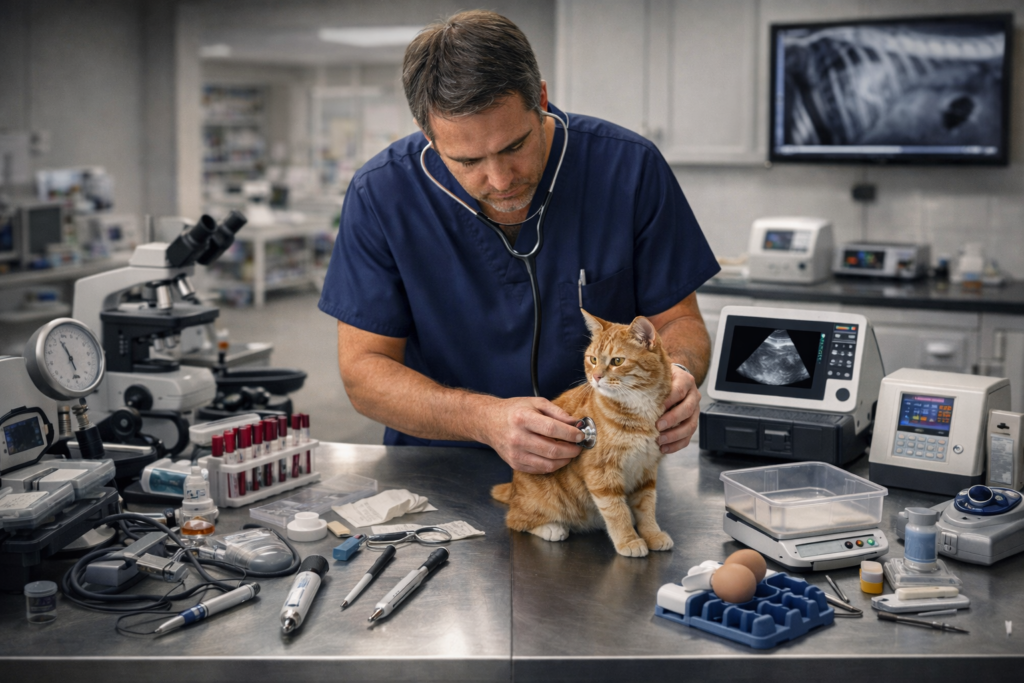
Diagnosis is where veterinary medicine actually begins. Before a treatment plan is written, before a drug is dispensed, before surgery is scheduled — a diagnosis must be made. And the accuracy, speed, and confidence of that diagnosis are determined almost entirely by the diagnostic tools available to the clinician at the moment they need them.
In 2026, the gap between a veterinary clinic with strong diagnostic capability and one with weak diagnostic infrastructure is not a gap in the quality of the veterinarians — it is a gap in the tools they have to work with. A skilled clinician without a blood analyzer, an ultrasound machine, or a reliable blood pressure monitor is limited not by their clinical judgment but by their equipment. The right diagnostic veterinary tools eliminate uncertainty, accelerate decisions, improve outcomes, and communicate findings to clients with a clarity no verbal explanation alone can achieve.
Section 1 — What Are Diagnostic Veterinary Tools?
How Diagnostic Tools Differ from General Veterinary Equipment
Not all veterinary equipment is diagnostic equipment. Surgical tables, autoclaves, fluid warmers, and recovery cages are essential tools — but they support treatment, not diagnosis. Diagnostic tools generate clinical information that guides every subsequent decision.
| Diagnostic Tools | General/Treatment Equipment |
|---|---|
| Stethoscope, otoscope, ophthalmoscope | Surgical instruments |
| Digital X-ray, ultrasound | Autoclave, sterilizer |
| CBC analyzer, chemistry analyzer | IV pump, fluid warmer |
| Microscope, centrifuge | Recovery cage, warming blanket |
| Blood pressure monitor, ECG | Anesthesia machine (treatment support) |
| Endoscopy system | Procedure tables (support role) |
What Diagnostic Tools Support
In a modern veterinary practice, diagnostic tools support every stage of the clinical encounter:
- Physical examination — first-line sensory assessment of body systems
- Point-of-care laboratory testing — same-visit blood, urine, and cytology results
- Diagnostic imaging — structural and soft-tissue visualization
- Physiological monitoring — real-time vital sign and organ function assessment
- Clinical decision confirmation — evidence-based treatment planning and client communication
Section 2 — Why Diagnostic Equipment Matters in a Veterinary Clinic
Equipment matters in a veterinary clinic the way tools matter in any precision profession — the quality and availability of tools either enables or limits what the practitioner can achieve.
Speed and Accuracy of Diagnosis
A vet clinic without in-house laboratory capability sends blood samples to an external laboratory and waits hours to days for results. A clinic with in-house analyzers has the same results in 10–15 minutes, during the same appointment. That difference in turnaround time is not a convenience — it changes the entire clinical encounter. Same-visit diagnosis allows same-visit treatment decisions, reduces re-visit rates, and prevents diagnostic delays that can be clinically significant in sick or deteriorating patients.
Reduction of Clinical Uncertainty
Veterinary medicine operates under a fundamental challenge: patients cannot describe their symptoms. Every diagnostic tool is a structured method of compensating for that communication barrier. A blood pressure measurement that reveals hypertension in a cat with apparent renal disease confirms a systemic problem that changes the treatment protocol entirely. An ultrasound finding of free abdominal fluid in a collapsed dog transforms a “collapse” case into a surgical emergency in seconds. Without the tools, these findings are not made — the clinical outcome is worse.
Workflow Efficiency and Practice Management
Every diagnostic tool that delivers reliable, rapid results in-house reduces the bottlenecks that fragment a clinic’s workflow. When diagnosis requires external referral for imaging or laboratory testing, the patient leaves the clinic undiagnosed, the treatment plan is delayed, staff must manage follow-up communication, and client trust diminishes. In-house diagnostic capability compresses the cycle from presentation to treatment decision, and that compression delivers measurable improvements in practice management efficiency, appointment value, and client satisfaction.
Client Communication and Trust
A radiograph displayed on a screen, an ultrasound image showing an organ abnormality, or a blood chemistry result showing kidney values two-and-a-half times normal reference range — these are not just clinical findings. They are communication tools. They make the invisible visible for a pet owner who needs to understand why a treatment is being recommended and why it should be accepted. Clinics that invest in strong diagnostic equipment have consistently better client communication capability as a direct result.
Section 3 — Essential Diagnostic Tools in the Exam Room
The examination room is the first diagnostic environment in every clinical encounter. The tools here are the first-line sensory instruments that provide the clinical baseline from which every subsequent diagnostic decision flows.
Stethoscope
What it does: Auscultates cardiac sounds, respiratory sounds, and gastrointestinal motility. Detects heart murmurs, arrhythmias, pulmonary crackles, pleural effusion, and intestinal hypomotility.
Why it is essential diagnostic equipment: The stethoscope remains the most clinically important instrument in veterinary medicine precisely because no imaging system, no blood analyzer, and no monitoring device replaces it at the point of first contact. A grade II/VI left-sided systolic heart murmur detected on stethoscope in a 7-year-old Cavalier King Charles Spaniel is a finding that changes the entire diagnostic and management plan for that patient. A finding that is missed entirely with a poor-quality acoustic instrument.
Selection note: A quality acoustic stethoscope — Cardiology III grade or equivalent — provides measurably superior auscultation to budget models. For veterinary practices seeing significant feline or small exotic caseloads, a small-diaphragm bell head improves sensitivity for subtle sounds in smaller patients.
Must-have. No substitution. Buy once, buy well.
Digital Thermometer
What it does: Measures core body temperature via rectal or auricular route. Detects fever, hypothermia, and monitors anesthetic recovery.
Diagnostic significance: Temperature is one of the four classic vital signs and a fundamental triage parameter. Pyrexia narrows the differential diagnosis list; hypothermia indicates shock or post-anesthetic complications; normal temperature in a sick patient changes the diagnostic direction. Multiple units are recommended — they are inexpensive and heavily used.
Selection note: Digital rectal thermometers remain the accuracy gold standard. Infrared auricular thermometers are faster but less reliable in small feline ear canals. Combined digital-display models with memory recall for trend tracking are preferable for hospitalized patients.
Otoscope
What it does: Directly visualizes the external ear canal, tympanic membrane, and nasal passages. Identifies otitis externa, polyps, foreign bodies, and perforated tympanic membranes.
Why it matters: Otitis externa is one of the most common presenting complaints in small animal practice. An otoscope examination determines whether infection is bacterial, yeast, or mite-related; whether the tympanum is intact (a treatment-critical finding — certain ear medications are contraindicated in perforated ears); and whether deeper disease requires further investigation.
Upgrade path: Video otoscope systems display canal images on a monitor, dramatically improving examination thoroughness, enabling guided flushing under visualization, and providing images for client communication and medical records. A strong upgrade for any clinic managing chronic ear disease.
Ophthalmoscope
What it does: Examines the anterior eye chamber, lens, vitreous, retina, optic disc, and fundus. Identifies retinal detachment, hemorrhage, cataracts, papilledema, and uveitis.
Diagnostic significance: Ocular findings are windows to systemic disease. Hypertensive retinopathy in cats with chronic kidney disease or hyperthyroidism, diabetic lenticular changes in dogs, retinal vascular disease, and infectious chorioretinitis — all visible ophthalmoscopically and all pointing to systemic diseases that require systemic investigation.
Selection note: Coaxial ophthalmoscopes provide the clearest fundic views by eliminating corneal reflection interference. Combined otoscope/ophthalmoscope kits are cost-effective for general practice. Direct ophthalmoscopes are appropriate for most general practices; indirect ophthalmoscopes are specialist tools for ophthalmology.
Blood Pressure Monitor
What it does: Measures systolic, diastolic, and mean arterial blood pressure. Identifies hypertension, hypotension, and shock states.
Why it is non-negotiable in modern veterinary medicine: Systemic hypertension is prevalent in cats with chronic kidney disease and hyperthyroidism — two of the most common diseases in the geriatric feline population. Hypertension causes target organ damage to the retina, kidneys, heart, and brain that can be prevented with early detection and treatment. A veterinary practice that does not routinely measure blood pressure in at-risk patients is missing a clinically significant finding in a substantial proportion of its senior cat caseload.
Intraoperative significance: Hypotension during anesthesia is the most common and most dangerous cardiovascular complication. Blood pressure monitoring during every anesthetic event is not an optional extra — it is the standard of care.
Types in practice:
- Doppler — gold standard for cats and small patients; audible pulse allows accurate cuff deflation endpoint detection
- Oscillometric — automated; more practical for repeated readings in cooperative patients; less reliable in cats
- Multi-parameter monitor with NIBP — integrates blood pressure with ECG, SpO2, and ETCO2 for surgical monitoring
Procedure Tables as a Diagnostic Workflow Tool
Procedure tables are not purely diagnostic instruments, but their role in the diagnostic workflow is direct and significant. A stable, non-slip, appropriately sized exam surface determines the quality of the physical examination the clinician can perform.
Hydraulic lift tables allow the clinician to position patients at optimal examination height — reducing the physical compromise of working at fixed awkward angles, and enabling more thorough abdominal palpation, orthopedic examination, and neurological assessment. A tilting table allows lateral and dorsal positioning for examination procedures without additional restraint staff. The exam table is, in this sense, a diagnostic precision tool.
Section 4 — In-House Laboratory Diagnostic Tools
In-house laboratory capability is the highest diagnostic value investment a veterinary clinic can make after the core imaging tools. The ability to generate laboratory results during the patient’s appointment — rather than 24–48 hours later from an external laboratory — fundamentally changes what a veterinary practice can accomplish in a single clinical encounter.
Microscope
What it does: Enables direct visualization of cells, microorganisms, parasites, and tissue samples at 4x, 10x, 40x, and 100x (oil-immersion) magnification.
Daily applications in a veterinary clinic:
- Ear cytology — identifies bacterial, yeast, or mite components of otitis; directs treatment selection
- Skin cytology and impression smears — distinguishes inflammatory from neoplastic lesions
- Blood smear evaluation — confirms automated analyzer differentials, identifies morphological abnormalities (Heinz bodies, spherocytes, parasitemia)
- Fecal flotation and direct smear — parasite identification and lifecycle staging
- Urinalysis sediment examination — crystals, casts, bacteria, red cells, white cells
- Fine needle aspirate interpretation — preliminary cytological assessment of masses and lymph nodes
- Vaginal cytology — breeding timing in dogs
Selection: A quality binocular compound microscope with a mechanical stage, built-in illumination, and objectives at 4x, 10x, 40x, and 100x oil-immersion is the standard. Plan camera attachment or digital imaging capability for documentation and client communication. Microscopes are precise optical instruments — purchase from established manufacturers and never compromise on objective lens quality.
Must-have. Used multiple times daily in any full-service veterinary practice.
Centrifuge
What it does: Separates blood and other biological fluids by density differential using controlled centrifugal force.
Applications:
- Packed cell volume (PCV) / hematocrit — rapid anemia detection from a microhematocrit tube spin; 3 minutes to result; does not require an analyzer
- Plasma protein estimation — with refractometer after PCV spin
- Serum preparation — separation of serum from clotted blood for chemistry analysis
- Urinalysis sediment preparation — concentrates cells and casts for microscopic examination
- Fecal flotation concentration — centrifugal flotation technique is significantly more sensitive than passive flotation for parasite egg detection
Selection: A variable-speed microhematocrit centrifuge with a swing-out or fixed-angle rotor is standard. Ensure compatibility with both microhematocrit tubes and standard laboratory tubes. Bench-top models with a maximum speed of 3000–4000 RPM serve most clinic laboratory needs effectively.
Refractometer
What it does: Measures the refractive index of a fluid, used in veterinary practice to determine urine specific gravity and plasma total protein.
Why it belongs in every clinic: Urine specific gravity is a critical diagnostic parameter in the investigation of renal disease, diabetes insipidus, and hyperadrenocorticism. Plasma total protein measurement from a post-centrifuge serum or plasma sample provides immediate patient assessment without requiring an analyzer. A refractometer costs a fraction of any analyzer and delivers results in under 60 seconds. It is one of the most cost-effective diagnostic devices in the entire clinic.
Selection: Veterinary-specific refractometers with cat-specific scale for urine specific gravity are preferable, as feline urine refractive characteristics differ from the canine scale that human clinical refractometers are calibrated for.
Hematology Analyzer (CBC Analyzer)
What it does: Performs a complete blood count (CBC) — measuring red blood cell count and indices, white blood cell count and differential, platelet count, and hemoglobin concentration from a whole blood sample.
Clinical significance: The CBC is the most commonly requested blood test in veterinary medicine. It reveals anemia (type and severity), infection and inflammation (neutrophilia, neutropenia), immune-mediated disease, thrombocytopenia (bleeding risk), polycythemia, and bone marrow abnormalities. It is required for pre-anesthetic screening, sick patient workup, chemotherapy monitoring, post-surgical follow-up, and routine senior wellness panels.
In-house vs. external laboratory: External CBC results arrive in 12–24 hours. In-house CBC analyzers provide results in under 3 minutes. For sick, deteriorating, or pre-anesthetic patients, the 24-hour wait is clinically unacceptable. In-house hematology is one of the fastest payback diagnostic investments in a growing veterinary clinic.
Key selection criteria:
- Veterinary-specific species calibration (many human hospital analyzers are inaccurate for animal blood cells)
- Five-part white cell differential (more informative than three-part differentiation)
- Flagging system for abnormal results requiring blood smear review
- Throughput compatible with daily case volume
- Reagent pack design and consumable cost per test
- Integration with practice management software
Chemistry Analyzer
What it does: Measures biochemical markers in serum or plasma — organ function values (liver enzymes, kidney markers, bilirubin), glucose, electrolytes, proteins, lipids, and endocrine markers depending on analyzer capability.
Essential panels in daily veterinary practice:
- Hepatic panel — ALT, ALP, GGT, bilirubin, albumin — liver function assessment
- Renal panel — BUN, creatinine, phosphorus, potassium — kidney function
- General health screen — combination panel for senior wellness and pre-anesthetic screening
- Diabetic monitoring — glucose, fructosamine
- Electrolyte analysis — sodium, potassium, chloride — critical in vomiting, diarrheal, and urinary obstruction cases
Combination analyzers integrating chemistry, electrolytes, and immunoassay (cortisol, T4, progesterone, bile acids) in a single platform provide the most flexible in-house diagnostic capability and are preferred for clinics that intend to develop comprehensive in-house laboratory services.
Selection note: Assess reagent shelf life, minimum sample volume (important for cats and small patients), calibration frequency, quality control protocol, and service contract availability. Low-cost analyzers with poor accuracy deliver misleading results — the clinical cost of a false negative or false positive chemistry result can significantly exceed any equipment savings.
Blood Gas and Electrolyte Analyzers
What they do: Measure arterial or venous blood gas values (pH, PO2, PCO2, bicarbonate, base excess) and electrolytes from a small whole-blood sample.
When they matter: Critical care cases — acidosis or alkalosis assessment in vomiting, diarrheal, or respiratory cases; potassium monitoring in urinary obstruction; ventilatory assessment during anesthesia. Not a Day 1 purchase for most general practices, but increasingly important as clinical complexity grows.
Rapid Immunoassay and Point-of-Care Test Kits
What they do: Deliver pathogen-specific or biomarker-specific results from a patient sample (blood, fecal, urine, swab) within 10–15 minutes using lateral-flow or ELISA-format cassette technology.
Commonly used rapid tests in small animal practice:
- Parvovirus fecal antigen (dogs)
- Feline panleukopenia (cats)
- FIV antibody / FeLV antigen combination test
- Heartworm antigen test (dogs)
- Giardia antigen (fecal)
- Leishmania antibody (endemic regions)
- Borrelia antibody (Lyme endemic regions)
Classification: Essential for every small animal veterinary clinic. Test kits are inexpensive, require no analyzer infrastructure, and deliver actionable information within the appointment.
Section 5 — Diagnostic Imaging Equipment
Diagnostic imaging takes veterinary diagnosis from what can be detected by examination and laboratory testing into what can be directly visualized inside the living patient. It is the most capital-intensive diagnostic investment a clinic makes — and one that delivers the most transformative improvement in diagnostic capability per dollar spent.
Digital X-Ray (Digital Radiography — DR)
What it does: Uses controlled X-ray exposure to create digital images of skeletal structures, thoracic organs, abdominal contents, and dental structures.
Clinical applications:
- Musculoskeletal: fractures, dislocations, joint disease, bone tumors, hip and elbow dysplasia scoring
- Thoracic: cardiac enlargement, pulmonary patterns (pneumonia, edema, neoplasia), pleural effusion, tracheal displacement, esophageal foreign bodies
- Abdominal: intestinal obstruction patterns, cystic calculi, bladder stones, hepatomegaly, splenomegaly, free gas (GI perforation)
- Dental (intraoral): tooth root disease, resorptive lesions, periodontal bone loss, retained roots
DR vs. CR radiography:
Modern flat-panel DR (direct radiography) systems capture images instantly on a digital flat-panel detector and display them on a review workstation in seconds — no cassette handling, no processing delay, no image degradation. CR (computed radiography) cassette systems require cassette transport to a reader and processing time. DR is the standard of care in 2026 for any new installation.
Why digital X-ray is essential diagnostic equipment:
The conditions reliably diagnosed by radiography — pneumonia, congestive heart failure, GDV, urinary stones, long bone fractures, intestinal obstruction — include some of the most time-sensitive emergencies in small animal practice. A clinic without X-ray capability cannot safely manage these cases without referral. For any full-service veterinary practice, digital X-ray is not an optional upgrade — it is a Day 1 diagnostic requirement.
Essential for every full-service veterinary clinic. The single most indispensable imaging tool alongside ultrasound.
Ultrasound Machine
What it does: Uses high-frequency sound waves to generate real-time images of soft tissues, organs, and fluid-filled structures that X-ray cannot visualize.
Clinical applications:
- Abdominal: liver parenchymal texture, spleen, kidneys, adrenal glands, urinary bladder wall, intestinal wall layering, free abdominal fluid, lymph node assessment
- Cardiac (echocardiography): chamber dimensions, wall motion, valve morphology and function, pericardial effusion, cardiomyopathy assessment
- Reproductive: uterine disease, ovarian pathology, pregnancy diagnosis, fetal viability
- Musculoskeletal: tendon and ligament assessment
- Interventional: fine-needle aspirate guidance, fluid centesis guidance, biopsy guidance
How ultrasound complements X-ray:
These two modalities are not redundant — they are complementary. X-ray excels at bone and gas-filled structure evaluation; ultrasound excels at soft tissue and fluid characterization. A dog with abdominal pain and radiographic loss of abdominal detail benefits from ultrasound evaluation to characterize free fluid, identify organ lesions, and guide diagnostic centesis. A cat with a palpable abdominal mass and unremarkable radiograph benefits from ultrasound to characterize the mass origin and architecture before aspiration.
Probe selection for small animal practice:
- Microconvex probe (5–8 MHz) — most versatile for abdominal and cardiac scanning in dogs and cats
- Linear probe (7–15 MHz) — musculoskeletal, vascular, and superficial structure imaging
- Phased array cardiac probe — dedicated echocardiography; higher quality but specialty use
Selection note: Image quality in ultrasound is determined by the probe quality and the machine’s processing capability more than any other single factor. A budget ultrasound with poor probe quality delivers images that reduce diagnostic confidence rather than increase it. High-quality equipment here is not a luxury — it is a clinical requirement.
Endoscopy
What it does: Passes a flexible or rigid fiberoptic or digital camera system into body cavities and hollow organs for direct visualization.
Applications by system:
- Gastrointestinal endoscopy (gastroscopy, colonoscopy) — evaluates esophageal, gastric, and intestinal mucosa; retrieves foreign bodies; obtains mucosal biopsies; assesses polyps and masses; gastric ulcer evaluation in horses
- Rhinoscopy — evaluates nasal passages for foreign bodies, polyps, fungal plaques, and neoplasia
- Tracheobronchoscopy — assesses tracheal collapse, bronchial disease, and inhaled foreign bodies
- Urethrocystoscopy — evaluates lower urinary tract in female patients; calculi, masses, strictures
- Otoscopy (video) — deep ear canal visualization and guided treatment
Classification: Recommended for any veterinary practice with medium-to-high case volume in internal medicine, gastroenterology, and respiratory disease. Essential for referral and internal medicine specialty practices. Advanced but high-value for general practices seeing significant foreign body ingestion caseload.
CT Scanner (Computed Tomography)
What it does: Uses rotating X-ray sources and digital reconstruction to create three-dimensional cross-sectional images of any body region with exceptional resolution.
Clinical applications: Neurology (brain and spinal cord disease), oncology (staging and surgical planning), complex orthopedic cases, nasal tumor assessment, dental and jaw pathology, thoracic vascular abnormalities.
Classification: Advanced equipment appropriate for referral centers, neurology and oncology specialty practices, and large multi-doctor hospitals with high surgical complexity. Not a Day 1 or Year 1 investment for a general veterinary clinic.
Practical access note: Many veterinary clinics access CT capability through mobile CT service providers that visit the practice on scheduled days — delivering advanced imaging access without the capital expenditure, physical space requirement, or maintenance burden of an owned CT unit. This is a practical and economical approach for practices that need occasional CT capability.
Section 6 — Monitoring and Procedure-Support Devices
Monitoring devices occupy the boundary between diagnostics and treatment support. They generate continuous diagnostic information — vital signs, physiological parameters, organ function indicators — that guide clinical decisions during anesthesia, hospitalization, and critical care.
Multi-Parameter Patient Monitor
Combines in one unit:
- SpO2 (pulse oximetry) — blood oxygen saturation; critical anesthesia safety parameter
- Capnography (ETCO2) — end-tidal CO2; the most sensitive indicator of respiratory adequacy and ventilation; detects esophageal intubation, apnea, and circuit disconnection before SpO2 changes
- ECG — cardiac rhythm monitoring; arrhythmia detection during anesthesia and cardiac evaluation
- NIBP (non-invasive blood pressure) — continuous blood pressure monitoring during procedures
- Temperature probe — hypothermia detection and warming management in recovery
Why it matters diagnostically: The multi-parameter monitor is not purely a surgical safety device — it generates diagnostic information that changes clinical management in real time. A temperature of 36.2°C in a post-surgical cat triggers an immediate warming intervention. An ETCO2 rise suggests hypoventilation that warrants manual ventilation assistance. These are diagnostic findings in a clinical monitoring context.
IV Pumps and Syringe Pumps
IV pumps and syringe pumps are treatment delivery devices, but their role in diagnostic workflow is significant. They allow precise delivery of drugs for diagnostic procedures (sedation for imaging studies, chemical restraint for examination), constant-rate infusions during diagnostic workup of critical patients, and fluid therapy at calculated rates during stabilization before diagnostic testing.
The precision these devices provide — volume-controlled rather than gravity-drip delivery — also reduces the physiological interference that fluid overload or under-delivery can create in diagnostic test results. Fluid status affects kidney biomarkers, protein values, and packed cell volume — all diagnostically significant parameters.
Anesthesia Machines
Anesthesia machines directly enable a category of diagnostic procedures that cannot be performed on a conscious, unsedated patient: imaging under controlled positioning, endoscopic examination, CT scanning, echocardiography in dyspneic patients, and complex physical examination in fractious or painful animals.
The diagnostic capability of a veterinary clinic is therefore partially bounded by its anesthetic capability. A clinic that can safely anesthetize patients with appropriate monitoring can perform a far broader range of diagnostic procedures than one that cannot. In this sense, the anesthesia machine and its associated monitoring — while primarily treatment infrastructure — directly expands diagnostic reach.
Procedure Tables in the Diagnostic Workflow
Procedure tables support diagnostic quality in ways that are underappreciated. Adjustable-height hydraulic tables allow the clinician to position for optimal auscultation, palpation, and examination technique. Non-slip surfaces allow examination without the distraction and patient stress of a struggling animal seeking traction. Tilting tables allow lateral and dorsal positioning for neurological and orthopedic examination without requiring additional restraint staff.
Section 7 — Must-Have vs. Advanced Diagnostic Equipment
Diagnostic Equipment Priority Framework
| Equipment | Priority | Stage |
|---|---|---|
| Stethoscope (Cardiology grade) | Must-have | Day 1 |
| Digital thermometers (multiple) | Must-have | Day 1 |
| Otoscope with multiple speculum sizes | Must-have | Day 1 |
| Ophthalmoscope | Must-have | Day 1 |
| Blood pressure monitor (Doppler) | Must-have | Day 1 |
| Refractometer (veterinary-specific) | Must-have | Day 1 |
| Centrifuge (microhematocrit) | Must-have | Day 1 |
| Microscope (binocular, quality) | Must-have | Day 1 |
| Rapid test kits (FIV/FeLV, parvo, HW, Giardia) | Must-have | Day 1 |
| Digital X-ray (DR flat-panel) | Must-have | Day 1 |
| Ultrasound machine (with microconvex probe) | Must-have | Month 1–3 |
| Hematology analyzer (CBC) | Must-have | Month 1–3 |
| Chemistry analyzer | Must-have | Month 1–3 |
| Multi-parameter patient monitor | Must-have | Day 1 (if doing anesthesia) |
| Video otoscope | Strong upgrade | Growth stage |
| Blood gas analyzer | Recommended | Growing complex caseload |
| Electrolyte analyzer (standalone) | Recommended | Higher critical care volume |
| Endoscopy system | Recommended | Medium-high internal medicine volume |
| Intraoral dental X-ray | Recommended | Standard of care with dental capability |
| Advanced echocardiography probe | Advanced | Cardiology referral or high cardiac volume |
| CT scanner | Advanced | Referral center or specialist practice |
| MRI | Advanced | Neurology specialist practice |
What to Buy First
For a new veterinary practice, the first-priority diagnostic investments are:
- Core exam room tools (stethoscope, thermometer, otoscope, ophthalmoscope, blood pressure) — these cost relatively little and provide everything needed for physical examination
- Basic laboratory (centrifuge, refractometer, microscope, rapid test kits) — inexpensive and used multiple times daily
- Digital X-ray — the highest single capital expenditure but non-negotiable for full-service capability
- In-house analyzers (CBC + chemistry) — same-visit diagnostic results; fast payback on investment
- Ultrasound — highest soft-tissue diagnostic value; complements X-ray completely
Section 8 — How to Choose the Right Diagnostic Veterinary Equipment
The Diagnostic Equipment Buyer Framework
1. Assess your real case mix before making any purchase
A feline-only practice has different diagnostic priorities from a mixed animal practice or a farm-service clinic. Species mix, condition types, and emergency frequency determine which tools will be used daily and which will sit idle.
2. Prioritize based on clinical urgency, not feature appeal
The most feature-rich analyzer or the most advanced ultrasound machine is not the most valuable purchase for a clinic that primarily sees wellness appointments and minor illness. Buy for your actual daily case volume and case type.
3. Evaluate service support as rigorously as technical specifications
A diagnostic instrument that fails and cannot be serviced for two weeks has zero clinical value during that period. Assess the manufacturer or supplier’s service response time, local technical support availability, loaner equipment availability during service, and the distributor’s reputation in your region.
4. Calculate total cost of ownership, not just purchase price
Consumable cost per test, reagent shelf life, quality control material cost, calibration consumables, preventive maintenance contracts, and software update fees are all part of the real cost of owning an analyzer. A lower-priced instrument with high consumable costs can be significantly more expensive over three to five years than a higher-priced unit with efficient consumable design.
5. Calibration burden matters for workflow
Analyzers that require frequent calibration, complex quality control protocols, or specialist service for recalibration create workflow interruptions and staff training burdens. In a busy clinical environment, equipment that is easy to calibrate and maintain is equipment that gets used correctly — equipment that is difficult to maintain gets used incorrectly, or not at all.
6. Match throughput to case volume
A hematology analyzer rated for 20 samples per hour is adequate for a low-volume practice but becomes a bottleneck in a high-volume hospital. Assess maximum throughput at peak periods, not average daily volume.
7. Consider space constraints realistically
Imaging systems require dedicated rooms with appropriate radiation shielding (X-ray), sufficient floor space for equipment and the patient (ultrasound, CT), and utility connections. Assess your physical clinic layout before committing to imaging equipment that cannot be appropriately installed in your facility.
8. Verify staff training requirements
Some diagnostic systems — ultrasound interpretation, advanced analyzer operation, endoscopy — require significant operator skill development. Factor training time, continuing education, and the availability of internal expertise before purchasing advanced diagnostic tools.
Section 9 — Diagnostic Tools, Practice Management, and Inventory Management
Diagnostic equipment does not exist in isolation — it reshapes how a veterinary practice operates, how it is staffed, how appointments are structured, and how consumables must be managed.
How In-House Diagnostics Change Practice Management
When a veterinary clinic installs in-house laboratory capability, the appointment workflow changes fundamentally. Blood draws, sample preparation, and analyzer operation must be integrated into appointment flow. Veterinary technicians take on expanded roles in sample collection, analyzer operation, quality control, and result documentation. Appointment scheduling must account for the time required for sample processing and result interpretation. Practice management software must integrate with analyzer data output to capture results in the patient record automatically.
For clinics managing this transition well, the result is a significant improvement in appointment value, diagnostic revenue, and client satisfaction. For clinics that install analyzers without adapting their workflow, the result is bottlenecked appointments, staff frustration, and underused equipment.
Inventory Management Becomes a Clinical Responsibility
Every diagnostic device generates a consumable supply chain that must be managed with the same discipline as drug inventory.
Critical consumable categories for diagnostic tools include:
- Hematology analyzer: Reagent packs, diluents, lyse solutions, quality control materials, capillary tubes
- Chemistry analyzer: Reagent slides or cartridges (multiple test panels), calibration materials, QC materials
- Microscopy: Immersion oil, staining solutions (Diff-Quik, modified Wright’s), cover slips, glass slides, labeled tubes
- Rapid test kits: All test kits have expiry dates; maintain appropriate stock levels without exceeding storage capacity and causing waste
- X-ray: No film consumables in DR systems, but developer chemistry requires management in CR systems; positioning aids, radiation dosimetry badges
- Ultrasound: Coupling gel (high volume in active use)
A dedicated diagnostic consumable inventory management system — even if it is a structured section within the existing practice management software — prevents stockouts that disable diagnostic capability and prevents waste from expired products.
Scheduling and Staffing Implications
In-house laboratory capability allows same-day results, which allows same-day treatment decisions. This changes the scheduling model: appointments that previously required a follow-up visit for results communication can now be completed in a single visit. This improves client satisfaction and reduces rebooking burden, but also requires that sufficient appointment time is allocated for laboratory processing during the initial visit. Plan appointment slot durations to accommodate sample collection, processing time, and result discussion when scheduling diagnostic workups.
Section 10 — Diagnostic Tools and Client Communication
The diagnostic tools a clinic owns are, simultaneously, client communication tools. This is one of the most underappreciated dimensions of diagnostic equipment investment.
How Imaging Transforms Client Understanding
A verbal explanation that “your dog has fluid around the heart” conveys a clinical finding. An ultrasound image displayed on a client-facing monitor showing the echogenic pericardial effusion around the moving heart demonstrates that finding in a way that is immediate, visual, and emotionally impactful. Clients who see the diagnostic evidence of the condition their pet has consistently show higher treatment acceptance rates, greater willingness to authorize further diagnostic workup, and stronger compliance with prescribed management plans.
The same principle applies to radiographs: a chest X-ray showing a massively enlarged cardiac silhouette in a dog with suspected dilated cardiomyopathy is a finding that communicates severity in a way that no verbal description replicates. A dental radiograph showing the subgingival bone loss and root resorption that explains a cat’s chronic oral pain demonstrates the clinical reality of a condition that was invisible to both owner and clinician without the imaging tool.
How Laboratory Results Support Clinical Discussions
Blood chemistry results showing creatinine three times above the upper reference range, or a white blood cell count showing significant neutrophilia with a left shift, provide a documented, quantified basis for the clinical conversation that follows. Clients make better decisions — for their pet and for their budget — when they understand the clinical basis of the recommendation.
In-house laboratory results also enable same-appointment result communication, which transforms the veterinary visit from a collection-and-wait experience to a diagnosis-and-plan experience within a single appointment. That transformation changes the client experience fundamentally, builds trust in the veterinary practice, and improves the follow-through rate on treatment plans.
Practice Identity and Perceived Quality
The diagnostic tools visible in an exam room and diagnostic area communicate the standard of the veterinary clinic before a word is spoken. A clinic with a digital X-ray viewer on the exam room wall, a visible laboratory area with professional equipment, and a practitioner who uses a quality stethoscope and diagnostic instruments signals clinical seriousness to an observant pet owner. That signal builds trust — and trust is the foundation of the long-term client relationships that sustain a veterinary practice.
Section 11 — Common Mistakes When Buying Diagnostic Veterinary Tools
Buying broad equipment without workflow planning
Installing a chemistry analyzer without planning who will run it, how samples will flow from the exam room to the lab bench, how results will be captured in the practice management system, and how result turnaround time will be communicated to the clinician — is not a diagnostic upgrade. It is a piece of equipment that creates confusion until the workflow is built around it.
Underinvesting in essential diagnostic tools
Some clinics attempt to minimize startup costs by deferring in-house laboratory capability or digital imaging, relying on external laboratory services and referral. This reduces diagnostic revenue, extends diagnosis-to-treatment timelines, reduces appointment value, and signals limited capability to discerning clients. Essential diagnostic tools have demonstrable payback periods — they are investments, not costs.
Overbuying advanced equipment too early
A CT scanner in a two-doctor general practice is an equipment purchase that precedes the clinical volume and referral relationships needed to justify it. Advanced diagnostic equipment delivers ROI only when case volume and case complexity are sufficient to generate utilization above the depreciation threshold. Buy for where your practice is, not where you hope it will be in five years.
Ignoring maintenance and calibration requirements
Equipment that is not correctly calibrated delivers inaccurate results. A chemistry analyzer running without current quality control validation, or an ultrasound machine with an unmaintained transducer, is a diagnostic liability. Approximately 46% of veterinary diagnostic laboratory equipment globally has been found to be improperly calibrated in survey research — a statistic that should focus every clinic owner on their maintenance protocols.
Choosing tools without considering service support
A diagnostic analyzer purchased at a significant discount from a supplier with no local service presence, no loaner equipment program, and a two-week service response time creates unacceptable clinical downtime risk. Service support quality is not a secondary evaluation criterion — it is a primary one.
Overlooking lab consumables and inventory management
Running out of analyzer reagents on a busy Monday morning, or discovering that rapid test kits have expired after a batch was stored incorrectly, disables diagnostic capability at the worst possible time. Consumable inventory management is a clinical operations responsibility, not an administrative afterthought.
Focusing on brand trendiness instead of clinical value
The most marketed product is not always the most clinically valuable one for a specific practice’s needs. Evaluate diagnostic equipment against your actual case mix, workflow, staff capability, and consumable cost before purchasing. Decision-making frameworks beat marketing materials every time.
Section 12 — FAQ
What diagnostic tools does every veterinary clinic need?
Every veterinary clinic needs: a quality stethoscope, digital thermometers, otoscope and ophthalmoscope, blood pressure monitor (Doppler for cats), refractometer, centrifuge, microscope, rapid test kits (parvovirus, FIV/FeLV, heartworm, Giardia), digital X-ray system, ultrasound machine with microconvex probe, hematology (CBC) analyzer, and chemistry analyzer. These tools form the diagnostic foundation of full-service veterinary practice.
What is the most essential diagnostic device in a vet clinic?
The stethoscope remains the single most universally essential diagnostic device because it is used in every patient encounter regardless of species, age, or complaint. Among the larger equipment categories, digital X-ray and ultrasound together represent the most impactful diagnostic investment because they visualize internal structures that no examination or laboratory test can reveal.
Are blood pressure monitors necessary in veterinary medicine?
Yes — without qualification. Hypertension is prevalent in cats with chronic kidney disease and hyperthyroidism. Hypotension during anesthesia is the most dangerous intraoperative cardiovascular complication. Blood pressure monitoring during anesthetic events is the standard of care, and blood pressure screening in senior feline patients is a clinical quality-of-care metric.
Should a new veterinary practice buy ultrasound or digital X-ray first?
Both are essential, and both should be in the Year 1 plan. If forced to sequence, digital X-ray should be purchased first — it enables diagnosis of the most time-critical emergencies (GDV, thoracic disease, foreign body obstruction, fractures) that a new clinic will encounter on Day 1. Ultrasound should follow within the first few months, as its soft-tissue diagnostic capability is not replicated by any other in-clinic tool.
What is the difference between basic and advanced veterinary diagnostic equipment?
Basic diagnostic equipment — stethoscope, thermometer, otoscope, ophthalmoscope, refractometer, centrifuge, rapid tests — delivers immediate results from physical examination and simple sample analysis at low cost. Essential diagnostic equipment — CBC analyzer, chemistry analyzer, digital X-ray, ultrasound — requires capital investment but delivers the diagnostic depth needed for full-service clinical practice. Advanced diagnostic equipment — CT, endoscopy, blood gas, echocardiography — adds specialty-level capability appropriate for higher case complexity or referral practice.
How do IV pumps and anesthesia machines support diagnostic workflow?
IV pumps and anesthesia machines enable diagnostic procedures that cannot be performed safely on an unsedated or unanaesthetized patient — imaging under controlled positioning, endoscopy, CT scanning, and echocardiography in distressed patients. They also provide the physiological stability (fluid management, anesthetic depth) that ensures patients are in optimal condition for diagnostic sample collection and result interpretation.
Why does high-quality equipment matter in veterinary diagnostics?
High-quality diagnostic equipment delivers accurate, reproducible results that low-quality alternatives cannot consistently achieve. An inaccurate hematology analyzer, a poor-resolution ultrasound probe, or a miscalibrated chemistry analyzer does not simply provide “slightly less accurate” results — it provides results that may actively mislead clinical decision-making. In diagnostics, equipment quality is directly equivalent to diagnostic accuracy.
How do diagnostic tools improve client communication?
Diagnostic tools make clinical findings visible and comprehensible to pet owners. Imaging displayed on a client-facing monitor, laboratory results printed with reference ranges and flagged abnormalities, and real-time ultrasound showing cardiac or abdominal pathology during the examination — these convert clinical findings from expert interpretation into shared visual evidence. Pet owners who see the diagnostic basis of a recommendation accept treatment plans more readily and comply more consistently.
Section 13 — Conclusion: Diagnostics Are the Foundation of Veterinary Medicine
Every effective treatment decision in a veterinary practice rests on a diagnostic foundation. The quality of that foundation — the accuracy of the stethoscope findings, the precision of the blood analyzer results, the resolution of the imaging system, the sensitivity of the rapid tests — determines the quality of every clinical decision that follows from it.
The veterinary clinics that deliver the best patient outcomes, retain the most loyal clients, and build the most sustainable practices are not simply the ones with the most experienced clinicians. They are the ones where experienced clinicians have the right diagnostic tools to work with — tools that are calibrated, maintained, appropriate to the caseload, and integrated into a workflow that uses them correctly every day.
Build your diagnostic capability in phases: core examination tools and basic laboratory from Day 1; digital X-ray and in-house analyzers as early as possible; ultrasound within the first quarter; advanced imaging and specialty diagnostics as case volume and clinical complexity warrant. Maintain what you buy with the discipline that precision instruments require. Manage your consumable inventory as carefully as your drug inventory.
The patients who walk through your door cannot tell you where it hurts, how long it has been hurting, or how severe it is. Your diagnostic tools speak for them — every day, in every appointment. Invest accordingly.