
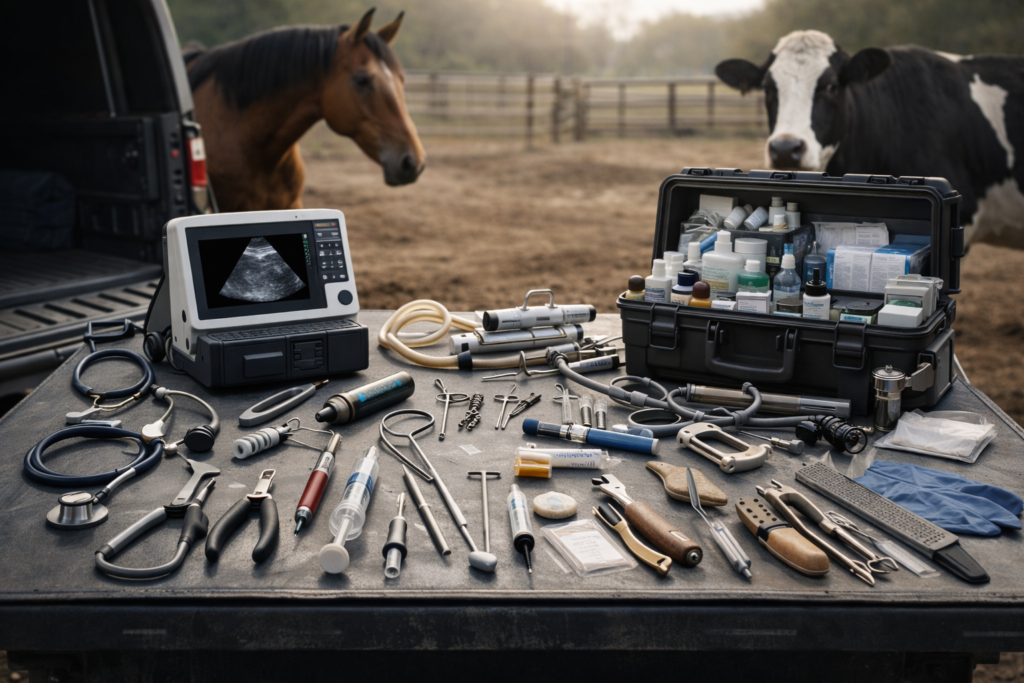
Large animal veterinary work operates in a world that most clinical equipment guides never adequately address. The patients weigh up to 700 kg and can move with enough force to injure a practitioner in a fraction of a second. The workplace is often a muddy paddock, an unlit barn, or a horse stable accessible only by gravel track. The procedures range from routine reproductive examinations performed standing in a field to emergency surgical interventions with no OR in sight.
The equipment that serves cattle and horses under these conditions must meet an entirely different set of demands from clinic-based small animal tools. Portability, durability, reach, and handling safety are not secondary features — they are the primary design criteria for every piece of equipment that belongs in a large animal practitioner’s vehicle, kit bag, or field surgery setup.
This guide covers every major category of large animal veterinary equipment with the depth and field-reality that buyers and practitioners actually need: what the tools are, why they matter for cattle versus horses specifically, which belong in the field versus the clinic, and how to prioritize intelligently across every budget stage.
Section 1 — What Counts as Large Animal Veterinary Equipment?
Who Uses Large Animal Veterinary Equipment?
- Large animal veterinarians — both field-based ambulatory practitioners and clinic-based specialists
- Mixed-animal practitioners — serving both companion animals and livestock from a single practice
- Equine veterinarians — specialists in horse medicine, surgery, reproduction, and performance assessment
- Bovine practitioners — focused on dairy and beef cattle herd health, reproduction, and production medicine
- Farm managers and producers — who use veterinary-grade equipment for routine herd management under veterinary supervision
How Large Animal Work Differs from Small Animal Practice
| Factor | Small Animal Practice | Large Animal Practice |
|---|---|---|
| Patient size | 0.5–80 kg typically | 200–700+ kg |
| Primary setting | Fixed clinic | Farm, paddock, stable, field |
| Power availability | Always present | Often unavailable |
| Restraint approach | Table-based, chemical | Chute, stock, rope, twitch |
| Procedure speed | Controlled pace | Often time-critical |
| Equipment mobility | Clinic-based | Vehicle and kit-based |
| Field conditions | Controlled, clean | Variable, often challenging |
| Species variation | Dog, cat primarily | Cattle, horses, sheep, pigs |
The implication is clear: large animal practice demands equipment that is longer, stronger, more durable, portable by design, and capable of functioning under field conditions without a power outlet, a clean surface, or a clinical assistant.
Section 2 — Why Cattle and Horses Need Specialized Equipment
The physical scale of cattle and horses alone would justify specialized equipment — but scale is only part of the reason. Species-specific anatomy, behavior, reproductive physiology, and clinical priorities all drive equipment requirements that overlap only partially between the two species.
Scale and Reach Demand Different Instrument Design
A rectal examination in a cow requires a full shoulder-length sleeve and the physical reach of the practitioner’s entire arm into the rectum to palpate the uterus, ovaries, and rumen. A stomach tube for a bloated cow must be long enough and wide-gauge enough to pass through the esophagus of an animal that outweighs the practitioner by a factor of five or more. Instruments that work in a small animal exam room are functionally useless in these applications.
Behavioral Realities Shape Safety Requirements
Cattle are prey animals that respond to handling with a flight response — they can be unpredictable, explosive, and dangerous without proper restraint infrastructure. Horses can strike forward with front legs, kick backward and sideways with considerable force, and rear — all potential causes of serious human injury. The right handling and restraint equipment is not a convenience — it is an occupational safety requirement in large animal practice.
Reproductive Work Is Central in Livestock Species
Reproductive efficiency drives the economic viability of cattle and equine operations. Pregnancy diagnosis, synchronization programs, artificial insemination, semen handling, dystocia management, and foaling assistance are core revenue-generating services for large animal practitioners — each requiring specific, species-appropriate instruments that have no equivalent in companion animal medicine.
Portability Is a Primary Design Criterion
A large animal practitioner who cannot take diagnostic capability into the field — portable ultrasound, portable X-ray, field treatment kits — is clinically limited in ways a small animal clinic never experiences. The ability to perform pregnancy diagnosis, evaluate a colic case, or radiograph a horse’s foot in the stable defines the scope of practical service delivery.
Section 3 — Main Categories of Large Animal Veterinary Equipment
The Ten Core Categories
1. Diagnostic Equipment
Portable tools for clinical examination, imaging, and sample collection — the field-adapted equivalent of a clinic’s diagnostic suite.
2. Imaging Equipment
Portable ultrasound and portable digital X-ray — enabling visual diagnosis under field conditions.
3. Obstetrical and Reproductive Tools
Instruments for pregnancy diagnosis, assisted delivery, artificial insemination, and reproductive management — among the highest-use and highest-revenue tools in cattle practice.
4. Treatment and Dosing Tools
Balling guns, drenching equipment, stomach tubes, fluid therapy equipment, and vaccination tools for efficient herd-level and individual patient care.
5. Surgical Instruments
Field-adapted surgical packs, suture instruments, and procedure-specific sets for the operative work that field conditions require.
6. Dental and Oral Tools
Equine dental floats, speculums, and oral examination equipment — especially important in horses where dental disease significantly affects performance and welfare.
7. Hoof Care Equipment
Hoof knives, testers, nippers, trimmers, and therapeutic hoof care supplies — essential in both cattle and horses, though priorities and tools differ between species.
8. Restraint and Handling Equipment
Crush/squeeze chutes, head gates, halters, twitches, ropes, and handling infrastructure — the operational safety foundation of large animal practice.
9. Emergency and Support Tools
Field emergency kits, fluid therapy equipment, oxygen support, and critical care tools for situations that cannot wait for clinic transport.
10. Mobile and Field Equipment
The vehicle-based kit infrastructure that allows a field practitioner to function as a mobile clinic.
Section 4 — Essential Diagnostic Equipment for Cattle and Horses
Portable Ultrasound
Portable ultrasound is the single most transformative diagnostic tool in large animal practice. It has redefined what is clinically achievable in the field — enabling real-time soft tissue visualization without power outlets, processing delays, or transport requirements.
What it does: Provides real-time imaging of reproductive organs, thoracic and abdominal contents, musculoskeletal structures, joints, and tendons.
In cattle: Pregnancy diagnosis (the primary commercial application), ovarian follicle assessment for synchronization protocols, uterine health evaluation, evaluation of thoracic and peritoneal effusions, and liver assessment. A well-equipped bovine practitioner can pregnancy-diagnose an entire herd in a single farm visit with a portable unit.
In horses: Reproductive tract evaluation (ovarian follicle monitoring, uterine edema, early pregnancy diagnosis), musculoskeletal tendon and ligament scanning (critical in performance horses), thoracic evaluation for pleural effusion and pneumonia, and abdominal assessment in colic cases.
Probe selection:
- Linear probe (5–10 MHz) — musculoskeletal, tendon, and superficial reproductive work in both species
- Convex/microconvex probe (3–5 MHz) — deeper abdominal and thoracic structures, bovine reproductive work
Why portability is critical: Modern handheld and compact portable ultrasound units connect to tablets or smartphones, weigh under 500 g, operate on battery for extended periods, and survive field conditions including dust, moisture, and occasional drops. These are professional veterinary instruments that have compressed the technology from a clinic cart into a jacket pocket.
Must-have for large animal practice. The portable ultrasound is the highest-ROI single tool investment in field-based cattle and equine practice.
Portable Digital X-Ray
What it does: Provides structural imaging of the musculoskeletal system, thorax, and selected soft tissue structures.
In horses: Hoof and distal limb radiography is one of the most commonly performed imaging procedures in equine practice — navicular disease, pedal osteitis, coffin joint pathology, and fracture assessment all require high-quality foot and limb radiographs. Cervical spine imaging, thoracic radiography, and dental radiography are also significant applications.
In cattle: Distal limb fracture assessment, septic joint evaluation, and occasionally thoracic imaging in high-value animals.
Field capability: Battery-powered DR flat-panel systems with tablet image review have made portable field radiography practical and affordable. A generator-capable vehicle setup extends runtime for high-demand farm visit days.
Essential vs. recommended: Highly recommended for equine practice, particularly any practice serving performance horses. More situationally used in routine cattle practice — but essential for any practice managing high-value individual bovine patients.
Endoscopy
What it does: Direct visualization of internal hollow structures — respiratory tract, esophagus, guttural pouches (horses), and urinary tract.
In horses: Equine endoscopy (rhinolaryngoscopy) is standard practice for respiratory disease investigation, exercise-induced pulmonary hemorrhage (EIPH) assessment, palate abnormalities, epiglottic entrappment, and dynamic airway collapse in performance horses. Guttural pouch endoscopy is the gold standard for diagnosing guttural pouch disease. Gastroscopy assesses gastric ulcer disease — extremely prevalent in horses, particularly performance and racing horses.
In cattle: Rumenoscopy (laparoscopic rumen access) and occasional gastrointestinal assessment in high-value individuals.
Classification: Essential for equine hospitals and performance horse practices. Recommended for ambulatory equine practices at volume. Advanced/optional for general cattle practice.
Basic Examination Tools
Large animal stethoscope: Bell-chest model with broad diaphragm for cardiac auscultation through the body wall; essential for cardiac evaluation, rumen motility assessment in cattle, and intestinal motility evaluation in colic horses. Quality large animal stethoscopes have longer tubing to accommodate the practitioner’s reach around large patients.
Digital thermometer: Rectal temperature — fundamental triage parameter in both cattle and horses. Durable models with a tether clip to prevent loss in field conditions are essential. Normal ranges: cattle 38.5–39.5°C; horses 37.5–38.5°C.
Stomach tube and pump (Nasogastric tube): The most critical emergency tool in equine colic management — relief of gastric reflux in cases of small intestinal obstruction. Also used for fluid and medication administration. In cattle, Frick speculum and large-bore stomach tube combination is used for bloat relief and oral medication delivery. Species-specific sizing is essential — equine nasogastric tubes are not interchangeable with bovine stomach tubes.
Refractometer: Field plasma protein assessment and urine specific gravity measurement without laboratory equipment. Inexpensive, battery-free, and durable — carries in a pocket.
Portable centrifuge (12V compatible): Packed cell volume, plasma protein, and basic blood assessment in field conditions. Vehicle power outlet or battery pack provides power without a generator.
Section 5 — Obstetrical and Reproductive Equipment
Reproductive services represent the core revenue stream of many large animal veterinary practices, particularly in cattle. The tools that support this work deserve detailed treatment.
Bovine Obstetrical and Reproductive Tools
Palpation sleeves (rectal examination sleeves):
Shoulder-length disposable polyethylene sleeves for rectal palpation and reproductive tract assessment. Stock in large quantities — used on every reproductive examination visit. Lubrication is applied liberally to facilitate passage and minimize patient discomfort.
Obstetrical (OB) chains and handles:
Stainless steel chains applied to the pasterns of a calf during assisted delivery. OB chains allow controlled traction application during dystocia management. Standard chains are 30–40 cm; handles are ergonomic grips that allow the practitioner to apply and control traction force. Stainless steel construction is non-corrosive and sterilizable.
Calf puller (dystocia extractor / obstetrical jack):
A mechanical leverage device that provides controlled traction for calf delivery in cases where manual traction is insufficient. The calf puller translates the practitioner’s force into controlled, even traction while resting against the cow’s perineum, reducing the risk of uterine and vaginal trauma. Correct technique is fundamental — the device amplifies force, making improper use capable of causing serious injury to both cow and calf.
Important: A calf puller is a tool that requires training and proper application. It is not a substitute for veterinary assessment of dystocia type, fetal position, and viability before traction is applied.
Prolapse retainers and retention suture equipment:
Used for replacement and temporary retention of uterine or vaginal prolapse. Prolapse retaining straps (Bühner suture materials, retention pins) are essential items in any bovine emergency kit.
AI (artificial insemination) guns and thaw equipment:
AI guns for cattle use either 0.25 mL or 0.5 mL straw format semen depending on the breed and AI program. Semen straws require temperature-controlled thawing (37–38°C water bath) before deposition. AI guns, semen sleeves, and a portable thermometer-equipped thaw bath are standard in any bovine AI service kit.
Synchronization protocol tools:
CIDR (controlled internal drug release) applicators and removal tools for progesterone synchronization programs. PGF2α injection equipment. These are used in timed AI programs that are now standard management practice on progressive cattle operations.
Uterine infusion equipment:
Long-handled uterine infusion pipettes for intrauterine antibiotic and treatment delivery. Standard in post-calving reproductive management programs.
Equine Reproductive Tools
Equine AI equipment:
Artificial insemination in mares uses an AI pipette inserted through the cervix under rectal guidance with palpation. Cooled and frozen semen handling requires insulated transport containers, quality-controlled cooling units, and liquid nitrogen storage for frozen semen programs.
Follicle monitoring and ovulation induction:
Portable ultrasound is the primary tool for follicle monitoring — sequential ultrasonographic examinations track follicle development to optimize breeding timing. Ovulation induction protocols (hCG, deslorelin) are timed from ultrasound-confirmed follicle size.
Breeding hobbles:
Applied to the mare’s hindlimbs during natural cover (live service) to prevent injury to the stallion from kicking. A safety requirement for live service breeding programs.
Foaling equipment and emergency kit:
- Disposable foaling sleeves
- OB lubricant in generous quantity
- Small foal nasogastric tube and syringe for colostrum/fluid administration in weak neonates
- Foal milk replacer and appropriate feeding bottles
- Umbilical disinfection supplies (dilute iodine or chlorhexidine for navel dipping)
- Emergency contact information for specialist referral if complications arise
Section 6 — Treatment, Dosing, and General Care Tools
These tools support the routine care and herd-level management services that make large animal practice economically sustainable through high-frequency, high-volume service delivery.
Balling Gun
What it does: Delivers boluses, capsules, and tablets to the back of a cow’s or sheep’s throat for swallowing, bypassing the risk of the animal biting or refusing the medication.
In cattle: Used for antibiotic boluses, bolus wormers, magnesium boluses, and mineral supplementation. Standard balling guns have an extension arm appropriate for cattle-sized mouths and throats. Stainless steel or heavy plastic construction is preferred for durability and cleanability.
In horses: Not typically used — horses receive oral medication via dose syringe, nasogastric tube, or in-feed delivery.
Rumen Magnets
What they are: Smooth cylindrical magnets administered orally to cattle for the prevention and management of hardware disease (traumatic reticulopericarditis).
How they work: Once swallowed, the magnet resides in the reticulum and attracts ingested ferromagnetic material (wire, nails, staples), preventing it from penetrating the reticulum wall and causing infection.
Delivery method: Administered with a specialized rumen magnet balling gun designed for the large magnet size. Magnetic test (held externally over the rumen area) can confirm whether a magnet is already present before a second administration.
Drenching Equipment
What it does: Delivers liquid medications, anthelmintics, electrolyte solutions, and nutritional supplements orally to livestock.
Drenching guns (manual and automatic repeat-dose): For sheep, goat, and small cattle treatment. Automatic repeat-dose drenching guns — which refill from a backpack-mounted reservoir — allow a single operator to treat an entire flock rapidly without repeated manual loading. Calibration accuracy is critical — incorrect dose delivery undermines both treatment efficacy and safety.
Pour-on applicators: For topical anthelmintic, antiparasitic, and insecticide delivery in cattle. Measured-dose applicators deliver consistent volumes along the dorsal midline.
Fluid Therapy Equipment for Large Animals
Field fluid therapy in large animals requires different equipment than the IV pump-based systems used in small animal clinics. Large volume requirements (20–80+ liters per day in adult cattle) demand gravity-flow or pressure-bag delivery systems.
- Large-bore IV catheters — 14G–16G for jugular vein catheterization in horses; 14G–16G for jugular or ear vein in cattle
- Large-bore administration sets — high-flow tubing for rapid large-volume delivery
- Pressure infusor bags — for accelerating fluid delivery in shock cases
- Pre-mixed electrolyte solutions — large-volume bags for field use
- Esophageal feeder — for rapid oral electrolyte delivery in calves with diarrhea, bypassing IV access requirement when mild-moderate dehydration is present
Vaccination and Injection Equipment
- Multi-dose vaccination guns (automatic syringe) — with dose-setting mechanism for herd vaccination programs; ensures consistent volume delivery and dramatically reduces per-animal time
- Needle management — changing needles per animal or per batch as per recommended protocols reduces injection site reactions and infection risk; needle disposal containers are essential in field kits
Section 7 — Surgical and Procedural Equipment
Large animal surgery in the field is a different world from a clinic surgical suite. The priorities shift toward what can be safely and practically deployed in the animal’s location — standing surgery under sedation and local anesthesia is far more common in large animal work than general anesthesia with a dedicated surgical suite.
Standing Surgical Principles
The majority of cattle surgical procedures — abomasopexy (correction of displaced abomasum), rumenotomy, c-section, dehorning in adults, and laceration repair — are performed with the animal standing in a cattle chute under sedation and regional/local anesthesia. This eliminates general anesthesia risk and allows the surgeon to work without an anesthetic machine. Field surgical kits must be complete enough to support these procedures safely.
Standard Large Animal Surgical Pack Contents
A field soft tissue surgical pack for cattle typically includes:
| Instrument | Function |
|---|---|
| Scalpel handle (No. 4) + blades (No. 22) | Primary tissue incision |
| Mayo scissors (curved, heavy) | Heavy tissue cutting |
| Metzenbaum scissors | Finer dissection work |
| Tissue forceps (toothed, smooth) | Tissue manipulation |
| Rochester-Carmalt hemostats (×4–6) | Large pedicle clamping |
| Kelly hemostats (×4) | Medium vessel control |
| Needle holders (Mayo-Hegar, large) | Heavy-gauge suture driving |
| Large retractors (Weitlaner, Army-Navy large) | Field exposure |
| Towel clamps (×4–6) | Draping |
| Large suction tip | Field fluid management |
Equine Surgical Equipment Priorities
Equine surgery is more likely to require general anesthesia and a padded knock-down area than standing surgery, particularly for abdominal (colic) surgery, orthopedic procedures, and reproductive tract surgery. Equine hospitals with surgical capability require:
- Large padded induction and recovery stalls or boxes
- Equine tilting surgical table
- Large animal anesthesia machine with large-volume vaporizer circuits
- Large animal multi-parameter patient monitor
- Equine-specific instrument sets (larger scale throughout)
Field equine surgery (lacerations, castration, tooth extraction, small tumor removal) under standing sedation requires a portable surgery kit with appropriate-sized instruments.
Sterilization in Field Conditions
Full autoclave sterilization between procedures is not achievable in field conditions. Practical field infection control standards:
- Pre-packed, clinic-sterilized instrument packs for each case
- Cold chemical sterilization tray (Cidex or equivalent) in a portable container for instrument soak between cases when needed
- Single-use disposable scalpel blades — change between every procedure
- Glove changes between animals
- Comprehensive post-visit vehicle and kit decontamination on return to clinic
Section 8 — Dental, Hoof, and Oral Equipment
Equine Dental Equipment
Horses require routine dental care at least annually throughout their lives. Unlike dogs and cats, horses’ teeth erupt continuously from the reserve crown throughout their lives — a process that creates sharp enamel points on the buccal edge of upper cheek teeth and lingual edge of lower cheek teeth, causing soft tissue laceration and pain.
Dental floats (rasps):
Long-handled instruments with abrasive filing surfaces used to reduce sharp enamel points — the fundamental equine dental procedure. Available in manual (hand float) and motorized (power float) versions.
- Manual floats — traditional; appropriate for moderate equilibration work; requires significant physical effort on a full-mouth reduction
- Power floats (motorized) — electric or battery-powered rotating float heads; significantly reduce procedure time and practitioner fatigue; standard in modern equine dental practice; faster and more consistent results
Equine mouth speculum (full-mouth speculum):
A hinged metal speculum that holds the horse’s mouth open during examination and dental procedures, protecting the veterinarian’s hands and allowing examination of all cheek teeth surfaces. Essential for any equine dental work — performing dentistry in an un-speculated horse’s mouth risks serious hand injury.
Dental mirrors and picks:
For examining occlusal surfaces and identifying caries, diastemata, and cemental hypoplasia.
Wolf tooth extraction forceps and elevators:
For removal of vestigial first premolars (wolf teeth) — a routine procedure in young horses, particularly those beginning bridle training.
Equine intraoral radiography:
Dental radiography in horses requires large-format dental X-ray capability. Intraoral films or digital sensors positioned within the mouth capture individual teeth — important for root disease, infundibular caries, and periodontal assessment in horses with problematic teeth.
Equine dental work is one of the most frequently requested and reliably recurring services in equine practice. A practitioner without appropriate dental equipment and training is limited in the services they can offer equine clients.
Bovine Oral and Dental Tools
Cattle dental work is less complex than equine dentistry but is not absent from large animal practice. Incisor examination and occasional molar work are performed in high-value cattle. Balling guns and mouth speculums facilitate oral examination and medication delivery in cattle.
Hoof Care Equipment
Cattle hoof care:
Lameness is one of the most economically significant production diseases in dairy cattle. Regular hoof trimming and prompt treatment of hoof pathology (digital dermatitis, white line disease, sole ulcers) is both a welfare and production management priority.
- Hoof trimming chute (tipping chute): Hydraulic or mechanical restraint that tilts the cow into lateral recumbency or elevates a single limb for safe hoof access. Essential for thorough hoof examination and trimming in both dairy and beef settings.
- Hoof knife: Primary instrument for paring and debriding hoof horn, exposing lesions, and applying therapeutic trimming. Various blade angles for different surfaces.
- Hoof nippers: Heavy-duty cutting nippers for removing large amounts of excess hoof horn rapidly.
- Hoof pick: Debris removal prior to examination and trimming.
- Hoof grinder / angle grinder with hoof disc: Electric-powered rapid trimming for high-volume cattle hoof care programs.
- Hoof blocks and adhesive: Therapeutic hoof blocks glued to the sound claw to offload weight from a diseased claw — standard treatment for unilateral claw lesions.
Equine hoof care:
Equine hoof assessment and treatment tools include:
- Hoof testers: A large-jawed compression instrument applied across the hoof wall, sole, and across the frog to identify areas of focal sensitivity — primary diagnostic tool for localizing foot pain. Essential in any equine lameness evaluation.
- Hoof pick and brush: Cleaning before examination
- Hoof rasp: For smoothing rough hoof wall edges and minor trim adjustments in clinical settings
- Hoof jack / hoof stand: Supports the horse’s limb in a raised position during examination and treatment without requiring the handler to continuously hold the foot
Section 9 — Restraint and Handling Equipment
Safe restraint in large animal practice is the prerequisite for every other clinical action. Without it, no examination, treatment, or procedure can be performed safely for either the patient or the practitioner.
Cattle Restraint Equipment
Cattle crush / squeeze chute:
The primary restraint system for bovine veterinary work. A squeeze chute applies lateral pressure to the animal’s sides, preventing lateral movement and dramatically reducing the force the animal can exert. A head gate at the front secures the head, preventing forward escape and allowing head and neck access for jugular catheterization, oral examination, and face procedures.
Palpation cage:
A specific chute configuration with rear access and optional rectal shelf for safe pregnancy examination in cattle. Prevents sideways movement of the hindquarters, reducing injury risk during rectal palpation.
Cattle nose tongs / nose leads:
Applied briefly to the nasal septum for additional head control during examination or minor procedures on tractable cattle. Induces temporary compliance through mild nasal pressure — not for extended application.
Head halter:
Essential for leading and basic head control of cattle accustomed to halter work. Less effective for restraint of fractious or untrained animals.
Ear tags, tagging gun, and applicator:
For identification and record-keeping — standard on all cattle operations.
Casting ropes and positioning techniques:
For controlled recumbency in field situations where chute access is unavailable. Rope casting techniques for cattle require training and appropriate knot selection — careless application risks positional injuries.
Equine Restraint Equipment
Halter and lead rope:
The most fundamental equine restraint tool. Quality leather or nylon halters with appropriate weight distribution and an adjustable fit are the starting point for all equine handling.
Twitch:
A restraint device applied to the horse’s upper lip — either a chain twitch (loop of chain on a wooden handle) or a humane twitch (metal clamp). Correctly applied, a twitch induces endorphin release and a mild sedative-like effect in most horses, facilitating brief procedures or injections. It is a veterinary restraint tool when used correctly and briefly — not a substitute for chemical sedation in prolonged or painful procedures.
Stocks:
A four-sided standing restraint structure for horses that limits sideways and forward movement. Common in equine clinics and hospitals for examinations, dental procedures, and rectal examinations. Portable lightweight stocks are available for farm visit use.
Breeding hobbles:
Prevent the mare’s hind-limb kicking during breeding — safety equipment for natural cover programs.
Sedation and chemical restraint:
In horses, chemical sedation (detomidine, xylazine, acepromazine, butorphanol) is a fundamental companion to physical restraint for most clinical procedures. The correct drug choice, dose, and administration route are clinical decisions, not equipment choices — but the syringes, needles, and IV access equipment to administer them are part of every equine field kit.
Personal Protective Equipment (PPE) for Large Animal Work
Large animal practitioners face genuine occupational injury risk. PPE specific to field work includes:
- Heavy leather or synthetic protective gloves for handling and procedures
- Sturdy steel-toe cap or safety boots with ankle support
- Protective headwear in environments with kick and strike risk
- Full-length protective overalls for obstetric and surgical work
- Eye protection for procedures involving fluid splash risk
Section 10 — Field Practice vs. Clinic-Based Large Animal Equipment
This is one of the most practically useful distinctions in all of large animal veterinary equipment planning.
Equipment by Setting
| Equipment Category | Mobile/Field | Equine/Farm Clinic | Large Animal Hospital |
|---|---|---|---|
| Portable ultrasound | Essential | Essential | Essential |
| Portable DR X-ray | Essential (equine) | Essential | Full DR system |
| Endoscope | Optional/portable | Essential (equine) | Essential |
| Anesthesia machine | Portable/field only | Equine clinic: Essential | Essential |
| Surgical instruments | Pre-packed sterile kits | Full pack sets | Specialty surgical suites |
| Autoclave | Clinic-based | Essential | Essential |
| Multi-parameter monitor | Portable unit | Clinic: Essential | Advanced multi-station |
| Cattle crush/chute | Farmer-provided or portable | Essential | Essential |
| Equine stocks | Portable lightweight | Essential | Essential |
| IV pumps | Field gravity/pressure | Essential | Essential |
| Large animal tilt table | Not portable | Optional | Essential |
| Laboratory equipment | Portable refractometer, centrifuge | In-house analyzer | Full laboratory |
What Must Be Portable for Field Practice
Every mobile large animal practitioner needs a vehicle kit that functions as a field clinic. The minimum mobile kit for cattle and equine practice includes:
Diagnostics:
- Portable ultrasound (handheld or compact)
- Portable DR X-ray (equine practices)
- Large animal stethoscope
- Digital thermometers
- Portable centrifuge + refractometer
Reproductive and obstetric:
- Palpation sleeves (large quantity)
- OB chains and handles
- Calf puller
- AI gun and semen handling supplies (if providing AI service)
- CIDR applicators
Treatment and dosing:
- Multi-dose vaccination syringe
- Balling gun
- Stomach tube + Frick speculum (cattle) / nasogastric tube (horses)
- Large-bore IV catheters + large-volume fluid bags + high-flow administration sets
Surgical and emergency:
- Pre-packed sterile surgical kit (at least two)
- Local anesthetic and administration equipment
- Cold sterilization container
- Portable drug storage (temperature-controlled)
Dental and hoof:
- Power or manual dental float + mouth speculum (equine)
- Basic hoof care tools
Restraint:
What Is Realistic Only in a Fixed Facility
- Padded equine induction and recovery rooms
- Large animal tilting surgical table
- Large animal anesthesia machine with full circuit
- Full in-house laboratory
- Dedicated autoclave room with validated workflow
- CT scanner (referral-level)
- Advanced equine endoscopy suite
Section 11 — Must-Have vs. Advanced Equipment
Must-Have Starter Equipment
| Equipment | Why Essential |
|---|---|
| Portable ultrasound | Highest diagnostic and revenue impact in field work |
| Large animal stethoscope | Core examination tool for all large animals |
| Digital thermometer (durable field model) | Fundamental triage parameter |
| Palpation sleeves | Required for all reproductive examinations |
| OB chains, handles, and calf puller | Dystocia management — time-critical emergency equipment |
| Balling gun | Routine cattle medication delivery |
| Stomach tube + pump or speculum | Bloat and fluid treatment; equine colic management |
| Multi-dose vaccination syringe | Herd vaccination efficiency |
| AI gun and semen handling equipment | If providing AI services — core revenue service |
| Hoof knife, nippers, pick | Routine hoof examination and care |
| Large animal halters and lead ropes | Every handling situation |
| Twitch | Equine restraint |
| Pre-packed sterile surgical kits | Field surgery and emergency laceration repair |
| Large-bore IV catheters + fluid bags | Emergency fluid therapy |
| Portable centrifuge + refractometer | Basic field diagnostics |
Recommended Upgrades
| Equipment | When to Add |
|---|---|
| Portable DR X-ray | Early in equine practice; when high-value bovine work justifies |
| Power dental float | When equine dental volume warrants investment |
| Equine stocks (portable) | High equine volume field practice |
| Equine endoscope | Equine respiratory and GI case volume |
| CIDR applicators and synchronization equipment | When providing reproductive synchronization programs |
| Advanced portable patient monitor | When performing field anesthesia |
Advanced Equipment (Clinic and Hospital)
| Equipment | Appropriate Context |
|---|---|
| Large animal anesthesia machine | Equine clinic or hospital |
| Large animal tilting surgical table | Equine surgical facility |
| Padded induction/recovery rooms | Equine hospital |
| Full in-house laboratory | High-volume clinic |
| CT scanner | Referral-level equine hospital |
| Advanced endoscopy suite | Equine specialist practice |
Section 12 — Cattle vs. Horse Equipment Priorities
Understanding where bovine and equine equipment needs diverge is essential for smart procurement — particularly for mixed large animal practices.
Equipment Priority Comparison
| Equipment Category | Cattle Priority | Horse Priority |
|---|---|---|
| Portable ultrasound | Very high (pregnancy) | Very high (reproduction + MSK) |
| OB chains and calf puller | Essential | Equine foaling kit (different) |
| Balling gun | Essential | Rarely used |
| Drenching gun | Important (small cattle/sheep) | Not applicable |
| Stomach tube + Frick speculum | Essential (bloat) | Nasogastric tube (colic) |
| Rumen magnets | Relevant (hardware disease) | Not applicable |
| Palpation sleeves | Essential | Essential (rectal/reproductive) |
| AI gun and semen handling | Core service | Core service (different equipment) |
| Hoof trimming chute | High priority | Different tools/approach |
| Dental floats | Limited use | Essential |
| Mouth speculum | Basic | Essential |
| Hoof testers | Less common | Essential (lameness workup) |
| Twitch | Rarely used | Essential |
| Stocks | Not used | Essential (equine) |
| Portable DR X-ray | Situational (high-value) | High priority |
| Endoscopy | Limited use | High priority (respiratory) |
The Core Overlap
Both cattle and horse practice share:
- Portable ultrasound need (different probes and applications)
- Reproductive examination tools (palpation sleeves, AI equipment — different designs)
- Field fluid therapy equipment (different gauge and volume scales)
- Basic surgical instrument needs
- Field emergency preparedness requirements
- Portable diagnostic basics (stethoscope, thermometer, refractometer)For mixed large animal practitioners: Identify the overlap first and invest in dual-use equipment where genuine overlap exists. Then budget separately for the species-specific tools that cannot be shared — bovine obstetric equipment, equine dental equipment, equine endoscopy, and species-specific restraint tools.
Section 13 — Common Mistakes When Buying Large Animal Veterinary Equipment
Buying tools designed for small animal work
This is the single most common equipment error in new large animal practices. Instruments designed for dogs and cats — stethoscopes with small chest pieces, IV catheters stocked only in small gauges, stomach tubes of wrong dimensions — are not just suboptimal in large animal work. They are functionally inadequate. Every instrument category requires species and size-appropriate selection.
Underestimating field durability requirements
Portable ultrasound probes, X-ray flat panels, and diagnostic instruments that perform well in clinic conditions frequently fail under farm and field conditions if not specifically rated for field use. Check IP (ingress protection) ratings, drop resistance specifications, and operating temperature ranges before purchasing any portable equipment intended for field use.
Forgetting battery and power planning
A portable ultrasound that dies midway through pregnancy diagnosis of a 200-cow herd because the battery was not charged is a clinical and client service failure. Power planning — backup batteries, 12V vehicle charging, portable battery stations — must be part of every field equipment setup.
Ignoring restraint infrastructure
Arriving at a farm to perform reproductive work on cattle with no adequate chute facility and no portable restraint plan is a safety failure before the first animal is touched. Always confirm handling facility capability before the visit. Build portable panel systems or bring portable head gates when fixed facilities are inadequate.
Buying specialized equipment before mastering core essentials
A practitioner who has not yet mastered the clinical use of portable ultrasound, basic reproductive techniques, and field emergency protocols does not benefit from advanced endoscopy or portable CT capability. Build competency with core tools before investing in specialty equipment.
Choosing equipment that is difficult to clean in field conditions
After a farm call involving obstetric work, equipment must be cleanable with field-available water, cleaning solutions, and limited facilities. Equipment with complex seals, deep recesses, or difficult disassembly creates real biosecurity risk between farms and between animals.
Underplanning for species-specific needs
A mixed large animal practice that equips comprehensively for cattle and then discovers it lacks equine dental equipment, hoof testers, and appropriate stocks for the equine clients it also serves has made a planning error. Define your species mix before ordering a single piece of equipment.
Failing to maintain portable equipment
Field equipment is subject to far greater physical stress than clinic equipment. Without a regular maintenance routine — probe cleaning, battery management, instrument inspection, drug restocking after every visit — the field kit degrades from a reliable clinical resource into a collection of uncertain-function tools.
Section 14 — FAQ
What equipment do large animal veterinarians use?
Large animal veterinarians use portable ultrasound, digital X-ray, large animal stethoscopes and thermometers, obstetrical chains and calf pullers, palpation sleeves, AI equipment, balling guns, stomach tubes, drenching guns, dental floats and mouth speculums (equine), hoof care tools, restraint equipment (crush chutes, halters, twitches), surgical instrument packs, large-bore IV catheters and fluid therapy equipment, and portable drug storage.
What tools are essential for cattle veterinary care?
Core cattle tools are: portable ultrasound (for pregnancy diagnosis and health assessment), palpation sleeves, OB chains and calf puller (dystocia management), balling gun, stomach tube and Frick speculum (bloat treatment), multi-dose vaccination syringe, large-bore IV catheters and large-volume fluid bags, hoof care tools, and adequate restraint via cattle crush and head gate.
What equipment is commonly used for horses?
Equine practice commonly uses: portable ultrasound (reproductive and musculoskeletal), portable digital X-ray (distal limb imaging), endoscope (respiratory assessment), dental floats and mouth speculum, hoof testers, nasogastric tube (colic management), twitch and stocks for restraint, reproductive examination equipment, large-bore IV access for fluid therapy, and sedation administration equipment.
Is portable ultrasound essential in large animal practice?
Yes — without qualification. Portable ultrasound is the highest diagnostic and commercial-value tool in field-based large animal practice. It enables pregnancy diagnosis at scale, reproductive assessment, musculoskeletal evaluation in horses, and emergency assessment of colic, thoracic disease, and abdominal pathology. Modern handheld units have made field-quality imaging accessible to every ambulatory practitioner.
What is the difference between cattle and equine equipment needs?
The most significant differences are: equine practice requires dental floats, equine endoscopy, hoof testers, and specialized reproductive equipment different from bovine AI tools. Cattle practice centers on balling guns, rumen-specific tools (Frick speculum, stomach pump), large-scale reproductive equipment, and hoof trimming chutes. Both require portable ultrasound and field fluid therapy equipment, but the specific tools differ in scale, design, and application.
What tools are needed for field-based large animal veterinary work?
A complete mobile field kit includes: portable ultrasound, portable DR X-ray (equine), large animal stethoscope, digital thermometers, palpation sleeves, OB chains and calf puller, AI gun and semen handling equipment, balling gun, stomach tube, multi-dose vaccination syringe, hoof care tools, halters, twitches, pre-packed sterile surgical kits, large-bore IV catheters and fluids, portable centrifuge and refractometer, portable drug storage, and PPE.
What should a new large animal practice buy first?
Start with: portable ultrasound (highest ROI tool), palpation sleeves and reproductive tools, OB chains and calf puller, balling gun, stomach tube, multi-dose vaccination syringe, basic field surgery kit, large-bore IV supplies, large animal stethoscope and thermometer, halters and lead ropes, twitch (equine), portable centrifuge and refractometer. Add portable DR X-ray and power dental float as case volume and revenue grow.
Section 15 — Conclusion: Equip for the Field, Plan for the Species
Large animal veterinary equipment is defined by two non-negotiable realities: the field comes first, and species specificity matters. Equipment that works for dogs and cats in a clean exam room is not a starting point for cattle and horse medicine — it is an entirely different domain with entirely different tools, entirely different field conditions, and entirely different clinical priorities.
The practitioners who serve cattle and horse producers most effectively are those who invest in genuinely portable, genuinely durable, genuinely species-appropriate equipment — and who build their kit based on what their patients actually need and where those patients actually live. Portable ultrasound is worth more than most practitioners’ entire first-year equipment investment combined. The right OB kit saves animals and clients before any other equipment category gets the chance to prove itself.
Build your large animal equipment list in phases: core field capability first, species-specific diagnostic depth second, clinic or hospital infrastructure last. Maintain everything you carry. Restock your vehicle after every visit. Verify handling facility adequacy before every farm call.
The right equipment, in the right hands, in the right field conditions, is the foundation of effective large animal medicine and a sustainable large animal veterinary practice.