
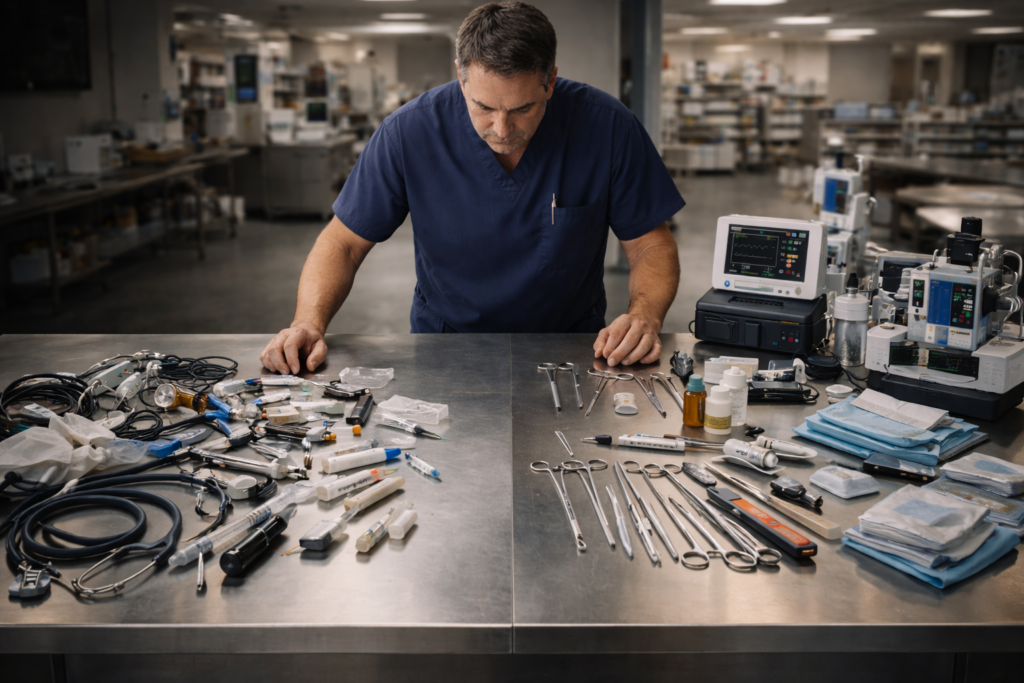
The right veterinary equipment is the operational backbone of every animal health outcome your practice delivers. In 2026, equipment planning is no longer simply a matter of buying a stethoscope and an exam table — it is the process of building a clinical workflow that allows your team to diagnose accurately, treat efficiently, operate safely, and scale intelligently.
Whether you are opening your first small animal clinic, expanding a growing mixed-animal practice, running farm calls across hundreds of acres, or auditing an established hospital against modern standards — this guide gives you the full picture: what to buy, why it matters, which setting it belongs in, and how to prioritize when resources are limited.
Two realities define veterinary equipment planning in 2026. First, the gap between clinic equipment and farm equipment is wider than most guides acknowledge — the tools that perform perfectly in a fixed exam room are often useless in a barn at midnight. Second, every practice type has a different buy-first logic, and the biggest procurement mistakes happen when buyers ignore that logic entirely. This guide corrects both problems.
Section 1 — What Veterinary Equipment Is Essential in 2026?
Core Equipment Categories and Their Clinical Role
| Category | Clinical Function | Who Needs It |
|---|---|---|
| Exam Room Equipment | Physical examination, vital sign assessment, first-line diagnosis | Every practice, Day 1 |
| Diagnostic Imaging | Internal structural and soft tissue visualization | Every full-service practice |
| Laboratory Equipment | Blood analysis, urinalysis, cytology, parasite testing | Every full-service practice |
| Surgery and Sterilization | Operative procedures, instrument sterilization, surgical safety | Any practice performing surgery |
| Treatment and Monitoring | Fluid therapy, drug delivery, anesthesia monitoring, patient support | Every clinical practice |
| Recovery and Support | Post-anesthetic and post-surgical care, oxygen delivery, warming | Any practice doing anesthesia |
| Farm and Field Equipment | Portable diagnostics, reproductive work, obstetrics, hoof care, livestock handling | Farm, mixed-animal, mobile practices |
Why Equipment Planning Is a Workflow Decision
The most important shift in veterinary equipment thinking in 2026 is understanding that equipment must fit a workflow — not just a checklist. A digital X-ray system installed in a poorly lit room with no cable management and no image review workstation delivers a fraction of its diagnostic value. An autoclave with insufficient cycle capacity for a busy surgical schedule becomes a bottleneck that halts consecutive procedures.
Buy for function within your actual physical and operational environment, not for a theoretical ideal clinic. That principle underlies every recommendation in this guide.
Section 2 — Veterinary Equipment by Area of the Clinic
Organizing equipment by physical area of the clinic is the most practical framework for setup planning, room-by-room procurement, and operational auditing.
2.1 Examination Room Equipment
The examination room is where every clinical relationship begins. Equipment here must support rapid, thorough physical assessment and give the veterinarian everything needed to form a preliminary diagnosis or direct the next diagnostic step.
Essential exam room equipment:
- Exam table — non-slip surface, appropriate load capacity (stainless steel is most hygienic); hydraulic lift tables recommended for high-volume practices or practices seeing large breeds regularly
- Procedure table — adjustable height, waterproof surface for bandaging, minor procedures, and treatment
- Stethoscope — quality acoustic model; Cardiology-grade for cardiac-heavy caseloads
- Digital thermometer — multiple units; digital rectal for accuracy; infrared for speed
- Otoscope — with interchangeable speculum sizes for different ear canal diameters; video otoscopes add client communication value
- Ophthalmoscope — coaxial model for clearest fundus views; combo otoscope/ophthalmoscope kits are cost-effective for most clinics
- Patient weighing scale — platform scale with digital display, 0–150 kg minimum range; accuracy is a drug-dosing safety issue
- Examination lighting — ceiling LED overhead and a focused handheld or mounted examination light for wounds, ears, and oral cavities
- Basic restraint tools — muzzles (multiple sizes), cat bags, Elizabethan collars, slip leads, positioning aids
Optional / upgrade path:
- Wall-mounted digital display for lab result review in room
- Video otoscope with dedicated display screen
- Wood’s lamp for fungal skin disease screeningCommon buyer mistake: Choosing a cheap exam table to save money at opening, then replacing it within two years due to surface degradation, wobbly structure, or staff injury from poor ergonomics. The exam table is used more than any other physical surface in the practice — invest appropriately.
2.2 Treatment Area Equipment
The treatment area is the clinical engine room — where IV lines are placed, medications are administered, monitoring occurs, and patients are stabilized before and after procedures.
Essential treatment area equipment:
- IV pumps (infusion pumps) — volume-controlled fluid delivery; essential for cats, small patients, neonates, and any patient on constant-rate infusion (CRI) drug protocols
- Syringe pumps — precision small-volume drug delivery for CRI analgesia, anesthetic maintenance, and critical care
- IV stands / fluid poles — adjustable height; one per treatment bay minimum
- IV catheters — stocked in multiple gauges (24G through 14G) for different patient sizes and flow requirements
- Administration sets — standard drip sets, mini-drip/burette sets for small patients
- Fluid warmers — for rapid fluid administration in hypothermic or shocked patients
- Electric clippers with blade set — surgical site preparation, wound management, dermatology; maintain blades, as dull clippers cause clipper burn
- Patient ward caging — stainless steel kennels in mixed sizes; adequate ventilation; separate sizing for cats and dogs
- Warming devices — forced-air warming blankets or circulating warm water systems (not electric pads — thermal burn risk)
- Oxygen delivery — flow-by oxygen tubing, masks in multiple sizes, nasal catheter supplies
- Bandaging supplies and scissors — lister scissors, conforming bandage, adhesive dressings, zinc oxide tape, non-adherent wound contact layers
- Medication storage — lockable, organized drug storage with controlled substance security; refrigerator for temperature-sensitive medications
- Treatment carts — mobile, organized tool carts for procedure efficiency
Optional / upgrade:
- Dedicated critical care ward with ICU caging and multi-parameter monitoring per kennel
- Nebulizers for respiratory treatment protocols
- Incubators for neonatal and exotic patient temperature managementWorkflow tip: Treatment area organization is a direct efficiency multiplier. Cluttered, disorganized treatment areas slow every procedure. Invest in labeled drawer systems, wall-mounted supply dispensers, and a logical traffic flow from preparation to patient to waste disposal. Time saved per procedure accumulates to significant daily capacity.
2.3 Surgery Suite Equipment
The surgery suite demands the most complete and most carefully maintained equipment subset in the practice. Gaps here are not inconveniences — they are patient safety risks.
Essential surgery suite equipment:
- Surgery table — stainless steel, adjustable, with leg and body positioning capability; V-trough support and restraint straps for patient positioning
- Surgical instrument packs — sterile, pre-packed sets specific to procedure type (soft tissue, orthopedic, etc.); minimum two sets for consecutive procedures
- Anesthesia machine — calibrated vaporizer (isoflurane or sevoflurane), appropriate rebreathing and non-rebreathing circuits, pop-off valve, reservoir bag, and waste gas scavenging system
- Multi-parameter patient monitor — simultaneous ECG, SpO2, ETCO2 (capnography), invasive or non-invasive blood pressure, and temperature; all in a single device reduces clutter and response time
- Surgical lighting — ceiling-mounted surgical light or high-quality LED arm lamp; shadow-free, color-accurate illumination of the operative field
- Suction unit — for blood and fluid evacuation from the surgical field; handheld or electric; Poole and Frazier tip sizes
- Electrosurgery unit (ESU) — monopolar and bipolar cutting and coagulation; reduces procedure time and blood loss; standard for soft tissue surgery
- Autoclave / steam sterilizer — validated, spore-tested; chamber size must accommodate your largest pack; cycle time must match your procedure volume
- Surgical prep sink and scrub station — dedicated hand and instrument washing area adjacent to surgery entry
- Sterile drapes and packs — in sizes appropriate for your patient range and procedure types
Optional / upgrade:
- Laparoscopy / minimally invasive surgery tower (high-volume or referral practices)
- Surgical microscope (ophthalmic or neurological procedures)
- Dedicated orthopedic instrument sets and power tools (drill, saw)Safety-critical item: Waste anesthetic gas scavenging is non-negotiable. Chronic inhalant anesthetic exposure is a documented occupational health risk for veterinary staff. Install active or passive scavenging before performing any inhalant anesthesia.
2.4 Laboratory Area Equipment
In-house laboratory capability transforms same-day clinical decision-making. Results that previously took 24–48 hours from external labs are available within minutes, allowing same-visit diagnosis and immediate treatment initiation.
Essential laboratory equipment:
- Hematology analyzer — automated CBC (red cells, white cells, platelets, differential); daily-use equipment in any active practice; essential for pre-anesthetic screening, sick patient workup, and monitoring
- Chemistry analyzer — organ function panel (liver, kidney, glucose, electrolytes, proteins); drives treatment decisions for virtually every sick patient
- Centrifuge (benchtop) — packed cell volume, plasma/serum separation, urine sediment concentration; inexpensive and used multiple times per day
- Microscope (binocular) — blood smear evaluation, cytology, ear and skin cytology, fecal parasite ID, urinalysis sediment; minimum 4x, 10x, 40x, and 100x oil-immersion objectives
- Refractometer — urine specific gravity and plasma protein concentration; rapid, inexpensive, essential for renal assessment and dehydration evaluation
- Urinalysis equipment — dipstick reagent strips, urine sediment analysis, refractometer
- Fecal flotation supplies — flotation jars, solutions, and slides for parasite identification
- Rapid test kits — SNAP or equivalent in-house tests for common diseases (parvovirus, heartworm, Giardia, FeLV/FIV, Leishmania depending on geography)
Optional / upgrade:
- Coagulation analyzer (for bleeding disorder investigation, pre-surgical assessment in at-risk patients)
- Urine analyzer (automated urinalysis beyond manual dipstick)
- SDMA-capable analyzer (early kidney disease detection)ROI reality: For practices performing 8–10 or more blood panels per week, in-house chemistry and hematology analyzers typically achieve positive ROI within 12 months through elimination of send-out costs and improved same-visit service value. Below that volume threshold, send-out laboratory may remain more cost-effective.
2.5 Imaging Equipment Area
Diagnostic imaging equipment is among the highest-value investments a veterinary clinic makes — and among the most commonly misjudged.
Essential imaging equipment:
- Digital X-ray system (DR — Direct Radiography) — flat-panel detector with near-instant image display; superior image quality and workflow speed compared to CR cassette systems; required for any full-service clinic; necessary for fractures, thoracic assessment, abdominal foreign bodies, and cardiac evaluation
- Ultrasound machine — real-time soft tissue imaging; the most diagnostically versatile modality in veterinary medicine; abdominal, cardiac, reproductive, and musculoskeletal evaluation; guided aspiration procedures; essential in any active clinical practice
Recommended additions:
- Portable ultrasound — handheld or compact unit for farm calls, mobile practice, or bedside use in critical patients
- Dental X-ray system (intraoral) — essential for any practice with a dental program; full-mouth radiographs are standard of care for dental disease staging
Optional / advanced:
- Endoscopy (rigid and flexible) — for gastrointestinal foreign body retrieval, airway evaluation, and colonoscopy at sufficient case volume
- CT scanner — referral-level; transformative for neurological, orthopedic, and oncological case workupDR vs. CR: In 2026, there is no practical reason for a new clinic to install a CR (computed radiography) cassette-based system. DR flat-panel systems have dropped significantly in price, deliver superior image quality, and provide workflow speed advantages that pay for the cost differential quickly in any active practice.
2.6 Recovery and Support Area
Recovery is where anesthetic complications most commonly go undetected. A properly equipped recovery area with active monitoring closes the gap between procedural success and patient safety.
Essential recovery area equipment:
- Recovery caging — appropriately sized for species and patient size; padded, easily disinfectable, with good visibility for monitoring
- Warming systems — forced-air warming blankets or circulating warm water systems; essential for all post-anesthetic patients, especially cats, small dogs, and exotic animals
- Monitoring tools — at minimum, a pulse oximeter for continuous SpO2 monitoring in recovery; temperature probes; multi-parameter monitor for high-risk recoveries
- Oxygen support — flow-by oxygen capability and mask delivery for patients with prolonged recovery or respiratory compromise
- Sanitation and cleaning supplies — hospital-grade disinfectants rated for parvovirus and ringworm; dedicated cleaning tools per area; sharps containers appropriately placed
Optional / upgrade:
- Dedicated ICU oxygen cages for respiratory patients requiring prolonged supplementation
- Incubators for neonatal, exotic, and pediatric patient recovery
Section 3 — Veterinary Equipment by Practice Type
Equipment needs vary significantly across practice models. This section provides a prioritized equipment profile for each major practice type.
Small Animal Veterinary Clinic
Top priorities:
All exam room and treatment area essentials, digital X-ray, ultrasound, in-house hematology and chemistry analyzers, anesthesia machine with multi-parameter monitoring, autoclave, dental unit
Must-have equipment: Everything covered in Section 2 across all clinic areas except farm/field tools
What can be delayed: Endoscopy, advanced orthopedic surgical instrumentation, intraoral dental X-ray (recommended early but not Day 1)
Common buying mistakes:
- Opening without an in-house analyzer and relying entirely on send-out laboratory — reduces same-visit service quality significantly
- Buying clinic-only portable ultrasound before confirming it handles all required probe frequencies
- Skipping dental equipment — dental disease is the most prevalent condition in companion animal practice
Mixed-Animal Veterinary Practice
Top priorities: All small animal essentials PLUS a portable ultrasound for farm use, portable DR X-ray, large animal stethoscope head, obstetric and calving tools, drenching guns, and a dedicated farm call vehicle kit
Must-have equipment: Two complete sets — one for the fixed clinic, one for the field
What can be delayed: Advanced referral-level imaging until farm revenue volume justifies it
Common buying mistakes:
- Buying a clinic-grade portable ultrasound that cannot survive farm conditions
- Failing to budget for field consumables separately from clinic consumablesIf you treat both pets and livestock: Build and budget two separate equipment inventories from the start. Treating them as one list creates chronic inventory confusion, field equipment deficits, and clinical compromise.
Large-Animal / Farm Veterinary Practice
Top priorities: Portable diagnostic capability, reproductive tools, obstetric equipment, livestock handling equipment, rugged drug storage, and a fully equipped farm call vehicle
Full coverage in Section 4 below.
Mobile / Ambulatory Veterinary Practice
Top priorities: Battery-powered portable DR X-ray, handheld or compact portable ultrasound, portable patient monitor, portable anesthesia machine, pre-packed sterile surgical kits, battery-powered syringe pump, compact drug storage with temperature management, and a mobile power station
Must-have equipment: Portable versions of every essential clinical category; weight, size, and battery independence are primary selection criteria
Common buying mistakes:
- Selecting clinic-grade portable equipment without verifying field-use durability ratings
- Underestimating battery and power requirements for simultaneous device use
Advanced Hospital / Referral Center
Top priorities: All of the above PLUS multi-parameter ICU monitoring per patient, advanced in-house laboratory, intraoral dental radiography, endoscopy, specialist surgical instrument sets, and separate isolation ward equipment
Optional but high-impact: CT scanner significantly expands referral case capability for neurology, oncology, and orthopedics; ROI depends on referral network density
Section 4 — Farm and Large-Animal Veterinary Equipment
Farm veterinary practice operates in conditions that bear no resemblance to a fixed clinic. Equipment selection for this environment is governed by a completely different set of priorities: portability, battery independence, ruggedness, speed of deployment, ease of field cleaning, and survival under physical stress.
How Farm Needs Differ from Clinic Needs
| Factor | Clinic | Farm / Field |
|---|---|---|
| Power supply | Mains power always available | Often unavailable — battery critical |
| Physical environment | Clean, controlled, indoor | Muddy, wet, temperature extremes |
| Patient restraint | Handler-assisted in controlled space | Farmer-assisted in variable conditions |
| Procedure speed | Can take time | Speed is often clinically necessary |
| Equipment cleaning | Post-use in clinic facilities | Field cleaning with portable supplies |
| Portability | Secondary concern | Primary design criterion |
| Durability | Moderate concern | Absolute requirement |
Portable Diagnostic Tools for Farm Vets
- Portable ultrasound — the single most transformative tool for farm veterinary practice; used for pregnancy diagnosis, reproductive tract evaluation, cardiac and thoracic assessment, pleural and peritoneal fluid detection, joint and tendon evaluation in horses; modern handheld units connect to smartphones and tablets, providing DR-quality imaging in a device that fits in a jacket pocket
- Battery-powered portable digital X-ray — modern flat-panel DR units with tablet-based image review; essential for diagnosing fractures, respiratory disease, and foreign body ingestion in horses and cattle without trailer trips to a clinic
- Large animal stethoscope — extended bell and diaphragm for cardiac and rumen/intestinal auscultation through the body wall; essential for evaluating heart sounds, detecting pleural effusion, and auscultating rumen motility in cattle
- Portable centrifuge (12V compatible) — battery or vehicle-powered; enables field packed cell volume, plasma protein, and basic blood assessment without returning to the clinic
- Refractometer — plasma protein and urine specific gravity assessment in the field; inexpensive, requires no power, highly durable
Reproductive and Breeding Tools
Reproductive efficiency is the primary economic concern of livestock producers. Veterinary reproductive services are among the highest-value farm veterinary offerings:
- Palpation sleeves — shoulder-length examination gloves for rectal palpation and reproductive tract assessment
- Obstetric (OB) chains and handles — for assisted delivery in cattle; proper length and placement technique is essential to avoid fetal or maternal injury
- Calf puller (dystocia jack) — mechanical assistance for controlled extraction in bovine dystocia; technique training is critical
- AI (artificial insemination) guns — cattle and sheep artificial insemination programs; various designs for different semen straw sizes
- Semen handling equipment — semen thaw bath, microscope for motility evaluation, semen protective sleeves
- CIDR applicators — for progesterone insert synchronization programs
Drenching and Oral Medication Tools
- Drenching guns (manual and automatic) — anthelmintic and oral medication delivery in sheep, goats, and cattle; automatic repeat-dose guns save hours of labor on large mobs
- Stomach tube and Frick speculum — treatment of grain bloat, passage of fluid into the rumen, and oral medication delivery in cattle; one of the most practical emergency field tools
- Multi-dose vaccination syringes — automatic-fill syringes for efficient herd vaccination; proper calibration before use
Hoof Care Tools
- Hoof trimming chute — safe restraint during hoof examination and treatment; tipping chutes allow lateral recumbency for thorough foot access
- Hoof knife, hoof pick, and hoof nippers — basic examination and debridement instruments
- Electric hoof grinder / angle grinder with hoof disc — for efficient corrective trimming in cattle
- Hoof blocks and adhesive — for treatment of digital dermatitis, white line disease, and sole ulcers; therapeutic hoof blocks offload affected claws to promote healing
Livestock Handling and Restraint Equipment
Safe restraint under farm conditions determines whether a procedure can be performed at all. Farm vets should always verify handling facility capability before arriving:
- Cattle crush / squeeze chute — primary fixed restraint; the vet’s working platform for most cattle procedures
- Head gate — controls head movement during examination, ear tagging, nose ring placement
- Nose tongs — temporary nose restraint for cattle that do not have nose rings
- Bull holders / nose leads — for leading and restraining bulls
- Halters and lead ropes — horse and cattle halters in multiple sizes; essential for head control
- Casting ropes — for controlled field recumbency when chute access is unavailable
Farm Emergency and Field Treatment Kit
Every farm call vehicle should carry a fully stocked field emergency kit. Minimum contents:
- IV catheters (14G–18G for cattle; 16G–20G for horses)
- IV fluid bags (minimum 4 × 5L bags) and large-bore administration sets
- Pressure bags for rapid large-animal fluid delivery
- Portable IV stand or improvised pole attachment
- Calcium borogluconate and magnesium solutions (for metabolic emergency)
- Endotracheal tubes (large animal sizes)
- Suction bulb and portable suction device
- Emergency drug kit (as per controlled drug regulations)
- Sterile instrument pack for field lacerations
- Flashlight and headlamp
Section 5 — Full Veterinary Equipment Checklist (2026)
Use this master checklist as your planning and auditing reference. Labels: E = Essential | R = Recommended | A = Advanced | F = Farm-specific | O = Optional
Must-Have for Every Veterinary Clinic
| Equipment | Priority |
|---|---|
| Stethoscope (quality acoustic) | E |
| Digital thermometer (multiple) | E |
| Otoscope with speculum range | E |
| Ophthalmoscope | E |
| Exam table (non-slip, appropriate capacity) | E |
| Patient scale (platform, digital) | E |
| Examination lighting (overhead + focused) | E |
| Muzzles (multiple sizes) | E |
| Cat restraint bag | E |
| Elizabethan collars (range of sizes) | E |
| IV catheters (multi-gauge supply) | E |
| IV pump (infusion pump) | E |
| Syringe pump | E |
| IV stands | E |
| Electric clippers + blade set | E |
| Patient ward caging | E |
| Warming system (forced-air or warm-water) | E |
| Oxygen supply + delivery equipment | E |
| Bandage scissors + bandaging supplies | E |
| Autoclave / steam sterilizer (validated) | E |
| Ultrasonic cleaner | R |
| Sterilization pouches + indicator strips | E |
| Digital X-ray system (DR) | E |
| Ultrasound machine | E |
| Hematology analyzer | E |
| Chemistry analyzer | E |
| Centrifuge | E |
| Microscope (binocular, oil immersion) | E |
| Refractometer | E |
| Urinalysis equipment + rapid test kits | E |
| Fecal flotation supplies | E |
| Surgical instrument packs (minimum 2 sets) | E |
| Anesthesia machine + circuits | E |
| Multi-parameter patient monitor | E |
| Surgery table | E |
| Surgical lighting | E |
| Suction unit | E |
| Recovery caging | E |
| Lockable medication storage + refrigerator | E |
| Dental unit (prophy + scaler) | R |
| Intraoral dental X-ray | R |
| Electrosurgery unit (ESU) | R |
| Waste anesthetic gas scavenging | E |
Must-Have for Farm and Large-Animal Work
| Equipment | Priority |
|---|---|
| Portable ultrasound (handheld or compact) | E+F |
| Battery-powered portable DR X-ray | R+F |
| Large animal stethoscope head | E+F |
| Large animal thermometer (durable) | E+F |
| Livestock scale | E+F |
| OB chains and handles | E+F |
| Calf puller (dystocia jack) | E+F |
| Palpation sleeves (shoulder-length) | E+F |
| Stomach tube + Frick speculum | E+F |
| Drenching gun (manual and automatic) | E+F |
| Multi-dose vaccination syringes | E+F |
| AI gun + semen handling equipment | R+F |
| Hoof knife, pick, nippers | R+F |
| Hoof trimming supplies and adhesive | R+F |
| Large animal halters and leads | E+F |
| Portable centrifuge (12V) | R+F |
| Field emergency fluid kit | E+F |
| Portable drug storage (temperature control) | E+F |
| Farm call vehicle PPE kit | E+F |
Recommended Upgrades for Growing Practices
| Equipment | Priority |
|---|---|
| Video otoscope | R |
| Advanced multi-parameter ICU monitor | R |
| Endoscopy system (flexible + rigid) | R |
| Intraoral dental radiography | R |
| Coagulation analyzer | R |
| SDMA / thyroid / early disease testing | R |
| Oxygen concentrator (ICU supplement) | R |
| Blood transfusion setup | R |
Advanced / Referral-Level Equipment
| Equipment | Priority |
|---|---|
| CT scanner | A |
| MRI | A |
| Laparoscopy / thoracoscopy system | A |
| Fluoroscopy / C-arm | A |
| Orthopedic power tools (drill, saw) | A |
| Advanced blood banking | A |
Section 6 — What to Buy First: Equipment Prioritization for New Practices
Budget-phased procurement prevents the two most expensive mistakes in veterinary equipment purchasing: buying too much too fast, or buying the wrong things first.
Opening a Basic Veterinary Clinic
Your opening-day equipment must enable safe clinical function and generate revenue from your first patient. Focus on:
Week 1 Priorities (before opening):
- Exam table, examination lighting, patient scale
- Stethoscope, thermometer, otoscope, ophthalmoscope
- Autoclave + sterilization supplies
- Surgical instrument pack (minimum two sets)
- Anesthesia machine + patient monitor
- IV pump, syringe pump, IV catheters, IV fluids
- Clippers + blade set
- Centrifuge + refractometer
- Oxygen supply and delivery
- Warming unit for recovery
- Patient caging (treatment and recovery)
- Muzzles, restraint, E-collars
Month 1–3 Priorities (as revenue flows):
- Digital X-ray system (DR)
- Ultrasound
- In-house hematology and chemistry analyzers
- Dental unit
- Full bandaging and wound care suppliesBudget allocation guidance for new practices: A reasonable starting-point benchmark allocates 20–30% of total setup budget to clinical equipment. Of that equipment budget, approximately 40% should go toward diagnostics (imaging + laboratory) and 30% toward surgery and anesthesia.
Expanding a Growing Clinic
Once your practice has 12–18 months of clinical data, you know your actual patient demographics, procedure mix, and diagnostic demand. Expansion investments should address:
- Upgrade from CR to DR X-ray if still on cassette-based system
- Add dental intraoral radiography if dental prophylaxis volume is significant
- Add endoscopy if gastrointestinal foreign body or respiratory case volume justifies it
- Upgrade to multi-parameter monitor with capnography if not already present
- Add second autoclave if sterilization is bottlenecking surgical throughput
Outfitting a Farm-Focused Veterinary Practice
Farm practice opening priorities differ from clinic priorities:
- Portable ultrasound — the most revenue-generating single tool in farm practice
- Farm call vehicle kit (emergency fluids, IV access, field instruments)
- OB and reproductive tools
- Drenching and medication delivery equipment
- Portable centrifuge and refractometer
- Large animal restraint equipment familiarity and access protocols
- Portable DR X-ray (recommended as early as financially viable)What gives the biggest ROI in farm practice: Portable ultrasound for pregnancy diagnosis and reproductive services. A single unit enables high-volume, high-frequency, high-value farm calls that generate consistent repeat business from livestock producers.
Section 7 — How to Choose the Right Veterinary Equipment
Every major purchase decision should pass through this structured evaluation framework before a purchase order is written.
The Veterinary Equipment Decision Framework (2026)
1. Define your patient population first
Species, age range, and case complexity drive every equipment specification — probe frequency for ultrasound, gauge range for IV catheters, scale capacity for weighing, anesthesia circuit sizing. Never buy equipment before defining who your patients are.
2. Match to actual clinical workflow, not aspirational future use
What procedures do you perform in the next 12 months? What diagnostic gaps force you to refer cases you should retain? Equipment that answers these questions delivers immediate, measurable value.
3. Assess portability requirements honestly
Fixed clinic settings prioritize image quality, throughput, and integration. Mobile and farm settings require battery independence, rugged construction, and weight minimization. Buying clinic equipment for farm use — or overpricing farm equipment for clinic installation — is a common mismatch.
4. Calculate total cost of ownership, not just purchase price
Add: installation, commissioning, staff training, service contract (annual), reagent/consumable costs, expected replacement cycle, and parts lead time in your geography. Cheap equipment with expensive consumables or no local service often costs more over five years than premium equipment with strong support.
5. Verify service and support availability
An ultrasound, digital X-ray, or autoclave that fails with no local service support grounds a significant portion of your clinical capability. Confirm service availability, parts stock, and turnaround time before committing to any brand.
6. Evaluate sterilization and cleaning compatibility
Every instrument used on or inside a patient requires validated decontamination. Verify that your intended sterilization method is compatible with each instrument’s material specifications. Not all instruments are autoclave-safe.
7. Test before committing on major equipment
Ultrasound image quality, analyzer reagent workflow, anesthesia machine ergonomics, and X-ray image processing speed cannot be evaluated from a brochure. Request a demonstration unit or trial period for every major capital equipment purchase.
8. Plan for the upgrade path
Choose brands and systems with genuine upgrade capability. A digital X-ray system that cannot accept a newer DR panel is a dead-end investment. A modular patient monitoring platform that accepts additional parameter modules grows with your practice.
Section 8 — Common Veterinary Equipment Buying Mistakes
These mistakes account for the majority of veterinary equipment procurement regret.
Buying for an ideal future instead of current reality
A specialty referral surgery system installed before building a stable referral network generates no revenue and creates ongoing maintenance and training cost. Buy for who your patients are today, not for an imagined practice five years from now.
Overbuying advanced diagnostic imaging too early
A CT scanner at single-doctor, single-location, general practice scale is rarely financially viable unless a dense urban referral market supports the case volume. Imaging investment should be driven by retained-case economics, not prestige.
Underinvesting in exam room basics
A poor-quality exam table that wobbles, a stethoscope that cannot resolve subtle murmurs, or a scale that is systematically inaccurate — these baseline failures undermine every clinical interaction. Foundational equipment deserves foundational investment.
Ignoring anesthesia and monitoring quality
Anesthesia equipment is the most safety-critical equipment category in the practice. Buying the cheapest anesthesia machine available to save capital is a patient safety compromise. Capnography is no longer optional — it is the most sensitive indicator of anesthetic problems and the standard of care.
Overlooking farm-specific portability needs
Mixed-animal practice owners frequently buy excellent clinic equipment and then discover they cannot take any of it into the field reliably. Build farm tool budgets as a completely separate line item.
Forgetting storage, workflow, and sanitation planning
Equipment that arrives without adequate storage space, cable management, and workflow-compatible placement creates operational friction at every procedure. Room-by-room layout planning must precede equipment ordering, not follow it.
Choosing cheap equipment with weak service support
A $4,000 diagnostic analyzer from a manufacturer with no local distributor and 6-week parts lead times is potentially more expensive over its lifespan than an $8,000 unit with a next-day service contract. Factor service economics into every capital equipment decision.
Buying individual monitors instead of multi-parameter systems
Separate ECG, SpO2, blood pressure, and ETCO2 monitors create cluttered surgical suites, tangled cables, and fragmented monitoring information. Multi-parameter units consolidate all parameters into a single display, reduce setup time, and improve response speed.
Section 9 — Maintenance, Sterilization, and Workflow Tips
Equipment that performs reliably is equipment that is maintained consistently. These practices protect both your clinical quality and your capital investment.
Daily Maintenance Habits
- Wipe all exam and treatment table surfaces with hospital-grade disinfectant between every patient — ensure contact time meets the disinfectant’s kill claim
- Inspect IV lines, catheter supplies, and fluid bag expiry dates at the start of each clinical day
- Clean clipper blades after every use — remove hair, apply oil, cool before storage
- Check oxygen cylinder pressure at the start of every shift; order replacements when any cylinder reaches 25% capacity
- Rinse anesthesia breathing circuits and endotracheal tubes promptly after use; hang to dry before storage
Sterilization Workflow (Step-by-Step)
- Gross cleaning — remove all visible organic material using enzymatic detergent and instrument brush immediately after use; sterilization cannot penetrate organic debris
- Ultrasonic cleaning — run instruments through ultrasonic cleaner with enzymatic solution to remove debris from hinges, serrations, and box locks
- Rinse and dry — thoroughly rinse, then dry completely; moisture compromises steam penetration
- Packaging — wrap or pouch with chemical indicator tape and internal indicator strips; label with load number and date
- Sterilization cycle — run validated cycle appropriate to load type (gravity for unwrapped, prevacuum for wrapped packs)
- Drying and cooling — allow complete drying inside the chamber before removing; wet packs are no longer sterile
- Storage — store in clean, dry, sealed conditions away from moisture risk
- Spore testing — weekly biological spore test with documented results; this is the only validation that confirms actual sterilization efficacy
Calibration and Servicing Schedule
| Equipment | Frequency | Action Required |
|---|---|---|
| Autoclave | Weekly | Biological spore test; document results |
| Autoclave | Monthly | Gasket inspection, door seal, chamber cleaning |
| Anesthesia machine | Pre-use daily | Circuit leak test, vaporizer level, pop-off function |
| Patient scale | Monthly | Calibration verification with known weight |
| Diagnostic analyzers | Per manufacturer QC protocol | Daily quality controls, reagent expiry, calibration |
| Digital X-ray | Annual | Output calibration, radiation safety survey |
| Ultrasound | Annual | Probe integrity check, image calibration |
| Blood pressure monitor | Per manufacturer | Cuff integrity, calibration verification |
Farm Equipment Field Care
- Rinse portable ultrasound probes immediately after farm use with probe-compatible disinfectant — never use alcohol directly on probe faces
- Store portable DR panels in padded, hard-shell cases — panel damage is expensive and common when cases are skipped for convenience
- Maintain and restock farm vehicle kits immediately after every call — inventory depletion discovered at the next emergency is a clinical and patient safety failure
- Never store wet farm instruments in closed containers — rust and contamination degrade function rapidly in field conditions
Section 10 — FAQ
What equipment do you need to start a veterinary clinic?
At minimum: exam table, patient scale, stethoscope, thermometer, otoscope, ophthalmoscope, autoclave, surgical instrument packs, anesthesia machine with patient monitor, IV pump, IV catheters and fluids, clippers, oxygen delivery, warming unit, patient caging, and drug storage. Digital X-ray and in-house laboratory analyzers should follow in the first three months. The goal for opening day is safe, functional clinical operation — not an exhaustive equipment list.
What is essential in a veterinary exam room?
Exam table, patient scale, stethoscope, digital thermometer, otoscope, ophthalmoscope, examination lighting, muzzles in multiple sizes, basic restraint tools, and a clean, disinfectable workspace. These tools enable complete physical examination and vital sign assessment for every patient.
Are IV pumps necessary in every vet clinic?
Yes — for any clinic performing anesthesia or managing sick patients. Gravity drip administration is insufficiently precise for small patients, neonates, cats, and any patient on CRI drug protocols. IV pumps are safety equipment that prevent fluid overload and drug delivery errors.
What diagnostic imaging equipment do veterinary clinics need?
Digital X-ray (DR system) and ultrasound are the two essential diagnostic imaging tools for any full-service clinic. Digital X-ray handles structural imaging; ultrasound handles soft tissue assessment. For dental practices, intraoral dental X-ray is the third essential imaging modality. Endoscopy and CT are growth-stage or referral-level additions.
What is the difference between clinic and farm veterinary equipment?
Clinic equipment is designed for a controlled, powered, indoor environment where precision and throughput are primary. Farm equipment must be portable, battery-independent, ruggedized, and operable in physically demanding, variable field conditions. Many tools share function — such as ultrasound — but differ fundamentally in form factor, durability, and design.
What farm equipment is most important for large-animal veterinarians?
Portable ultrasound is the single highest-value piece of farm diagnostic equipment — enabling pregnancy diagnosis, reproductive assessment, and emergency evaluation anywhere. After that: obstetric and calving tools, drenching guns, stomach tube and Frick speculum, livestock handling equipment, and a fully stocked field emergency fluid and treatment kit.
Are anesthesia machines necessary in all veterinary practices?
Yes — for any practice performing surgical procedures under inhalant anesthesia. Injectable-only sedation has a narrow application range and significant limitations for longer procedures. Inhalant anesthesia via a calibrated machine with appropriate monitoring is the standard of care for surgical veterinary medicine. Practices that only perform wellness care and do not perform surgery may defer this investment initially.
What should a veterinary practice buy first in 2026?
Prioritize in this order: (1) examination basics — stethoscope, thermometer, otoscope, scale; (2) surgical and anesthesia essentials — autoclave, instrument packs, anesthesia machine, multi-parameter monitor; (3) patient support — IV pump, oxygen, warming; (4) diagnostic imaging — digital X-ray and ultrasound; (5) in-house laboratory — analyzers, centrifuge, microscope. This sequence builds clinical safety first, then adds diagnostic depth as revenue confirms the investment.
Section 11 — Conclusion: Build Your Equipment List Around Real Workflow
The most commercially successful veterinary practices in 2026 share a common characteristic: their equipment choices are driven by clinical reality, not by catalogs, prestige, or peer pressure. They know their patients, their procedure mix, their team’s capability, and their operational space — and they buy accordingly.
For clinic-based practices, that means investing deeply in foundational examination, diagnostic imaging, and in-house laboratory capability before reaching for advanced imaging. For farm and mixed-animal practices, it means building two complete equipment profiles — one for the fixed clinic environment and one for field conditions — and refusing to compromise either one for the sake of a shared budget.
Equipment phasing is not a compromise. It is the most financially intelligent and clinically sound approach to building a practice that serves patients well, runs efficiently, and remains financially viable through every stage of growth.
Buy for where you are. Plan for where you are going. Maintain everything you own.
If you are ready to build your equipment plan, explore the complete veterinary equipment buying guides in this content cluster, or request a custom procurement consultation matched to your practice type, patient population, and budget stage.