
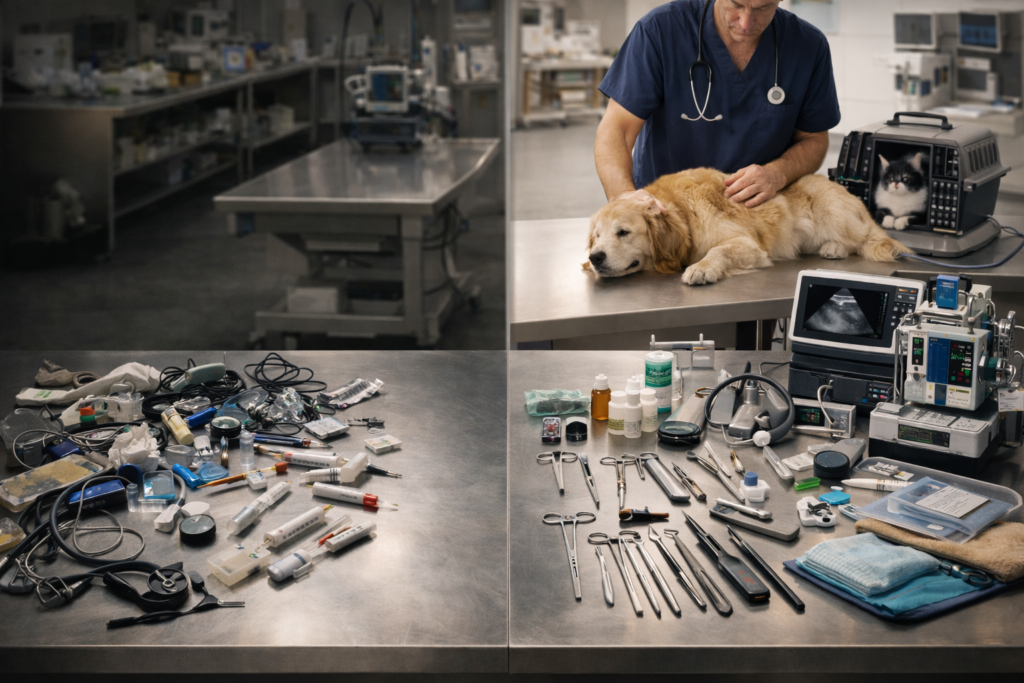
Dogs and cats account for the overwhelming majority of veterinary consultations worldwide, yet the tools that serve them best are rarely covered with the precision and focus that small animal practice deserves. The right veterinary tools for small animals are not simply scaled-down versions of general veterinary instruments — they are purpose-selected, species-appropriate, and workflow-matched to the specific clinical realities of daily companion animal medicine.
This guide covers every major category of veterinary tools used in a modern small animal practice: from examination and diagnostics to surgery, dental care, monitoring, handling, and recovery. Whether you are setting up a new clinic, auditing your current toolkit, or educating yourself on what small animal veterinary practice actually requires, this is the complete reference.
Section 1 — What Are Veterinary Tools for Small Animals?
Who Uses These Tools?
- Veterinarians — primary clinical decision-makers for diagnosis and treatment
- Veterinary technicians and nurses — anesthesia monitoring, laboratory work, treatment administration, patient handling
- Veterinary assistants — restraint, preparation, and support functions
- Veterinary students — clinical training under supervision
What These Tools Support
Small animal veterinary tools support every stage of the clinical encounter:
- Physical examination — assessing body systems through auscultation, palpation, visualization
- Diagnostics — identifying the nature and cause of illness or injury
- Surgery — performing operative procedures safely and precisely
- Dental care — treating and monitoring oral disease, the most prevalent condition in companion animals
- Treatment — delivering medications, fluids, and therapeutic interventions
- Monitoring — tracking vital signs during anesthesia and critical care
- Recovery — supporting safe return to consciousness and normal function
- Restraint — safely controlling patients for examination and procedures
Section 2 — Why Small Animal Practice Requires Specialized Tools
Dogs and cats are not simply “smaller patients.” They present specific physiological, behavioral, and anatomical realities that demand tools matched to those realities — and clinics that treat them with generic or oversized instruments compromise both clinical accuracy and patient safety.
Size Matters More Than It Seems
Drug dosing in veterinary medicine is entirely weight-based. A 4 kg cat and a 45 kg Labrador require profoundly different drug volumes, IV catheter gauges, fluid delivery rates, endotracheal tube sizes, and monitoring probe fittings. The tools that serve one patient safely can be inappropriate or dangerous for another. Precision tools, properly sized, are not a luxury — they are a patient safety requirement.
Behavioral Differences Drive Tool Selection
Dogs and cats behave very differently during clinical encounters. Cats are often significantly more fractious under handling stress, prone to defensive aggression, and physiologically sensitive to restraint-induced anxiety in ways that affect examination findings. Canine patients range from compliant to fear-reactive depending on breed, history, and training. The right restraint tools, sized correctly and used thoughtfully, reduce patient stress, improve the quality of clinical findings, and prevent staff injury.
Dental Disease Is Endemic
Studies consistently show that over 80% of dogs and 70% of cats over age three have some degree of periodontal disease. Small animal clinics that lack appropriate dental tools cannot diagnose, stage, or treat the most common condition they will encounter. Dental tools are not a specialty add-on in small animal practice — they are core equipment.
Compact, Efficient Exam Room Setup Is Essential
Small animal clinics operate at high patient volume with rapid appointment turnover. Tools must be organized for immediate accessibility, easy cleaning between patients, and efficient use in small physical spaces. The compact, workflow-optimized exam room is a design and equipment planning priority specific to small animal practice.
Section 3 — Main Categories of Veterinary Tools for Dogs and Cats
Understanding small animal veterinary tools through their clinical function provides the clearest framework for selection, setup, and prioritization.
| Category | What It Covers | Why It Matters |
|---|---|---|
| Examination Tools | Stethoscope, thermometer, otoscope, ophthalmoscope, scales | First-line clinical data collection |
| Diagnostic Tools | Blood pressure, pulse oximeter, ECG, in-house analyzers | Disease identification and staging |
| Imaging Tools | Digital X-ray, ultrasound, intraoral dental X-ray | Internal structural and soft tissue visualization |
| Laboratory Tools | Microscope, centrifuge, hematology analyzer, chemistry analyzer | Same-day diagnostic results |
| Surgical Tools | Scalpels, scissors, forceps, hemostats, needle holders | Safe operative procedures |
| Dental Tools | Scalers, probes, curettes, polishers, gags | Oral disease diagnosis and treatment |
| Treatment Tools | Syringes, IV catheters, IV pumps, fluid therapy | Medication and fluid delivery |
| Monitoring Tools | Pulse oximeters, ECG, ETCO2, blood pressure | Anesthesia and critical care safety |
| Restraint Tools | Muzzles, cat bags, E-collars, positioning aids | Staff and patient safety during handling |
| Sterilization Tools | Autoclave, ultrasonic cleaner, sterilization pouches | Surgical instrument safety |
Section 4 — Essential Examination and Diagnostic Tools
Diagnostic tools are the decision-driving instruments of small animal veterinary practice. The findings they generate inform every treatment choice, every referral, and every client conversation.
Stethoscope
What it does: Auscultates heart sounds, lung fields, and intestinal sounds. Detects murmurs, arrhythmias, pulmonary crackles, and borborygmi.
Why it matters for dogs and cats: Cardiac disease is extremely common in both species — mitral valve disease in small-breed dogs, hypertrophic cardiomyopathy in cats. A high-quality stethoscope is essential for detecting early murmurs before clinical signs develop. Grade I–II murmurs can be missed entirely with low-quality instruments.
Selection guidance: Invest in a Littmann Cardiology-grade or equivalent quality model. The acoustic difference between a quality stethoscope and a budget alternative is clinically significant, particularly in cats where subtle murmurs are easy to miss. For small animal-only practice, a small-diaphragm bell chest piece significantly improves acoustic clarity in cats.
Must-have first. No substitution.
Thermometer
What it does: Measures core body temperature — a critical triage parameter for fever, hypothermia, shock, and anesthetic recovery assessment.
Why it matters for dogs and cats: Normal temperature ranges differ between species and breed sizes. Cats run slightly higher than most dogs. Post-anesthetic hypothermia is common in small cats and toy-breed dogs — temperature monitoring through recovery is essential.
Selection guidance: Digital rectal thermometers remain the accuracy standard. Infrared auricular thermometers are faster but less reliable in small feline ear canals. Keep multiple units — they are inexpensive and frequently misplaced.
Otoscope
What it does: Visualizes the external ear canal and tympanic membrane.
Why it matters for dogs and cats: Otitis externa is one of the most common presenting complaints in dogs. Cats with polyps or chronic otitis require careful ear canal examination with appropriate speculum sizing. Video otoscopes display canal images to a monitor, improving treatment planning documentation and client education significantly.
Selection guidance: Choose a model with a range of speculum sizes — a speculum appropriate for a large Labrador is not appropriate for a cat or a Chihuahua. Video otoscopes are a high-value upgrade for any practice managing chronic ear disease.
Ophthalmoscope
What it does: Examines the retina, fundus, optic disc, lens, and anterior eye structures.
Why it matters for dogs and cats: Ocular examination findings reflect systemic disease. Hypertensive retinopathy in cats with kidney disease or hyperthyroidism, diabetic lens changes, retinal degeneration — all visible ophthalmoscopically. In dogs, progressive retinal atrophy screening is relevant for specific breeds.
Selection guidance: Coaxial ophthalmoscopes provide the clearest fundus images by reducing corneal reflection. Combination otoscope/ophthalmoscope kits are cost-effective for most small animal clinics.
Patient Weighing Scale
What it does: Measures body weight for drug dosing calculations, nutritional management, and disease monitoring.
Why it matters for dogs and cats: Accurate body weight is a patient safety issue, not a formality. An error in a cat’s weight translates directly to a dosing error — and cats are particularly sensitive to drug overdoses due to their unique hepatic metabolism. A scale that is consistently inaccurate by even 10% creates real clinical risk.
Selection guidance: Platform scales with digital display and 0.05 kg resolution are standard for small animal clinics. Tare function for weighing cats in carriers is a practical feature. Scales should be zeroed and calibrated monthly.
Blood Pressure Monitor
What it does: Measures systolic, diastolic, and mean arterial blood pressure.
Why it matters for dogs and cats: Hypertension is common in cats with chronic kidney disease and hyperthyroidism — two of the most prevalent diseases in geriatric feline patients. Blood pressure monitoring is also essential during anesthesia, where hypotension is the most common and dangerous cardiovascular complication.
Types and selection:
- Doppler blood pressure — gold standard for cats; uses audible pulse sound with inflatable cuff; most accurate in cats and small dogs
- Oscillometric — automated, faster, but less reliable in cats and small fractious patients
- Multi-parameter monitor with NIBP — most efficient for surgical suitesEssential for any practice managing feline geriatric patients, cardiac cases, or performing anesthesia.
Pulse Oximeter
What it does: Non-invasively measures blood oxygen saturation (SpO2) and pulse rate.
Why it matters for dogs and cats: During anesthesia, respiratory compromise can develop rapidly — especially in brachycephalic breeds (Bulldogs, Pugs, Persians, Exotic Shorthairs) whose conformation predisposes them to airway obstruction. Continuous SpO2 monitoring provides real-time early warning.
Selection guidance: Veterinary-specific clip-on tongue probes are standard. Human hospital units can give inaccurate readings in animals with heavily pigmented mucous membranes or thick tongues.
ECG Monitor
What it does: Records cardiac electrical activity and displays rhythm in real time.
Why it matters for dogs and cats: Arrhythmias are common in dogs with myocardial disease, splenic masses, and GDV (gastric dilatation-volvulus). In cats, hypertrophic cardiomyopathy frequently presents with arrhythmias. Continuous ECG during anesthesia detects rhythm changes before they become cardiac emergencies.
Selection guidance: Multi-parameter monitors combining ECG, SpO2, ETCO2, blood pressure, and temperature are more practical and clinically comprehensive than standalone ECG units for surgical use.
Ultrasound Machine
What it does: Real-time soft tissue imaging for abdominal, cardiac, reproductive, and musculoskeletal assessment.
Why it matters for dogs and cats: Ultrasound is the most diagnostically versatile tool in small animal medicine. It detects free abdominal fluid, splenic masses, liver disease, urinary tract pathology, intestinal foreign bodies, cardiac dimensions and function, and lymph node enlargement — none of which X-ray reliably visualizes. It guides fine-needle aspirates of masses and organs, directly improving diagnostic confidence without surgery.
Selection guidance: A microconvex probe (5–8 MHz) is the most versatile for small animal abdominal and cardiac scanning. A linear probe adds musculoskeletal capability. Portable units with good probe quality are a strong early investment.
Digital X-Ray System
What it does: Provides structural imaging of the musculoskeletal system, thorax, and abdomen.
Why it matters for dogs and cats: Fractures, pneumonia, cardiac enlargement, pleural effusion, tracheal displacement, cystic calculi, intestinal obstruction, and foreign body ingestion are routinely diagnosed radiographically. Digital radiography with a DR flat-panel detector provides near-instant, high-resolution images that significantly outperform older CR cassette systems in quality and workflow speed.
Essential for any full-service small animal clinic. X-ray is not a luxury — it is a core diagnostic capability.
In-House Laboratory Equipment
Microscope: Used daily for ear cytology, skin cytology, blood smear evaluation, fine needle aspirate interpretation, fecal parasite identification, and urinalysis sediment examination. Buy a quality binocular model with 4x, 10x, 40x, and 100x oil-immersion objectives.
Centrifuge: Separates blood for packed cell volume (PCV), plasma protein, serum chemistry sampling, and concentrates urine sediment. A basic benchtop centrifuge is inexpensive and used multiple times daily.
Hematology analyzer: Provides automated CBC results — red blood cell count, white blood cell count and differential, platelet count. Essential for sick patient workup, infection assessment, anemia investigation, and pre-anesthetic screening.
Chemistry analyzer: Measures liver enzymes, kidney values, glucose, electrolytes, and proteins. Same-day chemistry results allow same-visit treatment decisions — one of the highest-value in-house capabilities a small animal clinic can offer.
Section 5 — Surgical Tools for Small Animal Practice
Surgical tools in small animal practice must combine precision with ergonomic usability for the high-volume procedures that define companion animal surgery — spays, neuters, soft tissue procedures, wound management, and orthopedics at higher-complexity practices.
Scalpel Handles and Disposable Blades
The primary incision instrument. Handle sizes 3 and 4 are standard; blade sizes vary by tissue type and incision size. Disposable blades are standard practice — single-use blades provide consistent sharpness that reusable blades cannot maintain. A dull blade tears tissue rather than cutting it, increasing trauma and healing time.
Hemostatic Forceps
Used for clamping blood vessels and tissue pedicles during surgery. Small animal practice requires a range of sizes:
- Mosquito hemostats — fine-tipped, for small vessels in cats and small dogs
- Kelly hemostats — medium pedicles in dogs
- Rochester-Carmalt forceps — larger pedicles in ovariohysterectomy (dog spay) procedures
Quality construction prevents slippage during clamping — a critical feature in open body cavity procedures.
Tissue Forceps (Thumb Forceps)
For grasping and manipulating tissue during dissection and closure. Choose based on tissue type:
- Adson forceps (toothed) — firm grip on skin and dense tissue
- Brown-Adson forceps — multiple fine teeth for tissue manipulation
- Smooth dressing forceps — delicate tissue handling without tear risk
Surgical Scissors
- Metzenbaum scissors — the primary dissection scissors in small animal soft tissue surgery; long handle, short curved blade, ideal for fine tissue separation around vessels and ligaments
- Mayo scissors — for heavier tissue cutting, fascia, and suture removal
- Iris scissors — fine, short scissors for ophthalmic and very delicate tissue work
Needle Holders
Drive suture needles through tissue for wound closure. Mayo-Hegar and Olsen-Hegar needle holders are standard in small animal surgery. The Olsen-Hegar design includes built-in scissors for suture cutting, which is convenient in solo-surgeon situations. Jaws must hold the needle firmly without rotation — a quality criterion that cheap needle holders consistently fail.
Retractors
Maintain exposure of the surgical field. Self-retaining retractors (Gelpi, Weitlaner) are particularly practical in small animal abdominal and orthopedic surgery — they free both surgeon’s hands for dissection and instrumentation.
Basic Surgical Pack — Recommended Components
A standard small animal soft tissue surgical pack includes:
- Scalpel handle (×1 or ×2)
- Thumb forceps — toothed and smooth
- Mosquito hemostats (×6–8)
- Kelly or Crile hemostats (×4)
- Metzenbaum scissors (×1)
- Mayo scissors (×1)
- Needle holder (×1–2)
- Gelpi or Weitlaner retractors (×1)
- Towel clamps (×4)
- Suction tip and tubing
Maintain a minimum of two pre-sterilized packs for consecutive same-day procedures.
Section 6 — Dental Tools for Dogs and Cats
Dental care is one of the most clinically important and commercially significant services in small animal veterinary practice — yet it remains consistently underequipped in many clinics. The prevalence of periodontal disease in dogs and cats is so high that dental tools belong in the “essential” category for any practice seeing patients over two years of age.
Dental Probe and Explorer
What it does: Measures periodontal pocket depth and detects cavities, resorptive lesions, and enamel defects.
Why it matters: In cats, feline odontoclastic resorptive lesions (tooth resorption, now termed feline tooth resorption or TR) affect an estimated 30–70% of adult cats and cause significant pain. These lesions are only detectable on careful probing and dental radiography — they are invisible to the naked eye. Without a dental probe, a clinically significant and painful condition goes undetected and untreated.
Ultrasonic Dental Scaler
What it does: Uses high-frequency vibration to remove calculus and plaque from tooth surfaces — both supragingival (above the gumline) and subgingival (below the gumline).
Why it matters: Calculus removal is the core clinical purpose of a dental prophylaxis. Ultrasonic scalers remove calculus faster and more thoroughly than hand scalers alone, and their subgingival capability is essential for treating the source of periodontal disease. A functional ultrasonic scaler is a higher priority than most other dental equipment additions.
Dental Curettes and Hand Scalers
What they do: Manual subgingival scaling and root planing. Gracey curettes are area-specific designs for different tooth surfaces.
Why they matter: Fine subgingival work, particularly around multi-rooted teeth and furcation areas, still requires hand instrumentation that ultrasonic tips cannot access.
Dental Polisher
What it does: Smooths tooth surfaces after scaling to remove microscopic scratches that would otherwise accumulate plaque and calculus more rapidly.
Why it matters: Polishing is the final step in a complete dental prophylaxis. Scaling without polishing leaves a rough enamel surface that re-accumulates calculus faster — effectively reducing the duration of clinical benefit.
Mouth Gag
What it does: Holds the mouth open during examination or procedure under anesthesia.
Selection note for cats: Feline mouth gags must be used with careful technique — overstretching the cat’s jaw during extended dental procedures is associated with post-operative neuropathy (Horner’s syndrome, tongue deficits). Use the smallest appropriate gag and avoid prolonged wide-mouth positioning. This is a clinically important safety consideration specific to feline dentistry.
Intraoral Dental X-Ray System
What it does: Full-mouth intraoral radiographs of all tooth roots and supporting bone.
Why it matters: Approximately 60–80% of dental pathology lies below the gumline and is invisible on oral examination without radiography. In cats, tooth resorption staging, root remnant detection, and furcation bone loss cannot be assessed clinically. Intraoral dental X-ray is the standard of care for complete dental prophylaxis in both dogs and cats — not an optional advanced add-on.
Common buyer mistake: Purchasing a dental scaler and polisher without including intraoral dental X-ray capability. The combination of scaling, probing, and full-mouth radiographs is what constitutes a complete dental prophylaxis in 2026.
Section 7 — Treatment, Monitoring, and Recovery Tools
After a diagnosis is made, the tools that support treatment, anesthesia, monitoring, and recovery determine whether that diagnosis translates into a good patient outcome.
Syringes and Needles
Available in sizes from 1 mL to 60 mL; matched to drug volume and administration route. Precision matters most at the small end of the scale — a 1 mL syringe for a 3 kg cat is not interchangeable with a 3 mL syringe for the same dose. Needle gauge selection depends on administration route: 25–27G for subcutaneous in cats, 22–23G for intramuscular, 20–22G for intravenous.
IV Catheters (Peripheral Venous Catheters)
Provide intravenous access for fluid therapy, anesthesia induction, and medication delivery. In cats and small dogs, 22–24G catheters are standard. In larger dogs, 18–20G catheters allow higher flow rates for fluid resuscitation. Cephalic and saphenous veins are the most commonly catheterized sites in small animal patients.
IV Pumps and Syringe Pumps
Why they are non-negotiable in small animal practice: Cats and small dogs are extremely sensitive to fluid overload — a condition that gravity drip administration cannot reliably prevent. IV pumps provide precision volume delivery at programmed rates. Syringe pumps deliver small-volume drug constant-rate infusions (CRIs) for analgesia, anesthetic maintenance, and critical care — not achievable with gravity drip.
Endotracheal Tubes
Maintain an open airway during general anesthesia. For small animal patients, a full range of sizes is essential:
- Cats typically require 3.0–5.0 mm internal diameter tubes
- Small dogs: 4.5–7.0 mm
- Large dogs: 8.0–14.0 mm
Uncuffed tubes are standard for cats (to prevent tracheal pressure necrosis from overinflated cuffs in the small, rigid feline trachea). Cuffed tubes are appropriate for dogs of all sizes.
Anesthesia Equipment
Anesthesia in small animal practice requires an anesthesia machine with:
- Vaporizer — calibrated for isoflurane or sevoflurane
- Non-rebreathing circuit (Bain circuit or Mapleson-D equivalent) for cats and patients under 5–7 kg — minimizes resistance and dead space
- Rebreathing circuit for dogs over 7 kg
- Pop-off valve — prevents dangerously elevated airway pressure
- Reservoir bag — allows manual ventilation and visual monitoring of breathing depth
- Waste gas scavenging — occupational safety requirement
Patient Monitoring During Anesthesia
Minimum monitoring standard for every anesthetic event in a small animal clinic:
- Pulse oximetry (SpO2) — continuous oxygen saturation monitoring
- Capnography (ETCO2) — the most sensitive indicator of ventilatory status; detects apnea, esophageal intubation, and circuit disconnection
- Blood pressure — Doppler in cats; oscillometric in dogs; detects hypotension before it causes organ damage
- ECG — cardiac rhythm monitoring
- Temperature probe — hypothermia is common in small patients, particularly cats during extended procedures
Warming Devices
Post-anesthetic hypothermia is a genuine complication, particularly in cats and toy-breed dogs. Forced-air warming blankets (Bair Hugger-type) are the gold standard for intraoperative and recovery warming. Circulating warm water blankets are a reliable alternative. Electric heating pads are contraindicated in unconscious or sedated patients due to thermal burn risk from impaired sensation and movement.
Bandaging and Recovery Tools
- Lister (bandage) scissors — angled blade tip for safe bandage removal over skin
- Conforming bandage — flexible wound coverage and limb bandaging
- Non-adherent wound dressings — appropriate wound contact layer selection reduces pain and trauma at dressing changes
- Recovery caging — adequately sized, padded, easily disinfected; separate cat and dog recovery areas where possible to reduce stress
Section 8 — Handling and Restraint Tools for Dogs and Cats
Restraint in small animal practice is where clinical quality and patient safety intersect most visibly. A poorly restrained patient produces unreliable examination findings, injures staff, and experiences unnecessary distress — all avoidable with the right tools and technique.
Muzzles
Used to prevent biting in dogs during painful, stressful, or unpredictable clinical situations. Keep a range of sizes from Chihuahua to giant breed. Basket muzzles allow panting and treat delivery — preferred for extended wear. Soft cloth muzzles are appropriate for brief procedures.
Important: Never muzzle a dyspneic (respiratory-distressed) patient — airway obstruction risk is immediate. Respiratory patients need alternative restraint approaches and oxygen support, not physical restraint.
Cat Restraint Tools
Cats require a different restraint philosophy from dogs. Minimal, low-stress handling typically produces better examination results than aggressive physical restraint in cats — fractious responses escalate rapidly under forceful handling.
Cat-specific restraint tools:
- Cat restraint bag (cat bag) — full-body bag with zippered access openings; allows injection and blood draw with controlled access while preventing scratch and bite injuries to staff
- Towel wrap (“burrito wrap”) — for brief procedures; effective for most cats when technique is calm and confident
- Gauntlet gloves — heavy leather gloves for handling genuinely aggressive cats; note that tactile feedback is reduced with thick gloves, which can affect technique
- Feliway-sprayed surfaces and handling areas — synthetic feline facial pheromone reduces anxiety during examination; evidence-based and recommended
Elizabethan Collars (E-Collars)
Prevent self-trauma to wounds, sutures, bandages, and treatment sites post-procedure. Stock a range from cat/small dog sizes through to giant breeds. Clear plastic E-collars allow better peripheral vision — significantly less stressful for most cats than opaque models. Inflatable collar alternatives are available for some applications.
Exam Table Considerations
A non-slip surface on the exam table is both a restraint tool and a welfare measure. A dog or cat that cannot find traction on the table surface is immediately more anxious, more resistant, and more likely to injure itself scrambling for grip. Non-slip table mats or textured stainless steel surfaces directly reduce handling difficulty.
Positioning Aids
- V-trough — foam or rubber wedge for positioning patients in dorsal or lateral recumbency for radiography and surgical prep
- Sandbags — radio-opaque positioning aids for limb immobilization during radiography
- Body harnesses — for positioning anxious patients on exam tables without collar pressure
Section 9 — Essential Tools Every Small Animal Vet Clinic Should Have
This section provides the definitive must-have list for each area of a small animal veterinary clinic.
Exam Room Essentials
- Quality stethoscope (Cardiology-grade recommended)
- Digital thermometers (minimum two per room)
- Otoscope with small and medium speculum sizes
- Ophthalmoscope
- Non-slip exam table with adequate load capacity
- Patient scale (0.05 kg resolution)
- Examination light (focused, adjustable)
- Muzzles (minimum 6 sizes: XXS to XL)
- Cat restraint bag
- Elizabethan collars (range of sizes)
- Non-slip table mats
Treatment Area Essentials
- IV catheters (20G, 22G, 24G minimum stocking)
- IV pump (volume-controlled) + syringe pump
- IV administration sets and burette sets
- IV stands (minimum one per bay)
- Electric clippers (two units, multiple blade sizes)
- Fluid warming capability
- Patient ward caging (cat and dog separated where possible)
- Forced-air warming blanket or warm water blanket
- Oxygen supply + flow-by masks (cat, small dog, medium-large dog sizes)
- Bandage scissors and full bandaging supply set
- Lockable medication storage + dedicated veterinary refrigerator
Surgery Suite Essentials
- Surgery table (adjustable, stainless steel, with V-trough and straps)
- Sterile surgical instrument packs (minimum two sets)
- Anesthesia machine with non-rebreathing and rebreathing circuits
- Full range of endotracheal tubes (3.0–14.0 mm)
- Multi-parameter patient monitor (SpO2, ETCO2, ECG, NIBP, temperature)
- Surgical lighting (shadow-free, color-accurate)
- Suction unit
- Electrosurgery unit (ESU)
- Autoclave (validated, spore-tested) + ultrasonic cleaner
- Sterilization pouches and indicator strips
- Waste anesthetic gas scavenging system
- Warming blanket (intraoperative)
Dental Essentials
- Dental probe and explorer
- Ultrasonic dental scaler
- Dental curettes and hand scalers
- Dental polisher with prophy angle
- Mouth gags (appropriate sizes; feline-specific sizing awareness)
- Intraoral dental X-ray system (standard of care)
- Dental extraction instruments (luxators, elevators, extraction forceps)
Monitoring Essentials
- Pulse oximeter with tongue and toe probes
- Doppler blood pressure (standard for cats)
- Capnograph (ETCO2 monitor) — part of multi-parameter monitor ideally
- Temperature probes
- Recovery monitoring: at minimum, SpO2 and thermometer in recovery area
Section 10 — Must-Have vs. Advanced Tools
Basic Startup Tools — Buy First
| Tool / Equipment | Why It’s Priority One |
|---|---|
| Stethoscope, thermometer, otoscope, ophthalmoscope | Core examination capability — no clinical function without these |
| Patient scale | Drug dosing safety |
| Exam table (non-slip) | Core workflow |
| Autoclave + instrument packs | Surgical safety |
| Anesthesia machine + multi-parameter monitor | Surgical and anesthesia safety |
| IV pump + syringe pump | Fluid therapy safety |
| Clippers | Surgical site preparation |
| Centrifuge + refractometer | Basic in-house diagnostics |
| Oxygen supply + masks | Emergency and anesthesia support |
| Warming unit | Post-anesthetic patient safety |
| Digital X-ray (DR) | Essential diagnostic imaging |
Growth-Stage Upgrades — Add as Revenue Grows
| Tool / Equipment | When to Add It |
|---|---|
| Ultrasound machine | Month 1–3; highest diagnostic ROI after X-ray |
| Hematology + chemistry analyzer | Month 1–3; same-visit diagnostics |
| Dental scaler + polisher | Early; dental disease is endemic |
| Intraoral dental X-ray | With or shortly after dental unit |
| Video otoscope | After establishing patient volume |
| Electrosurgery unit (ESU) | Once surgical volume is confirmed |
Advanced Tools — For Higher-Volume or Specialist Clinics
| Tool / Equipment | Appropriate When |
|---|---|
| Endoscopy system | High GI foreign body or respiratory case volume |
| Laparoscopy system | Specialist surgical scope |
| CT scanner | Referral-level neurology, oncology, orthopedics |
| Advanced coagulation analyzer | Oncology or surgical specialty practice |
| Ophthalmoscopy slit lamp | Ophthalmic practice |
Key principle: Buy what serves your actual patient population in Year 1. Advanced tools deliver no value until the case volume that justifies them exists. Start with diagnostic depth, not specialty breadth.
Section 11 — How These Tools Improve Care and Client Communication
The right veterinary tools don’t only benefit the patient — they fundamentally change how effectively a veterinarian communicates with the pet owner who brought that patient in.
When a veterinarian walks a pet owner through an ultrasound image showing their dog’s enlarged spleen, or shows them an intraoral X-ray revealing root resorption invisible to the naked eye, or plays the Doppler recording of their cat’s heart murmur — the pet owner gains a level of understanding and confidence that a verbal explanation alone cannot achieve. High-quality diagnostic tools make the invisible visible, and that visibility builds trust in ways that no amount of professional communication skill can fully substitute.
Efficient tools also improve the experience for the pet owner indirectly. A well-organized exam room, an IV pump that silently and precisely delivers the right fluid rate, a warming blanket that keeps a post-surgical patient comfortable — these details are noticed. They signal professionalism. They reduce anxiety. They build the kind of client relationship that generates loyalty, referrals, and long-term practice sustainability.
From a practice management perspective, efficient small animal tools directly affect appointment throughput. An exam room set up for rapid, organized examination with all tools immediately accessible can meaningfully reduce per-appointment time without reducing quality — increasing daily capacity without adding staff. A well-stocked treatment area reduces the “searching for supplies” inefficiency that accumulates into hours of lost productivity per week. Tools are workflow infrastructure.
Section 12 — Common Mistakes When Choosing Small Animal Veterinary Tools
Buying broad tools instead of species-appropriate tools
A stethoscope with only a large adult chest piece, or a pulse oximeter probe designed for a 70 kg human tongue, is a mismatch for a 3 kg cat. Species and size appropriateness matter at every equipment decision.
Underinvesting in diagnostic tools
Some clinics attempt to minimize startup cost by relying entirely on external laboratory services and referral for imaging. This creates longer diagnosis-to-treatment timelines, higher per-test costs at volume, and a perception of limited capability that deters clients. In-house diagnostic investment pays for itself quickly.
Neglecting dental equipment
The most common clinical condition in small animal patients is dental disease — yet many clinics open without dental equipment. A scaler, probes, and curettes are inexpensive. Intraoral dental X-ray is the standard of care. These tools must be included from the start.
Choosing low-quality surgical instruments
Cheap hemostats slip, cheap scissors bind, cheap needle holders spin suture needles. In surgery, instrument failure is not a workflow inconvenience — it is a patient safety event. Quality surgical instruments from established manufacturers represent a foundational investment, not a luxury line item.
Ignoring monitoring and recovery equipment
Purchasing an anesthesia machine without a capnograph is the most common monitoring shortcut in small animal practice. ETCO2 monitoring is the earliest and most sensitive indicator of ventilatory failure and circuit disconnection — its absence leaves a critical safety gap.
Forgetting feline-specific handling needs
Many clinics plan their restraint tool selection around dogs and treat cat handling as an afterthought. Feline patients require a separate, thoughtful restraint toolkit — and cats tolerate less forceful handling than dogs. Inadequate cat restraint tools lead to staff injury, poor examination quality, and severely stressed patients.
Overbuying advanced equipment too early
An endoscopy tower and laparoscopy system at a newly opened single-doctor clinic commonly sit unused for months — accumulating maintenance costs and occupying critical space. Advanced tools should follow case volume, not precede it.
Section 13 — FAQ
What tools do vets use for dogs and cats?
The most commonly used tools in a small animal veterinary practice include the stethoscope, digital thermometer, otoscope, ophthalmoscope, patient scale, digital X-ray system, ultrasound machine, in-house laboratory analyzers, surgical instrument packs, dental scaler and probes, IV pumps, pulse oximeter, ECG monitor, capnograph, and patient warming equipment.
What are the most important diagnostic tools in a small animal vet clinic?
The stethoscope (for cardiac and respiratory assessment), in-house hematology and chemistry analyzers (for same-day blood results), digital X-ray (for structural imaging), and ultrasound (for soft tissue evaluation) are the four highest-impact diagnostic tools in daily small animal practice. Blood pressure monitoring is equally essential for feline medicine.
Are dental tools essential in small animal practice?
Yes. Periodontal disease affects the majority of dogs and cats over age three. A practice without dental tools cannot diagnose or treat the most prevalent condition it will encounter. At minimum: dental probe, ultrasonic scaler, curettes, polisher, and intraoral dental X-ray capability. These are essential — not specialty add-ons.
What surgical tools are commonly used for dogs and cats?
Standard soft tissue surgical instruments include scalpels (handles and disposable blades), Metzenbaum and Mayo scissors, tissue forceps, mosquito and Kelly hemostatic forceps, needle holders, Gelpi or Weitlaner retractors, towel clamps, and suction tips. Packs are pre-assembled, pre-sterilized, and procedure-specific.
Why are IV pumps important in veterinary care?
IV pumps deliver intravenous fluids and drugs at precisely programmed rates — critical for cats and small dogs who are sensitive to fluid overload, for patients on continuous rate infusion (CRI) analgesic or anesthetic drugs, and for any post-surgical patient requiring controlled fluid support. Gravity drip administration cannot achieve this precision safely.
What tools help veterinarians examine cats safely?
Cat restraint bags (full-body bags with access zippers), towel wrapping, cat-appropriate muzzles, low-stress handling techniques with minimal forceful restraint, non-slip exam table surfaces, Feliway pheromone in the examination environment, and a calm, methodical approach to the examination sequence. The goal is to minimize cat anxiety rather than overpower it.
What should a new small animal clinic buy first?
Priority one: stethoscope, thermometer, otoscope, scale, exam table, autoclave, surgical pack, anesthesia machine with patient monitor, IV pump, oxygen delivery, and warming unit. Priority two (months 1–3): digital X-ray, ultrasound, in-house laboratory analyzers, dental unit. Build clinical safety first; add diagnostic depth as revenue grows.
How do veterinary tools improve care for the pet owner and patient?
For the patient, tools improve diagnostic accuracy, reduce procedure time, support safer anesthesia, and enable earlier disease detection. For the pet owner, high-quality diagnostic tools make findings visible and understandable — an X-ray, ultrasound image, or dental radiograph communicates clinical reality in ways a verbal explanation cannot. This transparency builds trust, supports informed decision-making, and strengthens the long-term relationship between the pet owner and the veterinary practice.
Section 14 — Conclusion: Tools Built for the Patients You Actually Treat
Small animal veterinary tools are not a generic subset of a broader veterinary equipment category — they are a specific, thoughtfully selected toolkit matched to the clinical realities of treating dogs and cats every day. Size-appropriate instruments, feline-specific handling tools, comprehensive dental equipment, precise fluid delivery systems, and reliable monitoring technology are the foundations of modern small animal veterinary practice.
The clinics that serve dogs, cats, and their owners best are the ones that invest in the right tools for their actual patient population — not in the most expensive options available, and not in advanced specialty equipment before foundational capabilities are solid. Start with examination, diagnostics, surgery, and dental. Build monitoring quality early. Understand your patients’ needs before your wishlist.
When your toolkit matches your clinical reality, every examination is more accurate, every procedure is safer, every recovery is better supported, and every pet owner leaves your practice with a clearer understanding of what was found and how it was treated.