
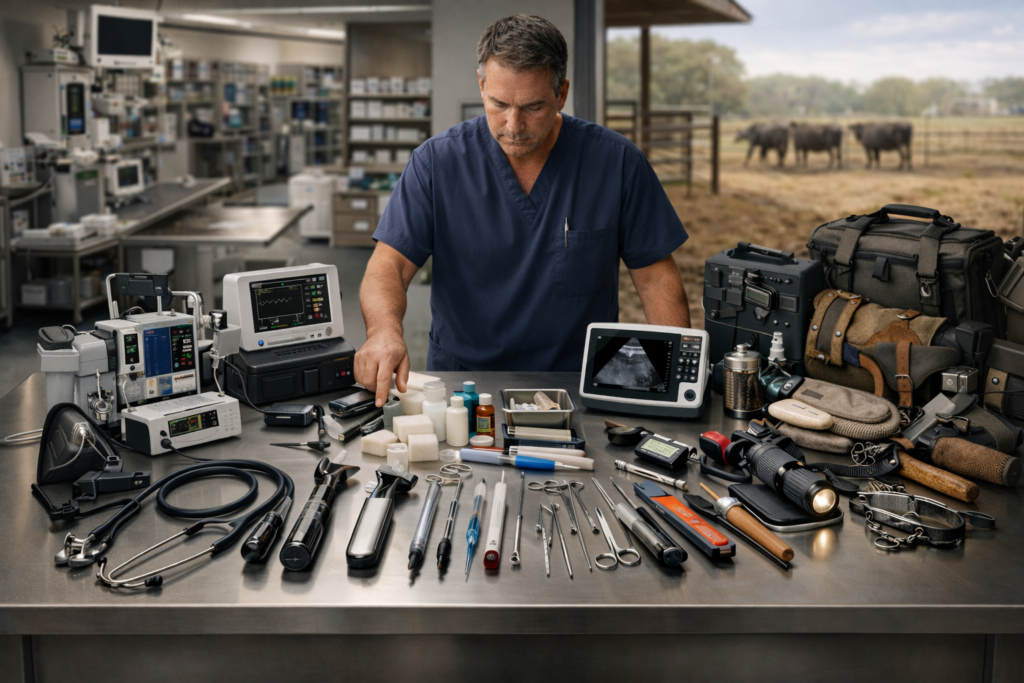
Veterinary tools are the instruments, devices, and handheld implements that veterinarians and veterinary technicians use every day to examine, diagnose, treat, and monitor animals. They range from something as simple and universal as a stethoscope to highly specialized surgical scissors used in a single procedure type. Without the right tools, even the most knowledgeable clinician cannot work safely, accurately, or efficiently.
Understanding what veterinary tools are — how they are categorized, what each one actually does, and which ones truly matter in daily clinical practice — is essential knowledge for every veterinary professional, practice owner, vet student, and procurement decision-maker. This article provides that understanding in full.
Section 1 — What Are Veterinary Tools?
A Clear Definition
A veterinary tool is any handheld or directly operated instrument used in veterinary medicine to:
- Examine an animal’s body structures and systems
- Diagnose illness, injury, or physiological abnormality
- Perform surgical or procedural interventions
- Deliver treatment, medication, or fluid support
- Monitor vital signs, anesthetic depth, or recovery status
- Handle, restrain, or safely position patients
- Sterilize instruments or maintain a clinically safe environment
Who Uses Veterinary Tools?
Veterinary tools are used by:
- Veterinary surgeons / veterinarians — primary clinical decision-makers
- Veterinary technicians and nurses — perform monitoring, treatment, anesthesia support, and patient care
- Veterinary assistants — support with restraint, preparation, and basic procedures
- Farm workers under veterinary supervision — drenching, vaccination, hoof care in livestock settings
- Veterinary students — learn clinical skills through hands-on instrument use
Why Veterinary Tools Matter
The tools a veterinary practice uses directly determine what it can diagnose, what procedures it can safely perform, and how efficiently the team can move through its clinical day. A stethoscope that cannot resolve a subtle murmur, a thermometer that is consistently inaccurate, or a pair of scissors that binds during a procedure — these are not minor inconveniences. They are clinical compromises.
The right veterinary tools, correctly selected and properly maintained, improve:
- Diagnostic accuracy — detecting problems early and correctly
- Treatment efficiency — delivering care faster with less patient stress
- Surgical safety — reducing complication risk and procedure time
- Patient outcomes — animals leave care in better condition
- Staff confidence and ergonomics — the right tool is easier and safer to use
- Client trust — professional tooling signals professional-grade care
Section 2 — Veterinary Tools vs. Veterinary Equipment vs. Veterinary Supplies
This is one of the most commonly confused distinctions in veterinary procurement. Getting this right prevents mislabeled budgets, wrong purchase decisions, and conversations that talk past each other.
The Three Core Categories
| Category | What It Is | Examples |
|---|---|---|
| Veterinary Tools | Handheld or directly operated clinical instruments | Stethoscope, scalpel, forceps, syringe, thermometer, otoscope |
| Veterinary Equipment | Machines, systems, and fixed or semi-fixed devices | X-ray system, ultrasound machine, autoclave, anesthesia machine, IV pump, centrifuge |
| Veterinary Supplies | Consumable items used and replenished regularly | Gloves, gauze, suture material, IV fluid bags, syringes (disposable), disinfectants, surgical drapes |
A Practical Way to Remember the Difference
Think of it this way: tools are what you pick up, equipment is what you turn on, and supplies are what you use up.
- A scalpel handle is a tool. The blade on it is a supply.
- A stethoscope is a tool. The replacement ear tips are a supply.
- An autoclave is equipment. The sterilization pouches you run through it are supplies.
- An IV pump is equipment. The fluid bags and administration lines are supplies.
What About Practice Management Systems?
Practice management software (PIMS) — platforms used for scheduling, medical records, billing, and inventory — is neither a tool, equipment, nor supply in the clinical sense. It is a practice management system, a distinct operational category. Some buyers confuse it with clinical equipment. It matters enormously for workflow, but it does not belong in a clinical tools budget.
Section 3 — Main Types of Veterinary Tools
Veterinary tools are best understood through their clinical function. Here are the ten primary categories:
1. Examination Tools
What they are: Instruments used during a physical examination to assess animal structure, function, and vital signs without performing any procedure.
Examples: Stethoscope, thermometer, otoscope, ophthalmoscope, reflex hammer, tongue depressor, refractometer, scales
Why they matter: Every clinical encounter starts with physical examination. Examination tools generate the first-line clinical data that drives all further decisions.
2. Diagnostic Tools
What they are: Instruments and devices that help identify the specific nature of an illness, injury, or internal condition.
Examples: Blood pressure monitor, pulse oximeter, ECG monitor, ultrasound machine, digital X-ray, in-house blood analyzer, microscope, centrifuge, urine dipstick reader
Why they matter: Accurate diagnosis is the foundation of effective treatment. Diagnostic tools reduce guesswork and allow veterinarians to detect conditions that a physical examination alone cannot reveal.
3. Surgical Tools
What they are: Handheld instruments used to perform incisions, manipulate tissues, control bleeding, and close wounds in surgical procedures.
Examples: Scalpels, surgical scissors (Metzenbaum, Mayo), hemostatic forceps, tissue forceps, needle holders, retractors, suction tips
Why they matter: Surgical tools must be precision instruments. Their quality, sharpness, and ergonomics directly affect procedure safety, tissue trauma, and complication rates.
4. Treatment Tools
What they are: Instruments used to deliver medications, fluids, and therapies after a diagnosis has been made.
Examples: Syringes, hypodermic needles, IV catheters, drenching guns, stomach tubes, bandaging tools, wound flushing kits
Why they matter: Treatment tools bridge the gap between diagnosis and recovery. They must be reliable, correct in size for the patient, and used with precise technique.
5. Monitoring Tools
What they are: Devices used to track patient vital signs, anesthetic depth, and physiological status during procedures and recovery.
Examples: Pulse oximeters, capnographs, ECG monitors, Doppler blood pressure units, esophageal stethoscopes, temperature probes
Why they matter: Monitoring tools are safety tools. They detect deterioration before it becomes irreversible — especially critical during anesthesia, surgery, and critical care.
6. Dental Tools
What they are: Instruments specifically designed for veterinary dental examination, cleaning, extraction, and oral surgery.
Examples: Dental probes, dental scalers (hand and ultrasonic), polishing equipment, dental extraction forceps, elevators, dental X-ray equipment
Why they matter: Dental disease is among the most common conditions in companion animals. Proper dental tools enable accurate staging, effective treatment, and prevention of systemic complications from untreated oral disease.
7. Laboratory Tools
What they are: Instruments used to process and analyze biological samples for diagnostic purposes.
Examples: Microscopes, centrifuges, hematology analyzers, chemistry analyzers, refractometers, fecal flotation equipment, blood smear preparation tools, urinalysis equipment
Why they matter: In-house laboratory capability generates same-visit diagnostic results, reducing patient wait time, improving treatment speed, and reducing send-out costs.
8. Sterilization Tools
What they are: Instruments and systems used to eliminate microbial contamination from surgical and treatment tools.
Examples: Autoclaves, ultrasonic cleaners, sterilization pouches, chemical indicator strips, biological spore test kits, cold sterilization trays
Why they matter: Sterilization is a non-negotiable safety function. Tools used inside a patient’s body or on open wounds must be free of viable microorganisms. Sterilization tools protect both patient and staff.
9. Animal Handling and Restraint Tools
What they are: Equipment and instruments used to safely position, control, and calm animals during examination and treatment.
Examples: Muzzles (multiple sizes), cat bags, Elizabethan collars, slip leads, halters, livestock head gates, squeeze chutes (large animal), positioning aids, towels for cat restraint
Why they matter: Proper restraint protects the animal from self-injury, protects staff from bites and kicks, and reduces patient stress — directly affecting the quality of examination findings.
10. Emergency Tools
What they are: Instruments specifically organized for rapid deployment in acute life-threatening situations.
Examples: Endotracheal tubes, laryngoscopes, Ambu bags, crash cart supplies, oxygen masks and delivery systems, suction devices, emergency IV access equipment, defibrillators (where used)
Why they matter: Emergency tools must be immediately accessible, organized, and functional at all times. In a critical situation, response time measured in seconds — not minutes — affects outcomes.
Section 4 — Full List of Common Veterinary Tools and Their Uses
Here is a comprehensive, categorized reference of the most important veterinary tools in clinical use.
Examination Tools
Stethoscope
- Category: Examination / Diagnostic
- Use: Auscultates heart, lung, and gastrointestinal sounds
- Why it matters: Detects murmurs, arrhythmias, respiratory abnormalities, and gut motility changes — a daily diagnostic workhorse in every practice type
Thermometer (Digital)
- Category: Examination
- Use: Measures core body temperature rectally or aurally
- Why it matters: Fever and hypothermia are critical triage indicators; inaccurate temperature measurement leads to missed diagnoses
Otoscope
- Category: Examination / Diagnostic
- Use: Visualizes ear canals and tympanic membrane
- Why it matters: Essential for otitis diagnosis, foreign body detection, and mite identification — one of the most frequently used examination tools in small animal practice
Ophthalmoscope
- Category: Examination / Diagnostic
- Use: Examines the fundus, retina, lens, and anterior eye structures
- Why it matters: Detects ocular disease, hypertensive retinopathy, and neurological changes reflected in the eye; coaxial models provide significantly clearer fundus views
Reflex Hammer
- Category: Examination
- Use: Tests neurological reflexes — patellar, withdrawal, and others
- Why it matters: Neurological examination is incomplete without reflex testing; guides spinal disease diagnosis
Tongue Depressor
- Category: Examination
- Use: Allows oral cavity visualization during examination
- Why it matters: Simple but essential for detecting oral masses, dental disease, and foreign bodies in the mouth
Patient Scale
- Category: Examination
- Use: Measures body weight for drug dosing, nutritional assessment, and disease monitoring
- Why it matters: All veterinary drug dosing is weight-based; an inaccurate scale is a direct patient safety risk
Diagnostic Tools
Blood Pressure Monitor (Doppler / Oscillometric)
- Category: Diagnostic / Monitoring
- Use: Measures systolic, diastolic, and mean arterial blood pressure
- Why it matters: Essential for anesthesia monitoring, cardiac and renal disease management; Doppler is gold standard for cats
Pulse Oximeter
- Category: Diagnostic / Monitoring
- Use: Non-invasively measures blood oxygen saturation (SpO2) and pulse rate
- Why it matters: Detects hypoxemia during anesthesia and in respiratory patients; clip-on tongue probes are standard
ECG Monitor
- Category: Diagnostic / Monitoring
- Use: Records cardiac electrical activity; identifies arrhythmias and conduction abnormalities
- Why it matters: Guides anesthetic management of cardiac patients; detects potentially fatal arrhythmias in real time
Ultrasound Machine
- Category: Diagnostic Equipment
- Use: Real-time soft tissue imaging for abdominal, cardiac, reproductive, and musculoskeletal assessment
- Why it matters: The most versatile diagnostic imaging modality in veterinary medicine; guides aspiration procedures, diagnoses effusions, confirms pregnancy
Digital X-Ray (DR/CR System)
- Category: Diagnostic Equipment
- Use: Structural imaging of bones, thorax, abdomen, and detection of foreign bodies
- Why it matters: Essential for fracture diagnosis, cardiac enlargement assessment, pneumonia, and foreign body detection — required in any full-service clinic
Refractometer
- Category: Diagnostic / Laboratory
- Use: Measures urine specific gravity and plasma protein concentration
- Why it matters: Rapid, inexpensive kidney function assessment and dehydration evaluation; indispensable in clinical practice
Surgical Tools
Scalpel Handle and Blades
- Category: Surgical
- Use: Primary tissue incision during surgery
- Why it matters: The precision and sharpness of the scalpel blade determines tissue trauma and healing quality
Surgical Scissors — Metzenbaum
- Category: Surgical
- Use: Fine tissue dissection and separation of delicate structures
- Why it matters: Metzenbaum scissors are the most commonly used dissecting scissors in soft tissue surgery; their curved design allows precise work in confined surgical fields
Surgical Scissors — Mayo
- Category: Surgical
- Use: Cutting of heavier tissues — fascia, muscle, and suture material
- Why it matters: Mayo scissors are robust enough for heavy cutting without flexing; their strength prevents binding in tough tissue
Tissue Forceps (Thumb Forceps)
- Category: Surgical
- Use: Grasping and manipulating tissue during dissection and closure
- Why it matters: Available in toothed (Adson) and non-toothed (smooth) variants for different tissue types; improper forceps selection causes unnecessary tissue trauma
Hemostatic Forceps (Mosquito / Kelly / Crile)
- Category: Surgical
- Use: Clamping blood vessels and pedicles to control hemorrhage
- Why it matters: Hemostats are among the most heavily used surgical instruments in routine procedures including spays and neuters; quality construction prevents slippage
Needle Holders
- Category: Surgical
- Use: Grasping and driving suture needles during wound closure
- Why it matters: Needle holders must provide firm, consistent grip without rotating the needle; Mayo-Hegar and Olsen-Hegar (with built-in scissors) are most common in veterinary use
Retractors (Gelpi, Weitlaner, Army-Navy)
- Category: Surgical
- Use: Holding tissue and incision edges apart for surgical field visualization
- Why it matters: Self-retaining retractors (Gelpi, Weitlaner) free the surgeon’s hands; hand-held retractors (Army-Navy) allow dynamic tissue manipulation by assistants
Towel Clamps
- Category: Surgical
- Use: Securing sterile surgical drapes to the patient and operative field
- Why it matters: Proper drape securement maintains sterile field integrity throughout a procedure
Suction Tip and Tubing (Frazier, Poole)
- Category: Surgical
- Use: Evacuating blood and fluid from the surgical site
- Why it matters: Field visibility is essential for safe surgery; suction prevents fluid accumulation that obscures anatomy and risks aspiration
Treatment Tools
Syringes
- Category: Treatment
- Use: Drawing up and administering injectable medications, fluids, and vaccines; aspiration of fluid samples
- Why it matters: Syringes are among the most frequently used items in any practice; available in sizes from 1 mL to 60 mL for different applications
Hypodermic Needles
- Category: Treatment
- Use: Subcutaneous, intramuscular, and intravenous drug delivery; venipuncture
- Why it matters: Needle gauge and length must match the route and patient size; incorrect needle selection causes pain and incomplete delivery
IV Catheters (Peripheral Venous Catheters)
- Category: Treatment
- Use: Provides intravenous access for fluid therapy, medication delivery, and anesthesia induction
- Why it matters: IV access is required for virtually every anesthetic procedure and most critical patient management scenarios; catheter gauge selection matters for flow rate and patient size
Bandage Scissors (Lister Scissors)
- Category: Treatment
- Use: Cutting bandages, dressings, and tape safely without cutting underlying tissue
- Why it matters: Angled, blunt-tipped design prevents skin lacerations during bandage removal — important for safety in fractious or recovering patients
Clippers (Electric Clipper + Blades)
- Category: Treatment / Exam
- Use: Clipping hair for surgical site preparation, wound management, dermatology procedures
- Why it matters: Clean, efficient clipping of the surgical site reduces bacterial load and infection risk; dull blades cause clipper burn — blade maintenance is essential
Wound Flushing Kits
- Category: Treatment
- Use: Irrigation and debridement of contaminated wounds
- Why it matters: Adequate wound lavage is more important than any topical medication in wound care; high-volume, low-pressure or pulsed irrigation dramatically reduces bacterial burden
Monitoring Tools
Capnograph (ETCO2 Monitor)
- Category: Monitoring
- Use: Measures end-tidal carbon dioxide concentration in exhaled breath during anesthesia
- Why it matters: The most sensitive real-time indicator of ventilatory status and circuit integrity during anesthesia; detects rebreathing, apnea, and esophageal intubation
Multi-Parameter Patient Monitor
- Category: Monitoring
- Use: Simultaneous monitoring of SpO2, ECG, blood pressure, ETCO2, and temperature in a single device
- Why it matters: Combining parameters in one display reduces monitor clutter, improves response speed, and is standard for surgical suites
Esophageal Stethoscope
- Category: Monitoring
- Use: Continuous cardiac and respiratory auscultation during anesthesia via esophageal probe
- Why it matters: Provides real-time audio monitoring during surgery when direct auscultation is impractical; detects cardiac rhythm changes and respiratory abnormalities
Dental Tools
Dental Probe (Periodontal Probe)
- Category: Dental
- Use: Measures periodontal pocket depth to assess attachment loss and disease severity
- Why it matters: Quantifies dental disease stage; drives treatment planning and prognosis communication
Dental Scaler (Ultrasonic and Hand Scaler)
- Category: Dental
- Use: Removes calculus and plaque from tooth surfaces above and below the gumline
- Why it matters: Calculus removal is the core function of a dental prophylaxis; ultrasonic scalers work faster and access subgingival regions more effectively than hand scaling alone
Dental Luxators and Elevators
- Category: Dental / Surgical
- Use: Sever the periodontal ligament to loosen teeth before extraction
- Why it matters: Proper elevation technique dramatically reduces extraction trauma and root fracture risk
Laboratory Tools
Microscope
- Category: Laboratory
- Use: Examines blood smears, cytology, fecal parasites, ear cytology, urinalysis sediment, and skin preparations
- Why it matters: In-house cytology capability delivers same-visit results for some of the most common diagnostic questions in practice — ear disease, skin disease, and mass cytology
Centrifuge (Benchtop)
- Category: Laboratory
- Use: Separates blood into serum/plasma; concentrates urine sediment; performs packed cell volume (PCV)
- Why it matters: A basic centrifuge is inexpensive, used multiple times daily, and enables fundamental blood and urine analysis without a full automated analyzer
Hematology Analyzer
- Category: Laboratory Equipment
- Use: Automated complete blood count (CBC) — red cells, white cells, platelets, differentials
- Why it matters: CBC is one of the most ordered diagnostics in veterinary medicine; in-house results allow same-visit diagnosis and treatment
Chemistry Analyzer
- Category: Laboratory Equipment
- Use: Measures organ function values — liver enzymes, kidney values, glucose, electrolytes, proteins
- Why it matters: Essential for sick patient workup, pre-anesthetic screening, and chronic disease monitoring
Sterilization Tools
Autoclave (Steam Sterilizer)
- Category: Sterilization Equipment
- Use: Uses pressurized steam to sterilize surgical instruments, drapes, and packs
- Why it matters: The primary and most reliable sterilization method in veterinary practice; without it, surgical procedures cannot be performed safely
Ultrasonic Cleaner
- Category: Sterilization
- Use: Pre-sterilization cleaning of instruments using ultrasonic vibration in detergent solution
- Why it matters: Removes organic debris from instrument hinges and serrations that manual scrubbing misses; critical first step in the sterilization workflow
Sterilization Pouches and Indicator Strips
- Category: Sterilization Supplies
- Use: Packaging for autoclave sterilization with built-in color-change indicators
- Why it matters: Indicators confirm that instruments were exposed to sterilization conditions; required for safe sterile instrument storage and use verification
Animal Handling and Restraint Tools
Muzzles (Multiple Sizes)
- Category: Restraint
- Use: Prevents biting during examination, treatment, and handling of fractious or painful animals
- Why it matters: Staff bite injuries are among the most common workplace injuries in veterinary medicine; appropriate muzzle use is a safety protocol, not optional
Cat Bags / Restraint Bags
- Category: Restraint
- Use: Full-body restraint of cats for injections, blood draws, and examination procedures
- Why it matters: Cats are particularly prone to defensive aggression during handling; restraint bags allow access through zippered openings while preventing claw and tooth injuries
Elizabethan Collars (E-Collars)
- Category: Treatment / Restraint
- Use: Prevents self-trauma to wounds, sutures, and treatment sites
- Why it matters: Post-surgical and post-treatment wound protection; self-trauma is a leading cause of wound dehiscence and treatment failure in companion animals
Section 5 — Diagnostic Tools in Veterinary Medicine
Diagnostic tools deserve their own dedicated analysis because they are the decision-driving tools of veterinary medicine. No treatment plan is stronger than the diagnosis that drives it.
Physical Examination Diagnostics
Stethoscope: The most used diagnostic tool in any veterinary practice. High-quality acoustic stethoscopes — particularly Littmann Cardiology-grade models — allow detection of subtle Grade I–II murmurs, early arrhythmias, and respiratory crackles that cheaper alternatives miss entirely. For mixed-animal practice, a dual-head model handles both small and large animal patients.
Thermometer: Body temperature is a fundamental triage data point. Digital rectal thermometers remain the accuracy standard. Infrared auricular thermometers offer speed but reduced precision in small ears and heavily haired canals. In large animals and livestock, robust digital thermometers rated for repeated field use are essential.
Otoscope: Visualizes the external ear canal and tympanic membrane. Chronic otitis is one of the most common presenting complaints in companion animal practice — proper otoscopy determines whether infection is bacterial, yeast, mixed, or complicated by eardrum rupture. Speculum size must match patient ear canal diameter. Video otoscopes allow screen display and client communication.
Ophthalmoscope: Examines the ocular fundus, retinal vasculature, lens clarity, and anterior chamber. Changes visible ophthalmoscopically — retinal hemorrhages, papilledema, vascular tortuosity — reflect systemic diseases including hypertension, diabetes, and neurological conditions. Coaxial ophthalmoscopes reduce corneal reflection for a clearer fundus image.
Imaging Diagnostics
Digital X-Ray: Provides structural imaging of the musculoskeletal system, thorax, and abdomen. Digital radiography (DR) with flat-panel detectors delivers near-instant image display, far superior to older computed radiography (CR) cassette systems in workflow speed and image quality. Portable battery-powered DR systems extend X-ray capability to farm calls and mobile practice.
Ultrasound: The most diagnostically versatile imaging tool in veterinary medicine. Ultrasound detects free fluid, organ architecture abnormalities, masses, cardiac dysfunction, and pregnancy — none of which X-ray visualizes reliably. Portable handheld units are transforming farm and mobile veterinary diagnostics.
Laboratory Diagnostics
Laboratory diagnostic tools extend the clinician’s reach inside the patient. In-house laboratory capability — analyzers, centrifuges, microscopes, and refractometers — compresses the time between sample collection and actionable results from days to minutes. This directly affects treatment initiation speed and patient outcomes.
Section 6 — Surgical Tools and Their Uses
Veterinary surgical tools are precision instruments designed to perform specific mechanical functions on biological tissue. Understanding what each instrument is designed to do — and why that design matters — elevates surgical technique and reduces operative complications.
Cutting and Dissection
Scalpel Handle (Bard-Parker) + Disposable Blades: The primary incision instrument. Handle sizes (3, 4) pair with specific blade sizes for different incision types. Blade sharpness is non-negotiable — a dull blade tears rather than cuts, increasing tissue trauma and healing time. Single-use disposable blades are standard in modern practice.
Metzenbaum Scissors: The go-to scissors for delicate tissue dissection. Their long shank and short, curved blades allow precise separation of tissue planes in tight surgical fields. Used for dissecting around blood vessels, ligaments, and delicate structures.
Mayo Scissors: Heavier and stronger than Metzenbaum scissors, designed for cutting dense tissue, fascia, and suture material. Straight Mayo scissors are used for suture cutting; curved Mayo for heavier tissue work.
Tissue Management
Thumb Forceps (Adson, Dressing, Tissue): Used to grasp and stabilize tissue. Toothed (Adson, rat-tooth) forceps grip tissue firmly but cause more trauma — appropriate for skin and dense tissues. Smooth (dressing) forceps cause less trauma and are better for delicate structures.
Hemostatic Forceps (Mosquito, Kelly, Crile, Rochester-Carmalt): Clamp blood vessels and tissue pedicles during surgery. Mosquito forceps handle small vessels delicately; Kelly and Crile forceps manage medium structures; Rochester-Carmalt forceps crush and occlude larger pedicles in procedures like ovariohysterectomy.
Wound Closure
Needle Holders (Mayo-Hegar, Olsen-Hegar): Drive suture needles through tissue for wound closure. The jaws must grip the needle consistently at mid-body without spinning. Olsen-Hegar needle holders have integrated scissors for cutting suture — convenient in solo surgery situations.
Retractors (Gelpi, Weitlaner, Army-Navy): Maintain exposure of the surgical field. Self-retaining retractors (Gelpi, Weitlaner) hold tissue automatically once placed, freeing both surgeon’s hands. Army-Navy retractors are handheld instruments for dynamic retraction managed by a surgical assistant.
Section 7 — Treatment, Monitoring, and Recovery Tools
After a diagnosis is confirmed, treatment tools move the clinical encounter from assessment to intervention.
Fluid Therapy and Medication Delivery
The cornerstone of in-clinic treatment for most sick and surgical patients is intravenous fluid therapy. The tools that deliver it must be correctly sized and properly operated:
- IV catheters — peripheral venous access in cephalic, saphenous, or jugular veins; gauge selection depends on patient size and intended flow rate
- Administration sets — standard drip sets and burette sets for pediatric/small patients where precise small volumes matter
- IV pumps and syringe pumps — control delivery rate with precision essential for cats, neonates, and CRI drug protocols
- IV stands — adjustable poles for gravity-fed fluid delivery
Monitoring During Treatment and Recovery
Post-operative and critical patient monitoring requires continuous attention to:
- Pulse oximetry: Continuous SpO2 monitoring during recovery from anesthesia detects hypoventilation and bronchospasm early
- Temperature monitoring: Hypothermic recovery is common in small patients; continuous temperature monitoring enables early warming intervention
- ECG: Continued cardiac monitoring in arrhythmia-prone patients during recovery
Warming Tools
Hypothermia is a genuine post-anesthetic risk in small patients and neonates. Forced-air warming systems deliver consistent warm air through a perforated blanket — the gold standard for surgical and recovery warming. Circulating warm water blankets are a safe alternative. Electric heating pads are not recommended due to thermal burn risk from impaired consciousness or immobility in recovering animals.
Bandaging Tools
- Bandage scissors — safe bandage removal
- Conforming bandage (Sof-Band, Vetrap) — flexible wound covering and limb bandaging
- Adherent and non-adherent wound dressings — wound contact layer selection matters based on exudate level and wound stage
- Zinc oxide tape and porous adhesive tape — securing bandage layers
Oxygen Support
Oxygen delivery tools include flow-by oxygen (mask or tubing near the muzzle), tight-fitting masks, oxygen cages, and nasal catheters for longer-term supplementation. Every practice must have oxygen delivery capability functional at all times — it is the most universally applicable emergency intervention.
Section 8 — Essential Veterinary Tools Every Veterinary Practice Needs
Regardless of practice type, size, or location, these tools represent the minimum functional toolkit for safe, professional veterinary care.
Every Exam Room Must Have
- Stethoscope (quality acoustic model)
- Digital thermometer
- Otoscope with appropriate speculum sizes
- Ophthalmoscope
- Non-slip exam table appropriate to patient size
- Patient scale
- Reflex hammer
- Tongue depressors
- Muzzles in multiple sizes
- Restraint aids (cat bag, E-collars)
Every Treatment Room Must Have
- IV catheters (multiple gauges)
- Syringes (multiple sizes: 1, 3, 5, 10, 20, 35, 60 mL)
- Hypodermic needles (multiple gauges)
- IV administration sets
- IV stand
- IV pump (at minimum one syringe pump)
- Clippers with multiple blade sizes
- Bandage scissors
- Wound flushing supplies
- Warming blanket
Every Surgical Suite Must Have
- Complete sterile instrument packs (minimum two sets for consecutive procedures)
- Autoclave (validated and spore-tested)
- Anesthesia machine with appropriate circuit
- Multi-parameter patient monitor (SpO2, ECG, ETCO2, blood pressure, temperature)
- Surgical lighting (shadow-free)
- Suction unit
- Electrosurgery unit (recommended)
- Sterile drapes and packs
Every In-House Lab Must Have
- Microscope (binocular, with oil immersion)
- Centrifuge
- Refractometer
- Hematology analyzer
- Chemistry analyzer
- Fecal flotation supplies
- Urinalysis equipment
Section 9 — How Veterinarians Choose the Right Tools
The right tool selection is driven by clinical reality, not catalog browsing. Use this structured framework for every purchasing decision.
The 10-Factor Tool Selection Framework
1. Species treated
Small animal tools differ fundamentally from large animal tools in size, design, and durability. Mixed-animal practices need versions for both.
2. Services offered
A wellness-only practice needs different tools than a surgical or emergency practice. Define your clinical scope before purchasing.
3. Case complexity
High-complexity medical and surgical cases demand precision instruments and advanced diagnostic tools. Lower-complexity wellness practices can operate effectively with a more focused toolkit.
4. Surgery frequency
High surgical volume demands high-quality, durable instruments and adequate sets to maintain sterilization throughput without delays.
5. Diagnostic capability needed
Consider what diagnostic gaps currently force you to refer cases you could retain. Each retained diagnostic capability generates revenue while improving client service.
6. Portability requirements
Mobile and farm veterinarians must prioritize battery independence, weight, ruggedization, and field-cleanability over image quality and fixed-installation convenience.
7. Durability and maintenance
Tools used in high-volume, high-stress conditions (farm work, emergency service) must withstand rough handling. Assess build quality before cost.
8. Sterilization and cleaning compatibility
Every instrument used on or inside a patient must be compatible with your sterilization method. Verify materials before purchasing.
9. Staff skill and training
Advanced equipment requires trained operators. A high-end ultrasound in the hands of an untrained operator delivers no diagnostic value and creates false confidence.
10. Budget and total cost of ownership
Purchase price is only one cost. Add service contracts, consumable costs, training, replacement cycles, and parts availability. A cheap instrument that fails in six months is more expensive than a quality one that lasts a decade.
Section 10 — Common Mistakes When Choosing Veterinary Tools
Learning from these common errors saves significant money, time, and clinical frustration.
Buying low-quality surgical instruments
Cheap hemostats slip, cheap scissors bind, cheap needle holders spin. In surgery, instrument failure has direct patient consequences. Invest in quality German or Japanese-manufactured surgical instruments from reputable veterinary suppliers.
Confusing tools with equipment and supplies
Blurring these budget categories leads to allocation mistakes — spending equipment capital on consumables, or failing to plan for ongoing supply costs. Keep the categories separate in your purchasing and inventory management.
Overlooking sterilization needs
Adding surgical procedures without adding sterilization capacity creates dangerous workflow bottlenecks. If you perform three procedures in a day with only one surgical pack, your sterilization cycle must complete between cases. Plan sets to match volume.
Overbuying advanced tools too early
An in-house hematology analyzer delivers strong ROI at 10+ CBCs per week. At 2 per week, send-out testing is more cost-effective. Match tool capability to actual case volume.
Failing to match tools to clinical needs
Buying the most expensive ultrasound on the market without understanding probe frequency requirements for your patient population is poor procurement. A probe optimized for cardiac imaging in large dogs is not optimal for abdominal scanning in cats.
Neglecting durability for field use
Clinic-grade portable ultrasound probes are not designed for farm use. Selecting field tools without reviewing IP (ingress protection) ratings and drop resistance guarantees premature failure.
Ignoring ergonomics
Tools that cause hand fatigue, require excessive force, or have poor grip design reduce clinical accuracy and increase staff injury risk over a working career. Ergonomics matter, especially for high-volume users.
Skipping hands-on trials
Diagnostic imaging quality, instrument balance, and analyzer workflow are impossible to evaluate from a specification sheet. Always trial major tools before committing to a purchase.
Section 11 — Frequently Asked Questions
What are veterinary tools?
Veterinary tools are the handheld instruments and directly operated devices used by veterinary professionals to examine, diagnose, treat, monitor, restrain, and perform procedures on animal patients. They include physical examination instruments like stethoscopes and thermometers, surgical instruments like scalpels and forceps, diagnostic devices, and monitoring instruments.
What tools do veterinarians use the most?
The most frequently used tools in daily veterinary practice are the stethoscope, digital thermometer, otoscope, syringes, IV catheters, clippers, and surgical instruments (for practices that perform surgery). The stethoscope is used in virtually every patient encounter, regardless of species or presenting complaint.
What are the main types of veterinary tools?
The ten main types are: examination tools, diagnostic tools, surgical tools, treatment tools, monitoring tools, dental tools, laboratory tools, sterilization tools, animal handling and restraint tools, and emergency tools. Each category serves a distinct clinical function and has different requirements for selection and maintenance.
What is the difference between veterinary tools and veterinary equipment?
Veterinary tools are handheld or directly operated clinical instruments — stethoscopes, scalpels, forceps, syringes. Veterinary equipment refers to machines and larger systems — X-ray machines, autoclaves, anesthesia machines, IV pumps. Both are essential but serve different operational and budget categories.
What are diagnostic tools in veterinary medicine?
Veterinary diagnostic tools are instruments and devices used to identify the nature and cause of an animal’s illness or condition. They include stethoscopes, thermometers, otoscopes, ophthalmoscopes, blood pressure monitors, pulse oximeters, ECG monitors, ultrasound machines, digital X-ray systems, microscopes, centrifuges, and in-house blood analyzers.
What are surgical tools used for in a veterinary clinic?
Surgical tools are used to perform operative procedures safely and precisely. Scalpels make incisions, scissors dissect and cut tissue, forceps grasp and manipulate structures, hemostats control bleeding, needle holders drive sutures through tissue for wound closure, and retractors maintain field exposure. Each instrument has a specific mechanical role that affects surgical safety and outcome.
Why is blood pressure monitoring important in veterinary practice?
Blood pressure monitoring is critical during anesthesia, where hypotension is the most common and dangerous cardiovascular complication. It is also essential for managing hypertensive patients (common in cats with kidney disease and hyperthyroidism), cardiac patients, and any animal in shock or critical condition. Undetected hypotension during anesthesia can cause cardiac arrest, organ failure, and death.
What are the most essential tools in a veterinary practice?
The minimum essential tools for any veterinary practice are: stethoscope, digital thermometer, otoscope, patient scale, exam table, syringes and needles, IV catheters, clippers, bandage scissors, and basic surgical instruments. For any practice performing anesthesia, add: pulse oximeter, blood pressure monitor, and capnograph. For any practice with in-house diagnostics, add: microscope, centrifuge, and refractometer.
Section 12 — Conclusion: Tools Are the Foundation of Veterinary Practice
Veterinary tools are not peripheral details in the practice of animal medicine — they are its foundation. Every examination finding, every diagnosis, every surgical outcome, and every recovery depends on the instruments in a veterinarian’s hands.
Understanding tools through their categories, their specific functions, and their clinical indications allows veterinary professionals and practice managers to make purchasing decisions that are intelligent rather than impulsive, right-sized rather than over-engineered, and genuinely matched to the work being done rather than to wishful thinking about future capability.
The most effective veterinary practices are built on a clear principle: buy the right tool for the right patient at the right clinical stage of your practice’s growth. Quality over quantity. Workflow-fit over feature-lists. Durability and maintainability over appearance.
Whether you are stocking your first exam room, expanding into surgery, building a farm call kit, or auditing an existing clinic’s toolset against its actual clinical needs — this guide gives you the framework to do it right.